
The world is entering a new era characterized by significant changes. The global order is in the midst of shifting from a unipolar to a multipolar structure, with recent developments in trade policies reshaping global dynamics. The green transition is spurring increased demand for key commodities and final goods, while the expanding middle class and global population growth are putting pressure on land use systems and raising concerns about food security. In addition, the rapid advancement of new technological platforms is transforming production and the competitive landscape across industries.
These global trends present challenges and opportunities for all countries. But Latin America’s competitive strengths make the region particularly well positioned to meet the moment. Its abundant and cost-competitive renewable energy and talented workforce could enable Latin America to benefit from an ever more digital and compute-intensive global economy. Further, its rich, diverse natural resources put the region at an advantage amid rising demand for food, energy, and critical minerals. Meanwhile, its production capabilities, geographic location, and relatively neutral geopolitical stance could offer its advanced-manufacturing sector a competitive edge.
Of course, we recognize that Latin America is made up of a diverse mix of economies, peoples, and histories. Indeed, the notion of “Latin America” as a single entity may resonate more outside the region than within it. Nevertheless, our research grapples with the idea that Latin America has been a land of unrealized potential for more than 50 years.1 As we see it, the current global shifts present a once-in-a-generation chance to change course. The region’s investment levels and productivity output have struggled to keep pace in a rapidly shifting global economy, and the expansion of its labor force is losing steam. Moreover, about 60 percent of the population today lives below the empowerment line,2 and it faces the prospect of “getting old before getting rich” due to demographic pressures and a weak growth outlook.3
If GDP growth per capita persists at recent rates, it will rise only 19 percent by 2040—just one-third of emerging Asia’s growth over the same period.4 Therefore, growth will be critical to enable more households to meet their basic needs and start to save. This report explores pathways Latin America can take to jump-start productivity and enable its population to reach high-income status.
Increasing Latin America’s productivity and closing investment gaps
Increased investment and more effective capital allocation are essential to achieve higher productivity growth in Latin America and unlock the region’s full potential. Historically, low investment has hindered productivity in the region. Over the past 25 years, additional capital per worker boosted the region’s productivity growth by just 0.9 percentage points a year, half that of its peers.5
From 1997 to 2022, productivity accounted for 35 percent of Latin America’s GDP growth (0.8 percentage points of the total 2.3 percentage points of growth), reflecting the region’s persistent underinvestment in capital-deepening sectors. This is significantly lower than the contribution seen in comparable countries, which achieved at least double or triple Latin America’s rate. For example, Poland and Türkiye achieved 3.5 and 3.0 percentage points, respectively.6
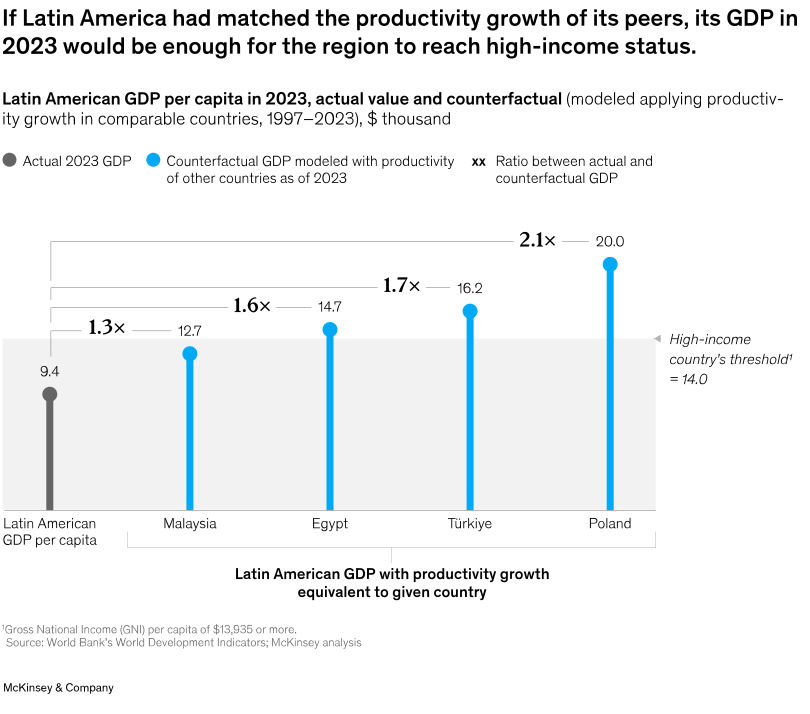
If Latin America had matched the productivity growth of its peers such as Egypt, Poland, and Türkiye over this period, its GDP in 2023 would have been 60 to 110 percent higher and the region could have reached high-income status,7 on average (Exhibit 1).8
Weak local investment is a primary contributor to slow productivity growth. In Latin America, gross fixed capital formation, a metric for total investment in an economy’s stock of assets, is approximately 20 percent of GDP, on average, trailing comparable regions (Emerging Asia and Central and Eastern Europe) and countries such as Türkiye and Malaysia.9 From 1997 to 2019, Latin America’s capital stock per worker grew by only 30 percent, while countries such as Poland and Türkiye experienced a twofold jump in this metric and achieved productivity growth rates two to three times higher than that of Latin America.10
A high-income scenario by 2040 would require accelerating productivity growth to match the rate of faster-growing peers
What would Latin America’s productivity look like in the coming years with higher growth? We conducted an analysis of 14 comparable economies that produced two scenarios11 (see sidebar, “About the productivity growth methodology”). The high-case scenario represents the median of the yearly average productivity growth of these 14 countries during the past two decades, while the low-case scenario represents the average of the lowest quartile.
About the productivity growth methodology
To develop feasible productivity growth scenarios, we selected a group of emerging economies that were at a similar level 20 years ago and compared them with the six largest Latin American economies: Argentina, Brazil, Chile, Colombia, Mexico, and Peru. We identified the relevant benchmark countries through a structured approach using data from 2003 to 2022. We began by filtering countries based on size, excluding those with populations less than 75 percent of the smallest country among our Latin American sample. This lens ensured our benchmarks reflected economies of meaningful scale.
Next, we defined a productivity range with a lower bound at 75 percent of the 2023 productivity level of the lowest-performing country among our regional sample and an upper bound of 1.25 times the 2023 productivity level of the highest-performing country. We then segmented all the countries that, at any point from 2003 to 2023, had a productivity level within that range. This step ensured the selected emerging countries had productivity levels broadly comparable to those in Latin America. Advanced countries that made this list were not included.1
Last, we excluded countries that were not classified as part of the “mid” and “fast” productivity lanes in McKinsey Global Institute’s Investing in productivity growth report to focus on the countries that grew in productivity.2
Applying these filters produced 16 potential benchmark countries. Of this group, 14 had complete productivity data available for the full 2003–23 period.3 For these 14 countries, we calculated the CAGR of productivity over the two-decade period (exhibit). The resulting average and median productivity growth rates across these benchmark countries were 3.2 and 2.6 percent a year, respectively.
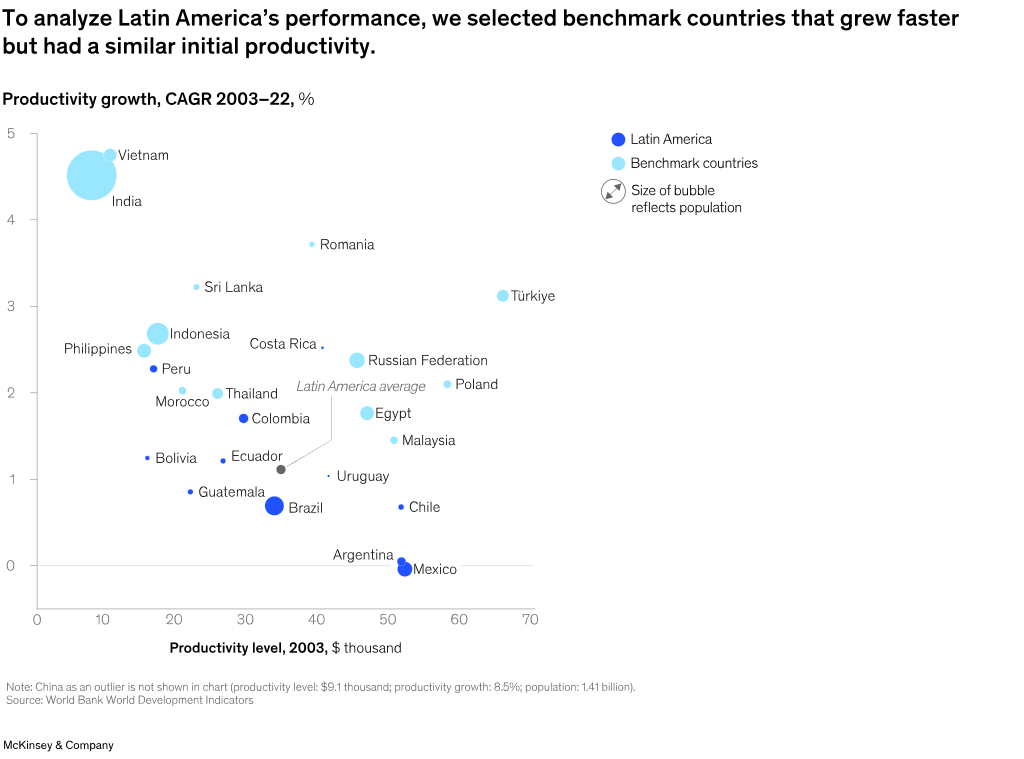
If Latin America’s productivity growth matched the low- and high-case scenarios of these reference economies, it would achieve a jump of 1.1 and 2.0 percentage points, respectively, beyond the region’s yearly average productivity growth of 0.6 percentage points over the past 20 years. An annual average productivity growth rate of 1.7 to 2.6 percent would enable Latin America to reach a GDP range of $8.9 trillion to $10.3 trillion (in 2023 dollars) by 2040.
Growth of 2.6 percent annually could be achievable for Latin America, given that half the countries in the sample exceeded this level. Although a jump in productivity growth from 0.8 percent to 2.6 percent might seem ambitious, more than a third of the countries we analyzed have recorded even larger increases over the past two decades. This precedent suggests that with the right strategies, Latin America could achieve these growth rates, paving the way for significant economic expansion.
Average annual investment of $1.9 trillion to $2.3 trillion through 2040 could enable Latin America’s GDP growth
The growth of middle-income economies depends on sufficient levels of investment, among other variables. Based on the correlation between capital per worker and productivity as countries develop economically, achieving a GDP of $8.9 trillion to $10.3 trillion in Latin America by 2040 would likely require average annual total investment in the range of $1.9 trillion to $2.3 trillion.12
Assuming the region’s GDP reaches the high-case scenario of $10.3 trillion, this ramp-up of investment could reach approximately 28 percent of GDP by 2040, up from 20 percent today and aligned with other fast-growing regions such as China (around 40 percent), Türkiye (31 percent), and India (30 percent) over the past 20 years.13
Unlocking Latin America’s growth potential amid global shifts
Four trends, from changing global power dynamics and technological advancements to demographic transitions and evolving resource and energy systems, are influencing the course of the global economy. Together, they could usher in a new era of economic opportunity, but they also bring specific challenges.
Multipolar world
The global order is shifting from a unipolar to a multipolar structure. Global integration still shapes trade, migration, capital flows, and intangibles (such as knowledge transfer), but underlying trends are evolving. Recently, trade has been reconfiguring along geopolitical lines. Since 2017, the average geopolitical distance of goods trade has fallen by 4 to 10 percent for economies such as China, Germany, the United Kingdom, and the United States.14 Meanwhile, economies such as Brazil and India have achieved high trading volumes across the geopolitical spectrum. As countries seek to mitigate risks, supply chains could become more regionally concentrated or aligned with countries with similar geopolitical goals.
Although this trend poses economic challenges, it also creates opportunities. Regions or countries with strategic geographic locations, neutral geopolitical stances, or significant reserves of resources (such as those critical to the energy transition) could strengthen their position in new supply chains and address emerging demand.
Technological advancements
Rapid technological advances, particularly in AI, cloud computing, and digital services, could open a $100 billion export opportunity for Latin America in knowledge-based services.15 To convey the magnitude of the opportunity, total global revenues for AI software and services and cloud could rise to as much as $8 trillion by 2040.16 Together, they could be two of the most dynamic and mutually reinforcing arenas of growth in the decades ahead, with multitrillion-dollar revenue opportunities and significant productivity impact on the rest of the economy.17
This growth is fueling demand for IT services, business process outsourcing (BPO), and digital infrastructure. Global data center IT load, for example, is projected to quadruple from 55 gigawatts (GW) in 2023 to 219 GW by 2030,18 creating an opportunity for certain regions to both supply services and cover the infrastructure gap.
Demographic transitions
The world is undergoing a profound demographic transformation. Fertility rates are declining, leading to aging populations in many regions. This trend increases pressure on healthcare and social security systems and could result in labor shortages, widening regional inequalities, and the erosion of intergenerational wealth.19 Further, the world’s rural population reached a peak in 2020 and has since started to shrink.20 This urban expansion will predominantly occur outside the Western world.
As these developments raise new challenges around the world, they also bring evolving consumption patterns that could create new opportunities. Overall population growth, rising incomes, and urbanization will increase demand for manufactured goods, energy, and food. Indeed, global demand for food is projected to rise more than 40 percent by 2040,21 which will create an opening for producers across sectors.
Resource and energy systems
The global shift toward cleaner energy sources is underway, guided by ambitions to reach net-zero emissions and reduce dependence on fossil fuel. Yet this transition is complex and requires a balance among energy security, affordability, industrial competitiveness, and decarbonization. On the supply side, geopolitical shifts have further exposed vulnerabilities in energy and materials supply chains. On the demand side, the transition could increase the need for products and intermediate goods.
Despite record volume in renewable and electrification investments, project deployment remains below the level required to meet 2030 and 2050 targets set by countries and companies in line with the Paris Agreement.22 In Europe and the United States, for instance, less than 20 percent of announced solar capacity and 15 percent of hydrogen projects have reached the final investment decision stage, creating a high risk of cancellation or delay. This persistent gap means oil and gas could remain a central part of the energy mix beyond 2050 (even under accelerated transition scenarios).
Latin America is well positioned to respond to global trends
The four global trends will alter demand across sectors. While Latin America’s distinctive strengths and assets could offer new sources of growth and competitiveness, it would need to develop new capabilities and unlock more potential from existing ones. Focusing investment on sectors and countries where capabilities and new sources of demand could align offers a microlevel strategy for beginning to advance the region’s possibilities. Where such investments succeed, the possibilities for broader-based growth across companies and sectors expand.
Our research examined the region’s sectors and identified three themes with the greatest potential to help the region attract investment and enhance economic growth: revitalizing Latin America’s industrial base, thriving in the age of global digitalization, and leveraging Latin America’s natural endowments.
Revitalizing Latin America’s industrial base. The changing global order presents Latin America with an opportunity to capitalize on the ongoing restructuring of global supply chains, especially for export-oriented industries such as manufacturing.
The region’s location, particularly its proximity to the North American market, offers a significant advantage in global trade. Its shipping times are roughly half those of Asia, enabling faster delivery, reducing logistics costs, and enhancing supply chain responsiveness.23 Further, at a time of shifting global supply chains and trade realignments, Latin America’s relative proximity to global extremes on the geopolitical spectrum could enable the region to deepen trade ties across diverse blocs, expanding exports to other countries and extending trade partnerships. In addition, Latin America’s manufacturing sectors are well placed to take advantage of the global energy transition. The region is home to some of the world’s most abundant and competitive renewable energy resources, including hydro, wind, and solar power.
By harnessing these endowments and building on existing industrial capabilities, Latin America has the potential to emerge as a key energy carrier for decarbonizing hard-to-abate sectors. Capturing this potential will require accelerating technology adoption, building know-how, strengthening supply chain integration, and deepening international openness.
Thriving in the age of global digitalization. The rapid acceleration of digital technologies is increasing global demand for digital services. Latin America is well positioned to capture this opportunity: Its advantages include strong knowledge from leading IT companies along with competitive labor costs, solid English proficiency, and highly competitive internet speeds.24
Further, the region’s connectivity, competitive operating costs, and abundant renewable energy resources make it an excellent location for energy-intensive data center development. These advantages could allow Latin America to offer a sustainable and cost-effective solution to meet the rising global need for digital infrastructure. Achieving this goal will require closing gaps in digital access and infrastructure and strengthening technical training. Given that digital services and data centers are high-productivity sectors, capitalizing on these opportunities will enhance their contribution to Latin America’s economy, thereby boosting the region’s overall productivity.
Leveraging Latin America’s natural endowments. The global energy transition and AI race are driving a surge in demand for critical minerals, which are essential for renewable energy technologies and battery production. Latin America holds a significant share of the world’s reserves of materials such as lithium and copper.25 In addition, the region’s central geopolitical positioning could enable it to be seen as a reliable source of minerals for different trade partners.
Shifting demographics are projected to increase global food demand by more than 40 percent by 2040,26 presenting another opportunity for Latin America, which has 14 percent of the world’s arable land.27 Most Latin American and Caribbean countries could double agricultural productivity by modernizing just 25 percent of small farms with improved input application and cultivation practices.28 Capturing agriculture’s potential will require Latin American growers to embrace more-productive practices (such as farm equipment and automation) and reallocate resources from less- to more-productive subsectors (for example, fruits and industrial crops). Lifting labor productivity in agriculture would increase incomes for farmers while reducing overall employment share, with workers moving to higher-productivity jobs in other sectors.
These themes could add $1.1 trillion to $2.3 trillion to Latin America’s GDP by 2040
While the region has distinctive competitive advantages in each of these three themes, it still needs to address critical gaps, from human capital development, infrastructure enhancement, and macroeconomic stability to the creation of new trade corridors and expansion of current ones. Moreover, attracting investment will require coordinated action from both the public and private sectors. Nonetheless, sectors and companies are primed to build on the region’s advantages.
To understand a plausible growth scenario for Latin America, we divided the economy into two parts: sectors associated with the three themes, which currently account for 29 percent of the region’s GDP, and the rest of the economy. One potential path is for the three themes to increase by 3.0 to 5.0 percent annually, the range of productivity growth levels of benchmark countries in comparable sectors, while the rest of the economy grows 1.1 to 1.3 percent a year, a level in line with the lower-end performance of comparable economies.29 This rate of growth would generate an additional $1.1 trillion to $2.3 trillion to regional GDP above the current trajectory by 2040 (Exhibit 2).
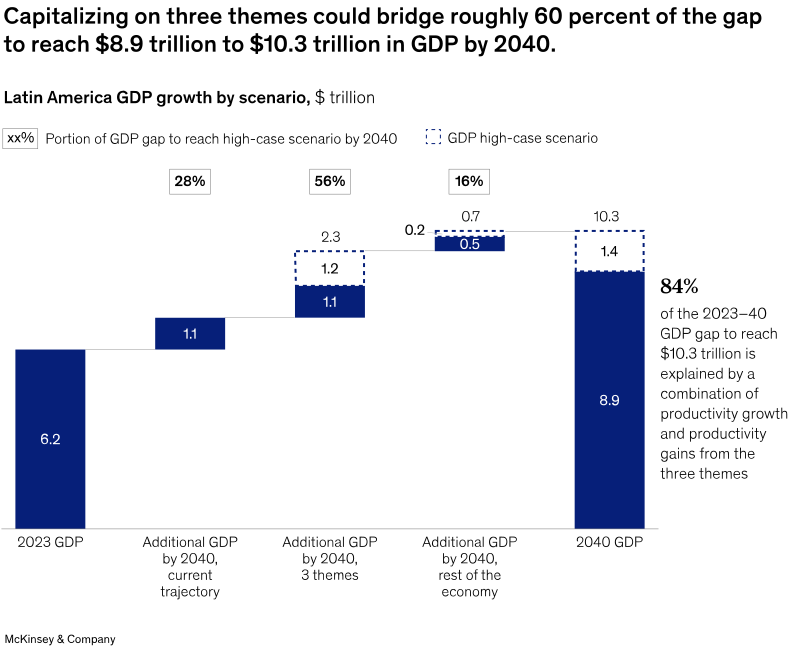
This two-speed option is just one of many the region could follow to exceed $10 trillion in GDP by 2040, but it offers high-level validation of how building on strengths in certain areas could address the productivity imperative.
Seven sectors for transformative investment
The three strategic themes encompass a multitude of growth opportunities for Latin America. The region has an opportunity to transform its productivity through investments in seven high-potential sectors that exemplify the impact these themes could have on the region:
- Revitalizing the industrial base. This includes next-gen manufacturing and Power-to-X solutions.
- Thriving in the age of global digitalization. This includes digital services and data centers.
- Extracting the potential of natural resources. This includes agri-foods, oil and gas, and critical minerals.
By 2040, these sectors could generate combined annual revenues of approximately $590 billion to $ 1.2 trillion, depending on the pace of investment, degree of policy alignment, and global demand (Exhibit 3). Achieving this growth would require cumulative investment of $1.7 trillion to $2.8 trillion through 2040.
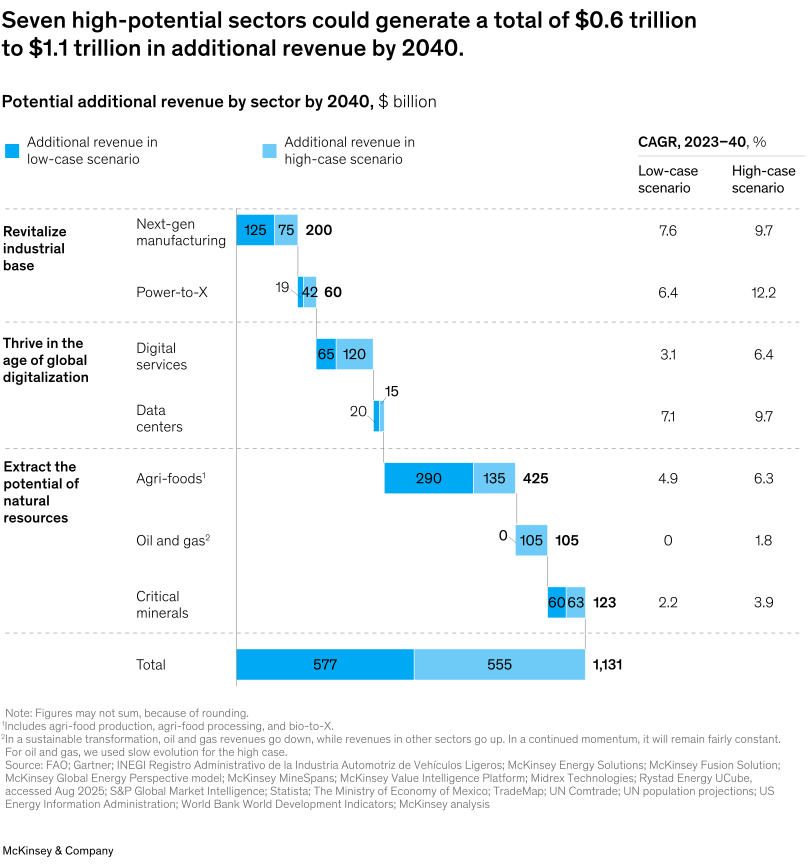
Our analysis seeks to be ambitious and feasible while presenting a consistent view across sectors. Since the potential revenues of several sectors—next-gen manufacturing (including EVs and batteries), critical minerals, oil and gas, and Power-to-X—rely on the pace of the energy transition, we incorporated its potential impact on revenue calculations across sectors. We based the estimation of outputs for these sectors on two energy transition scenarios: continued momentum and sustainable transformation.30 For six of the seven sectors, continued momentum represents the low output and sustainable transformation is the high output. Oil and gas is the exception: Continued momentum is the low case, and slow evolution is the high case. When aggregating opportunities across sectors, we combined the range for oil and gas inversely with those of the others. Each sector scenario includes specific factors that are explained in the methodology section in the full report’s appendix.
For each sector, we identified the countries with the greatest potential and classified them into four archetypes, defined by the sector’s overall maturity within each country:
- Global champions include regional players accounting for more than 10 percent of global exports, top five exporters, and countries with the potential to become even more relevant in the future, given emerging global trends.
- Strong competitors are countries that have established robust capabilities (such as labor or technology) in a given sector but are not yet global leaders. Strong competitors are well positioned to enhance their global relevance as emerging trends reshape opportunities.
- Promising contenders are regional players that hold a potential competitive edge but need to strengthen capabilities and invest in enablers to fully capture the opportunity.
- Emerging frontiers are high-potential countries whose competitiveness depends on overcoming significant uncertainty through coordinated efforts and alignment among key stakeholders.
This categorization of archetypes applies to country–industry pairs, using industries within the seven sectors. It is done at the industry level because industries within the same sector in the same country could be categorized as different archetypes. For instance, Argentina’s critical minerals sector is a global champion in lithium production but a promising contender in copper, illustrating the multifaceted nature of competitiveness and the importance of strategies tailored to each industry’s stage of development. In cases where relevant opportunities did not exist for country–industry pairs, they were not categorized as an archetype.
The following interactive offers deep dives into the seven sectors, highlighting potential additional revenues, the investment required to capture the opportunity, and the performance of selected Latin American countries.
Next-gen manufacturing
Unlocking an additional $200 billion in annual revenues by 2040 would require cumulative investments of roughly $230 billion.
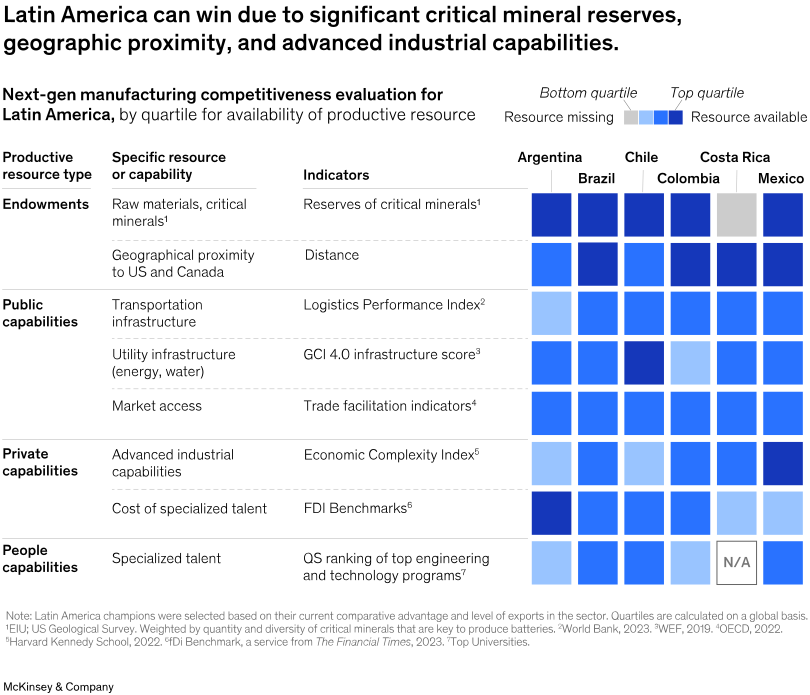
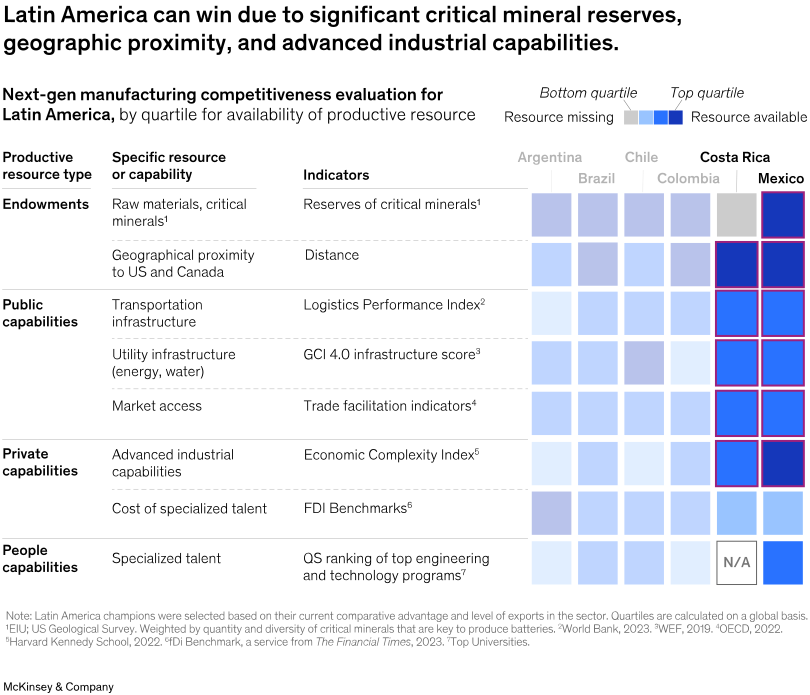
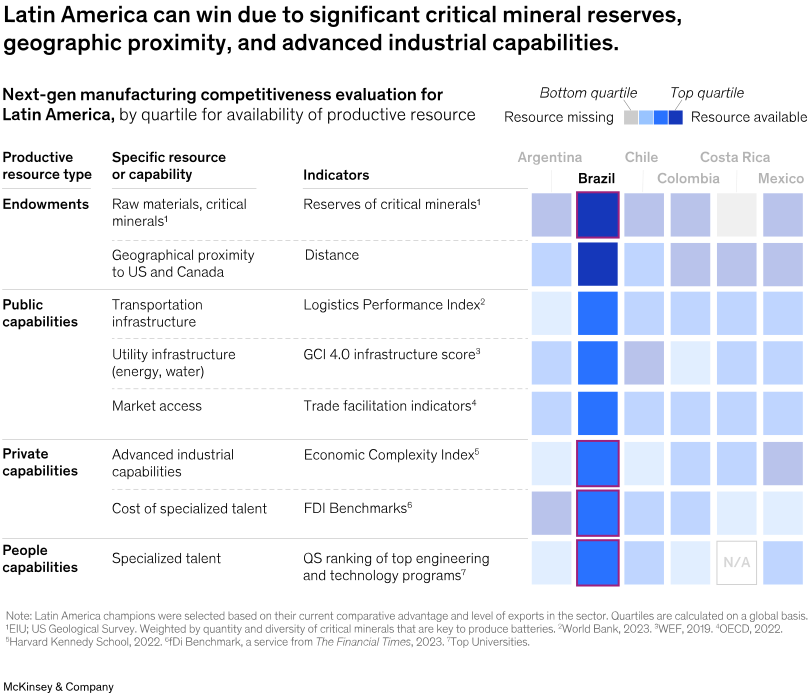
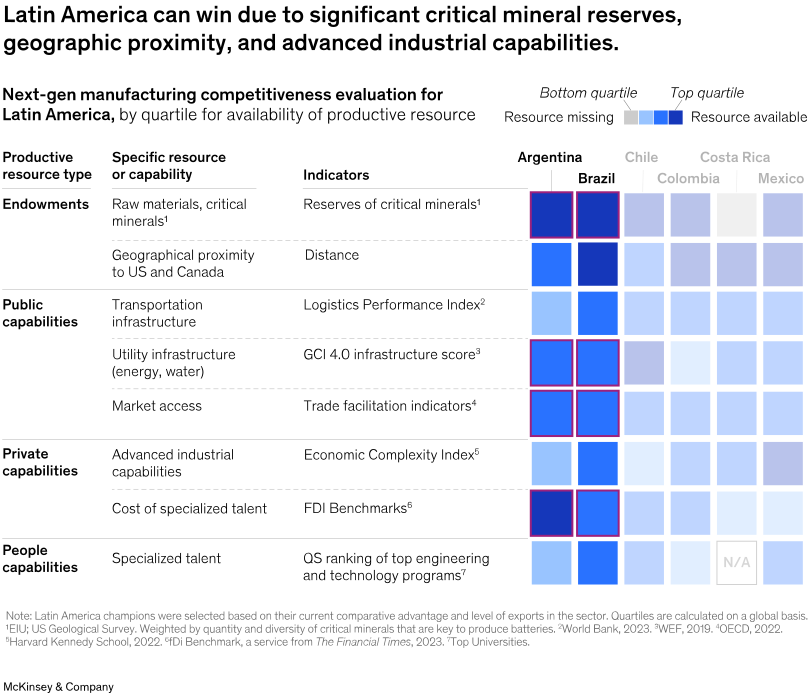
Latin America’s next-gen manufacturing capabilities span multiple high-value industries. Our analysis focused on four: EVs, batteries, semiconductors, and medical devices. The region has both established industries and the potential to capture the next wave of advanced-manufacturing growth.
This is a condensed view of our next-gen manufacturing competitiveness evaluation. This view does not include capability indicators for political stability and absence of violence, regulatory quality, and R&D capabilities. These capability indicators can be found in the heat map for this sector in the full report.
Strong competitors
Costa Rica
- Semiconductors: Harnessing established global hub for semiconductor assembly, testing, and packaging (ATP)
- Medical devices: Serving as location to 13 of the top 20 OEMs in medtech1
Mexico
- Medical devices: Thriving in exports, with $20.3 billion in medical devices in 20232
- Semiconductors: Capitalizing on strong manufacturing capabilities in ATP
- EVs and batteries: Expanding strategically to build on leadership in automotive manufacturing and proximity to key markets (North America)
Promising contenders
Brazil
- EVs: Benefiting from fast-growing demand driven by favorable policy incentives, strong trade links with China, and plans from Chinese companies (BYD and GWM) to start manufacturing in the country
- Semiconductors: Aiming to be a regional player in assembly and testing, with recent policy measures to support industry growth
Emerging frontiers
Argentina and Brazil
- Batteries: Potentially becoming established producers (at least at a regional level) by drawing on strong manufacturing capabilities, the right partners, incentives for local production, and, in Argentina’s case, the third-largest lithium reserves in the world
Mexico
- Semiconductors: Building on ATP capabilities to expand into design through the Kutsari project, which aims to improve design capabilities and build dedicated R&D centers
Argentina
- EVs: Pursuing market share by aligning its industrial base toward EV production to fulfill regional demand and integrating supply chains with Brazil
Achieving this potential requires strategic actions to prioritize education and workforce development. Moreover, upgrading transportation and logistics infrastructure could reduce costs and increase the region’s competitiveness.
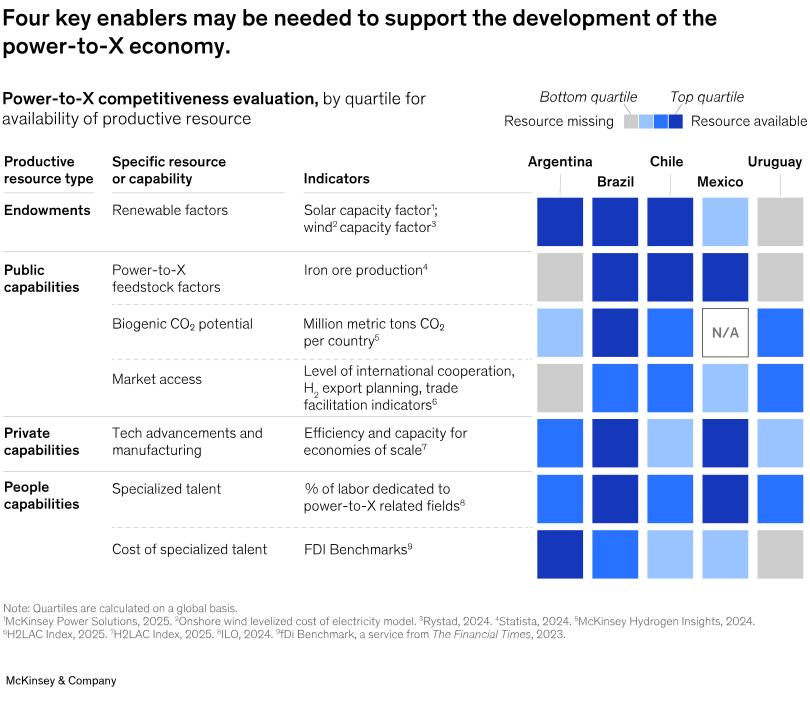
Power-to-X
Expanding revenues by an additional $60 billion annually by 2040 would require cumulative investments of up to $275 billion.
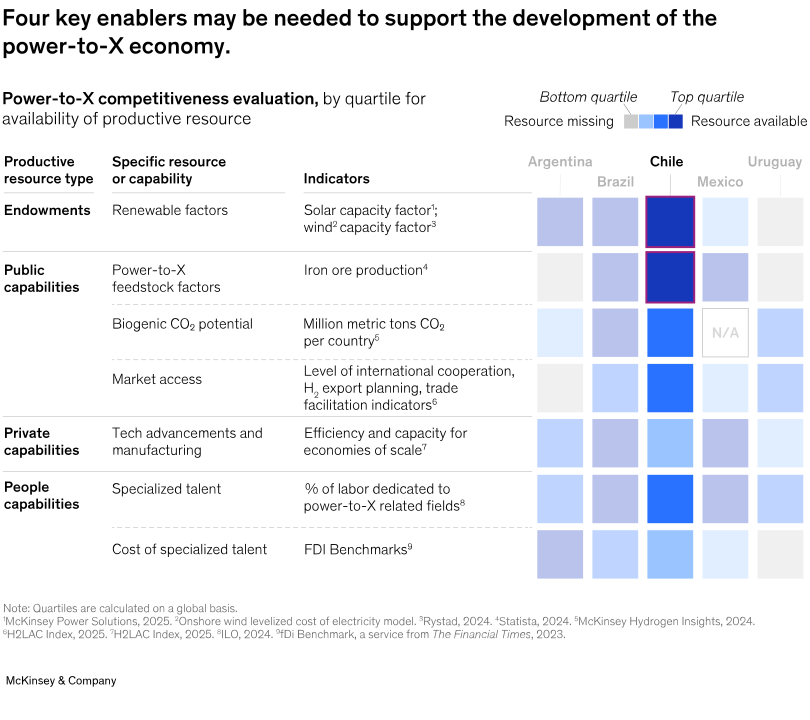
Given the nascent nature of the Power-to-X sector—which includes hydrogen, ammonia, methanol, synthetic kerosene, and green steel—and the region’s endowments in renewable energy, numerous Latin American countries are well positioned to capture future growth.
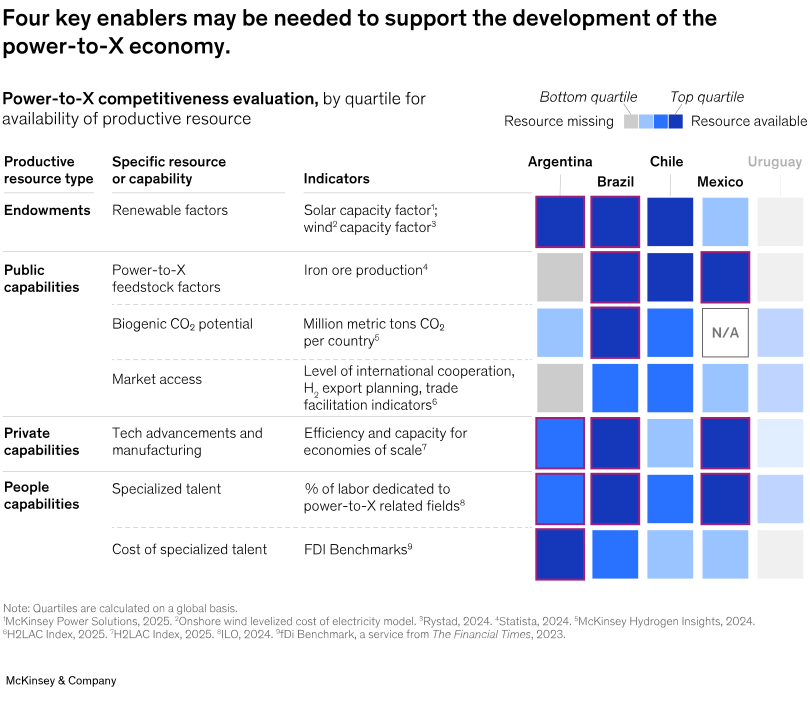
This is a condensed view of our Power-to-X competitiveness evaluation. This view does not include capability indicators measuring regulatory environments or market infrastructure. These capability indicators can be found in the heat map for this sector in the full report.
Promising contenders
Chile
- Hydrogen: Leveraging large solar potential to generate energy that could be used for electrolysis plants; potentially capitalizing on large-scale projects3 in Southern Chile’s Magallanes region to make the country a future exporter of clean hydrogen and its derivatives
Emerging frontiers
Uruguay, Brazil, and Chile
- Synthetic kerosene and methanol: Potentially expanding in production, drawing on the availability of biogenic CO2, the lower levelized cost of hydrogen driven by renewable energy potential, and existing industrial capabilities
Brazil
- Green steel: Taking advantage of position as the world’s second-largest iron ore producer and abundant renewable energy to develop green steel manufacturing4
Mexico
- Hydrogen: Leveraging blue hydrogen production to satisfy US demand
Excelling in Power-to-X areas would require the development of transportation and storage infrastructure for hydrogen and its derivatives, investments in R&D, funding for pilot projects, and the creation of harmonized regulatory frameworks. By focusing on these enablers, Latin America could establish itself as a global leader in the emerging green hydrogen economy.
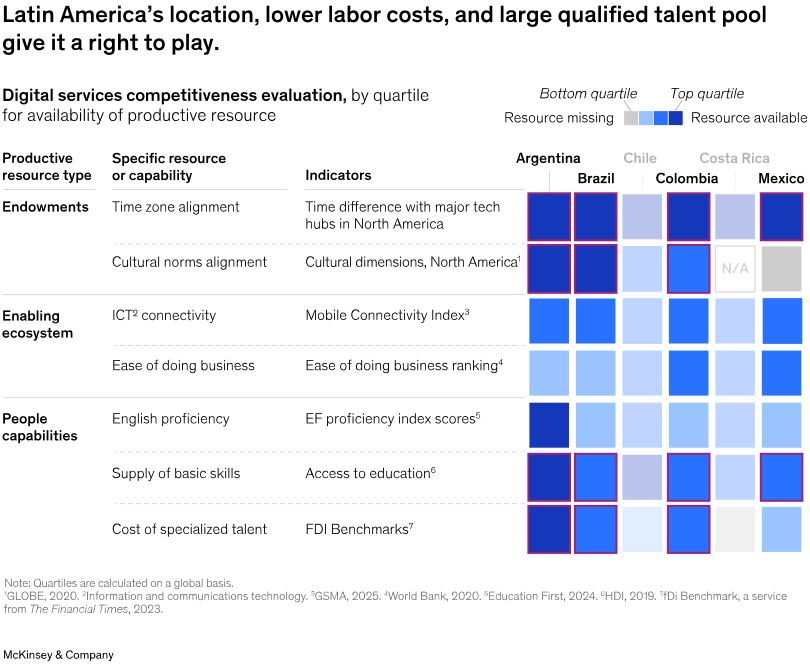
Digital services
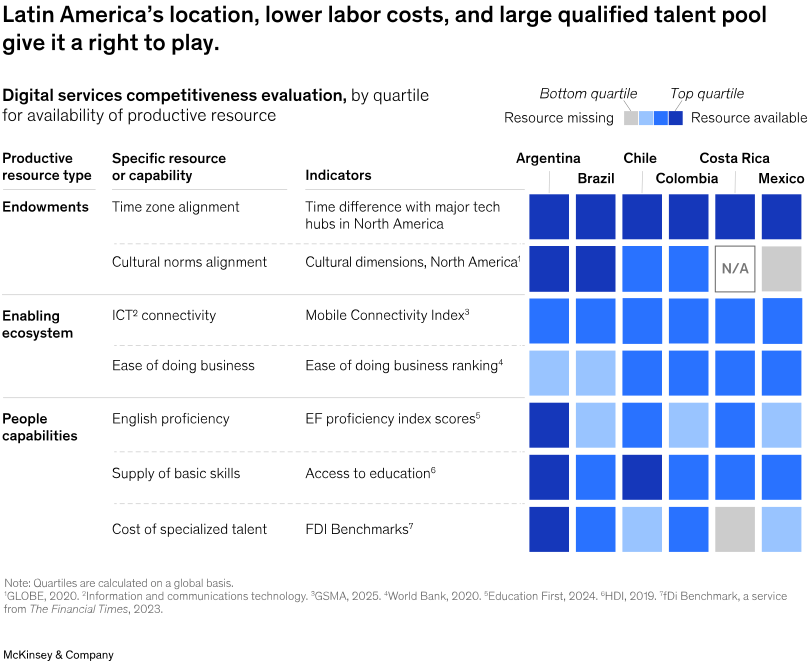
Expanding revenues by an additional $185 billion annually by 2040 would require cumulative investments of roughly $270 billion during this period.
Latin America’s digital services sector, which includes IT services and business process outsourcing (BPO), has established a solid presence and is well positioned to capture growing demand.5
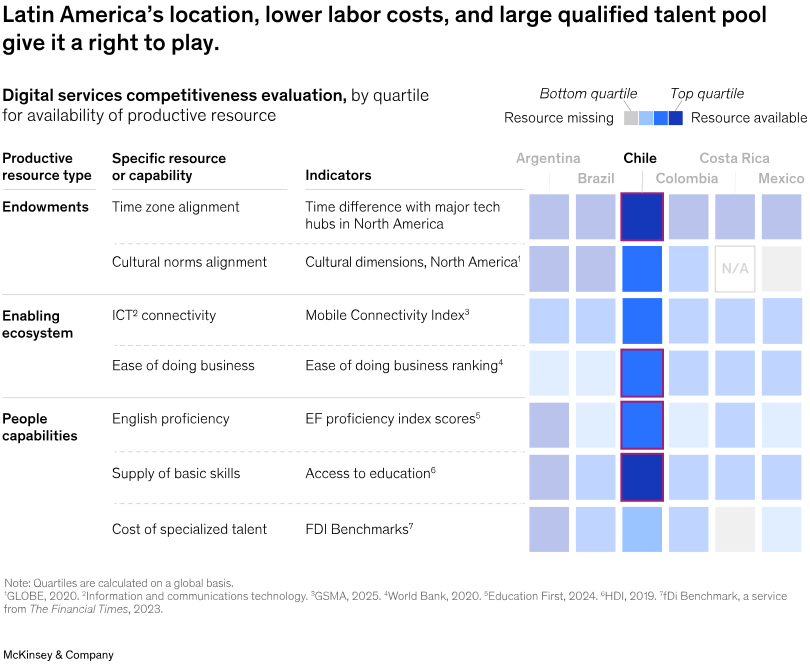
This is a condensed view of our digital services competitiveness evaluation. This view does not include the capability indicator for supply of specialized talent. That capability indicator can be found in the heat map for this sector in the full report.
Strong competitors
Argentina, Brazil, and Mexico
- IT services: Drawing on mature ecosystems developed by hosting regional IT leaders such as Globant, Stefanini, and Softtek as well as global IT giants, which operate substantial knowledge and service centers throughout these countries
Mexico, Colombia, and Costa Rica
- BPO: Harnessing alignment with North American time zones, competitive labor costs, and a large, qualified talent base to serve the North American market
- IT services: Recognizing Colombia as a strong player due to its foundational advantages
Promising contenders
Chile, Costa Rica, and Uruguay
- IT services: Serving as home to operations of global companies such as Globant and Tata Consultancy Services; hosting IT digital development centers for 16 of the top 100 IT companies globally and 32 Fortune 500 companies in corporate and business processes in Costa Rica,6 and 400 domestic tech firms in Uruguay delivering high-quality tech solutions7
To unlock the full potential of the digital services sector, the region would need to align itself with target markets, mainly North America. Further, investing in skilled talent, English proficiency, and connectivity could enhance the talent pool, and developing hubs around the investment could facilitate growth and the creation of new companies.
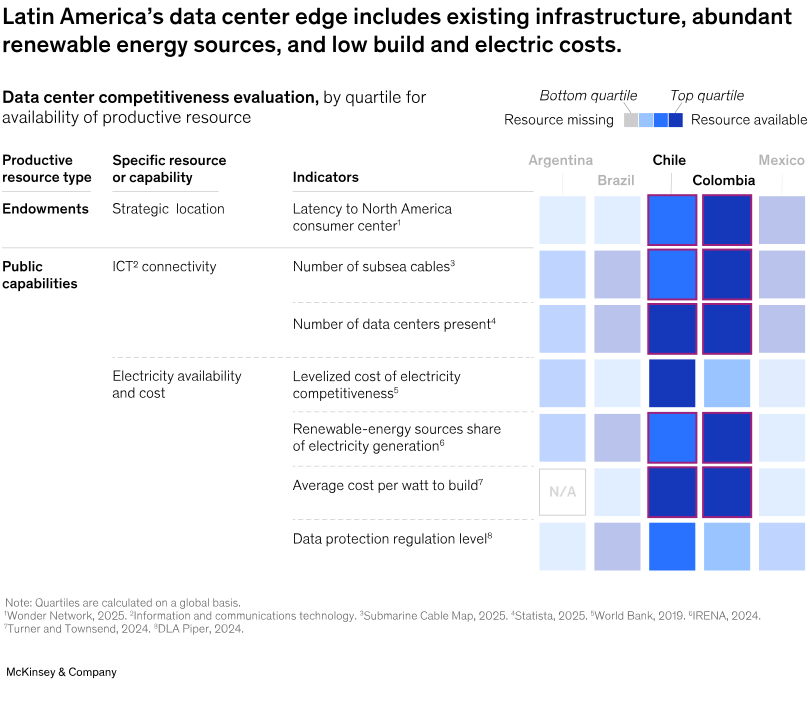
Data centers
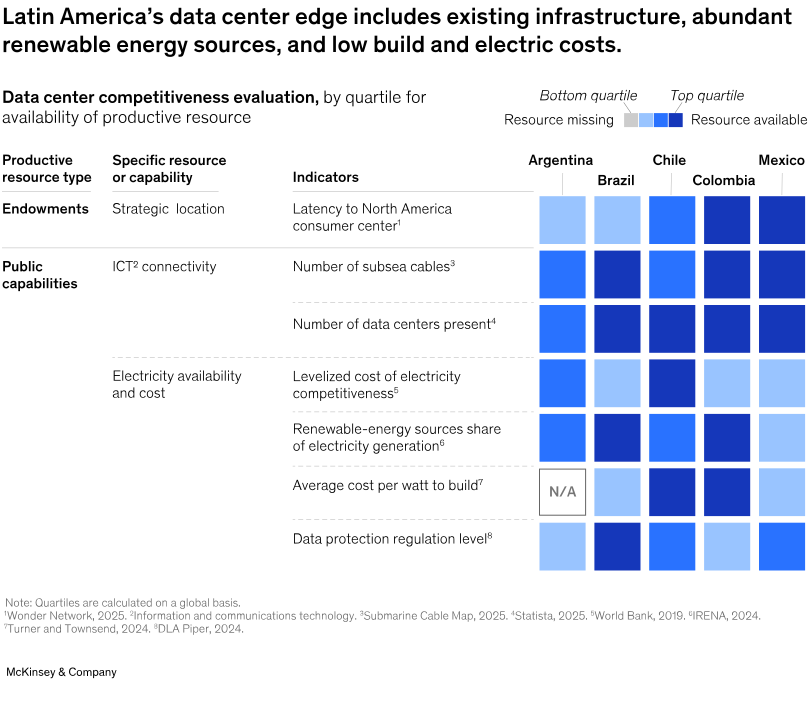
Increasing annual revenues from data centers by an additional $35 billion annually by 2040 would require cumulative investments of roughly $70 billion.
Latin America’s competitive advantages in this sector include proximity to key markets, connectivity, large renewable-energy potential, and existing data centers, along with associated capabilities.
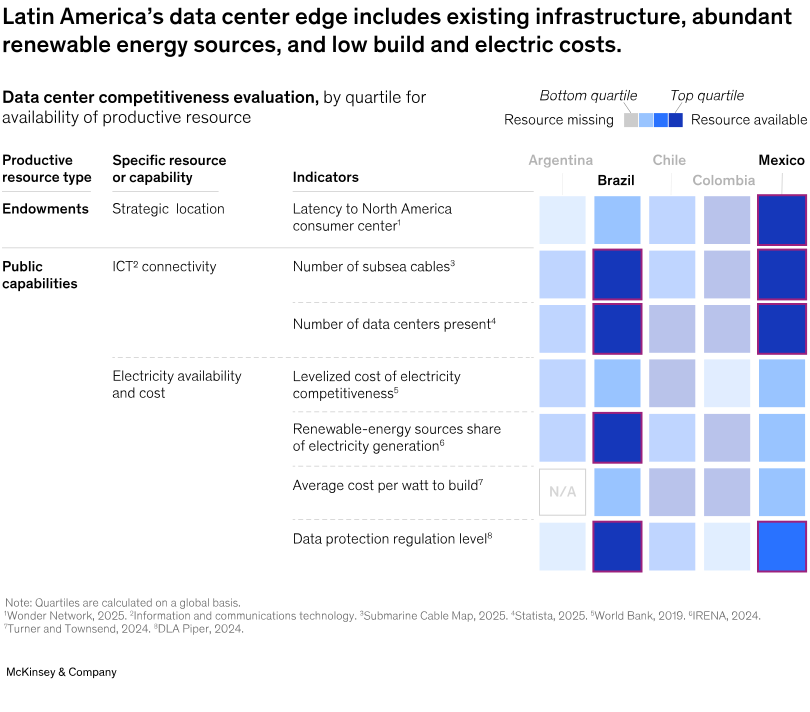
This is a condensed view of our data center competitiveness evaluation. This view does not include capability indicators for Mobile Connectivity Index or fiber access. These capability indicators can be found in the heat map for this sector in the full report.
Strong competitors
Brazil
- Emerging as a hub, with 195 data center operations8 and 16 direct submarine cables connecting it to global networks9
Mexico
- Hosting 63 data center operations10; strategic location and robust fiber optic infrastructure could offer connections to North America of less than 200 milliseconds (ms) of latency11
Promising contenders
Chile, Colombia, and Uruguay
- Serving as the home for nearly 100 operational data centers12 with an abundance of renewable-energy sources and strategic subsea-cable connectivity
- Consistently attracting data center investments through established stable regulatory environments and infrastructure policies
- Benefiting from connections to North America, with less than 200 ms of latency (Colombia)
To pursue this opportunity, the region would need to streamline permitting, strengthen connectivity, and increase reliable access to energy. Recent announcements highlight strong investor interest in developing the region’s digital infrastructure.
Agri-food
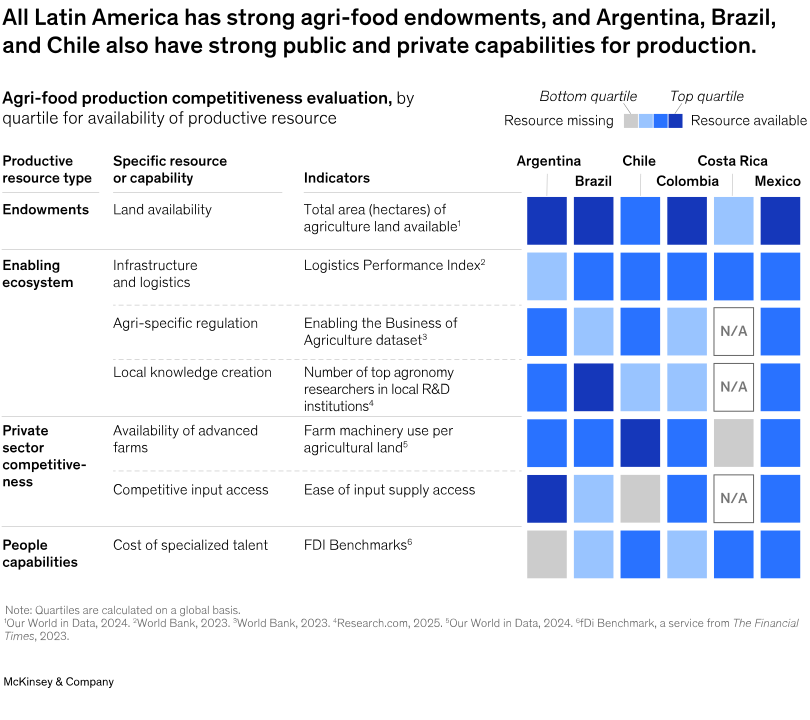
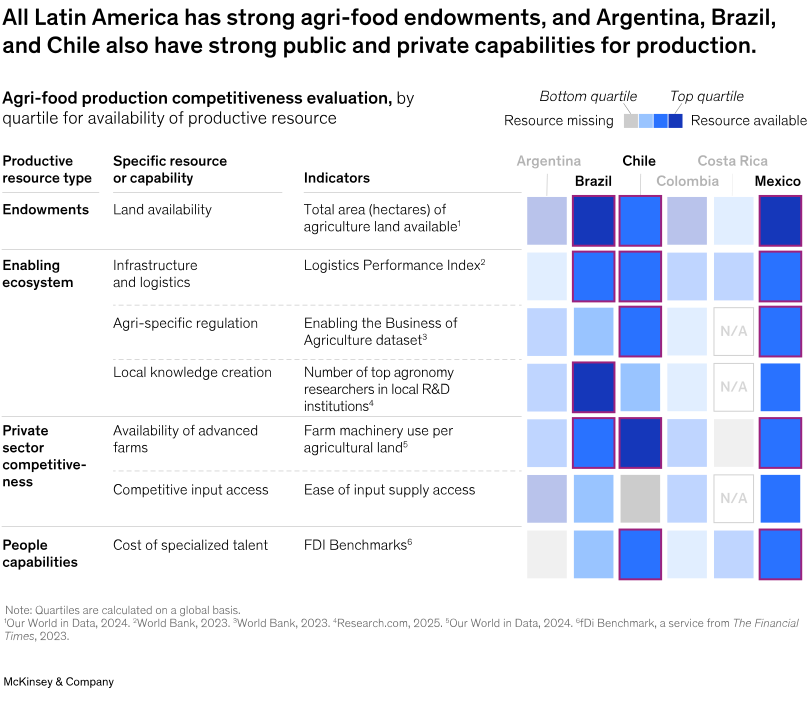
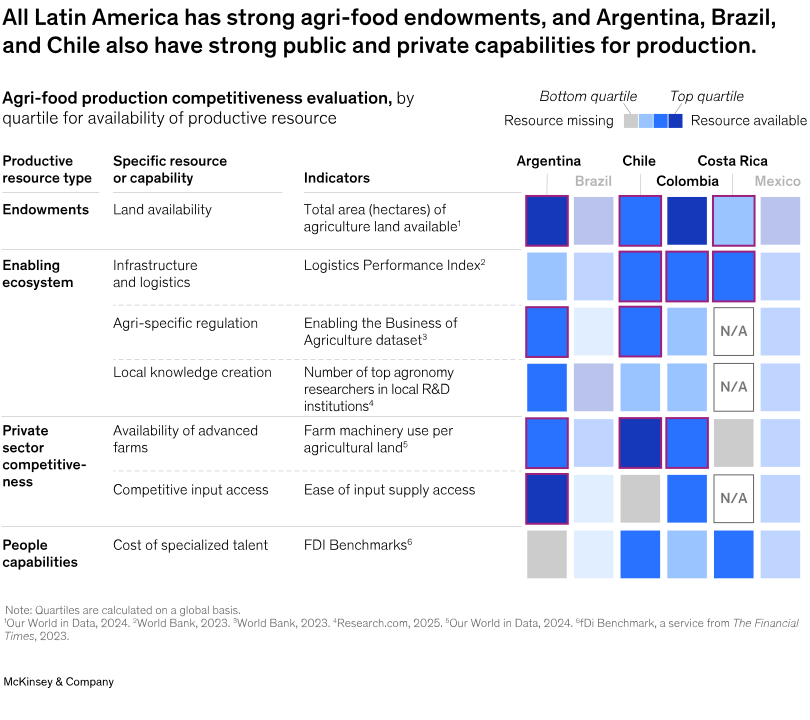
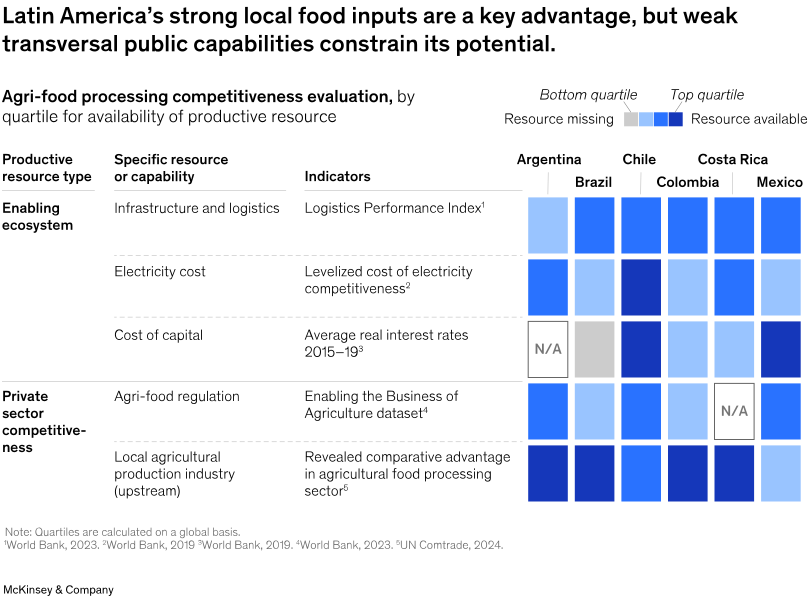
Generating an additional $425 billion in annual revenues in agri-food by 2040 would require cumulative investments of up to $760 billion.
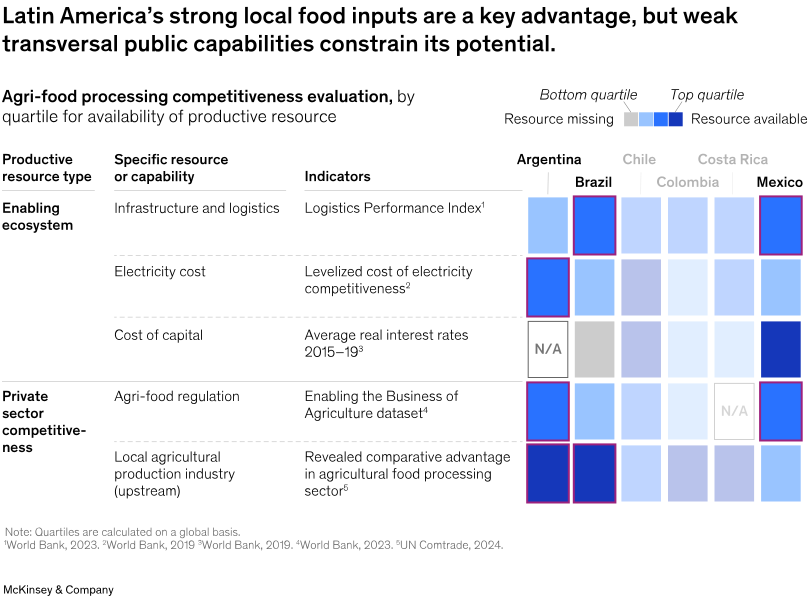
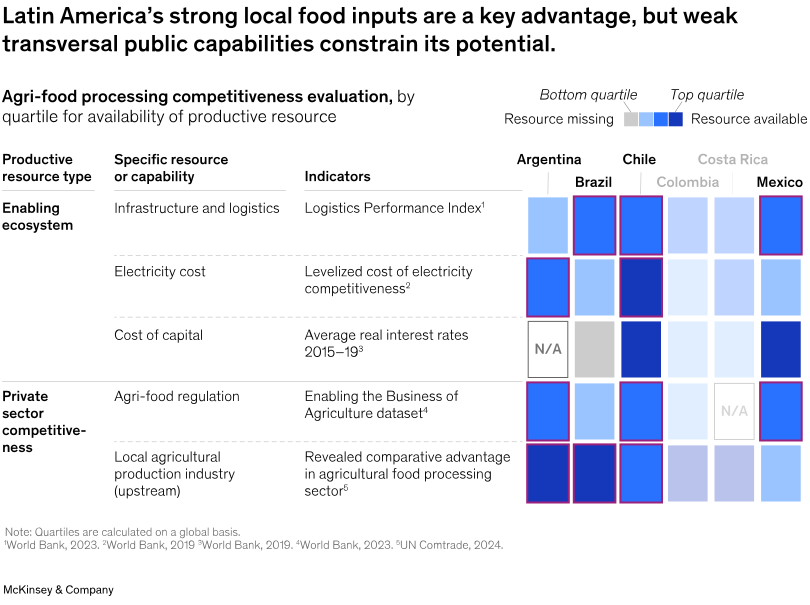
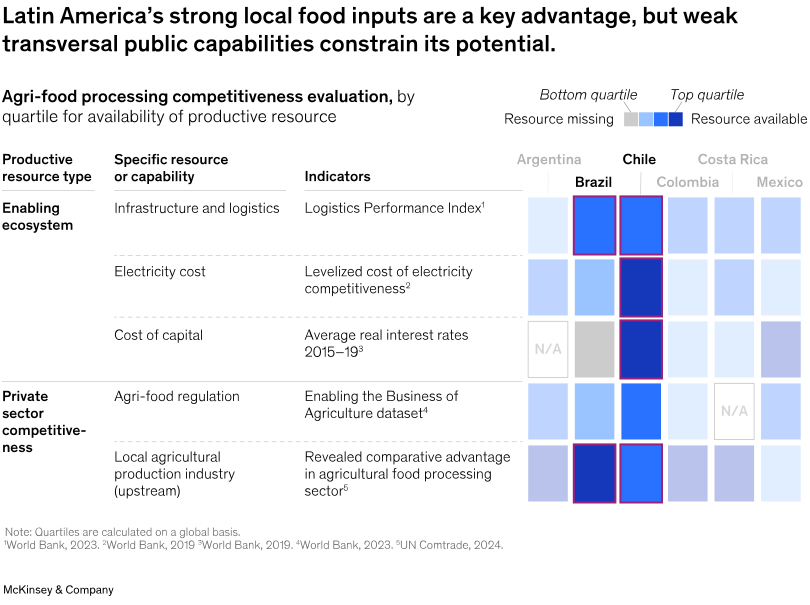
Latin America’s agri-food sector showcases a powerful combination of production capacity (crops, meat, fish, and fruits) and processing expertise (crops, meat, fish, fruits, and vegetables; beverages; oils and fats; and animal feed) across the value chain. Its opportunities reflect the region’s natural endowments, trade relationships, and growing global demand. In addition, infrastructure and logistics are competitive across most leading countries.
This is a condensed view of our agri-food competitiveness evaluation. This view does not include the capability indicator for cost of capital. This capability indicator can be found in the heat map for this sector in the full report.
Production: Global champions
Mexico
- Fruits and vegetables: Top 3 exporter in both categories (second in vegetables and third in fruit in 2023)13
Brazil
- Crops: A top global exporter of soybeans, cereals, and coffee, in 2023 thanks to its extensive arable land and high productivity14
- Meat: Ranked as the world’s second-largest meat exporter overall and the leading exporter of frozen beef and poultry15
Chile
- Fish: The world’s second-largest salmon producer
Production: Strong competitors
Argentina
- Crops: Producing and exporting large amounts of cereals and soybeans, ranking 12th globally in exports
- Meat and fish: Ranking ninth for volume of beef exports; has achieved growth in crustaceans (such as shrimp) in recent years, making it the seventh-largest exporter in the world
Chile
- Meat: Achieving high export-to-production ratios in pork and poultry; maintaining robust sanitary standards and leading in some fruits and vegetables, particularly cherries
Colombia
- Fruits and crops: Ranking among the top global exporters of coffee and bananas, benefiting from both agricultural capacity and strong national branding
Costa Rica
- Fruits and vegetables: Specializing in exports, especially pineapples and bananas, drawing on its climate, export infrastructure, and access to global markets
Processing: Global champions
These processing strengths build on existing agricultural output, industrial capabilities, and increasing global demand for processed agriproducts.
Mexico
- Beverages: Leading in beverages, notably beer and spirits, on the strength of globally competitive brands and export capacity
Brazil
- Animal feed: Ranking as the world’s second-largest exporter of soy-based animal feed thanks to its advanced agricultural sector
Argentina
- Animal feed: Exporting the third-largest share of animal feed in the world, primarily through the production of soy residuals
Processing: Strong competitors
Brazil
- Oils and waxes: Excelling in food and soybean oil processing, leveraging its position as a global leader in soybean production
Mexico
- Food processing: Standing out in bakery goods and fruit-based foods, benefiting from a large domestic market, integrated supply chains, and close trade ties with the United States
Argentina
- Beverages: Already ranking among the top global exporters of wine
- Oils and waxes: Showing promise in this category, particularly soybean oil, thanks to its scale and advanced processing infrastructure
Chile
- Beverages: Generating value in beverages through wine exports, driven by established branding and access to key international markets
Processing: Promising contenders
Brazil
- Beverages: Enjoying a strong position in beverages, particularly wine, beer, and spirits, where established local brands are largely untapped in global markets
Chile
- Animal feed: Demonstrating potential in animal feed, where production is rising to support the country’s burgeoning livestock and aquaculture sectors
Bio-to-X
The agriculture sector provides a significant opportunity in Bio-to-X, which could enable Latin America to convert its abundant renewable resources into low-carbon energy and biobased products. Latin America already plays a disproportionate role in global liquid biofuels, accounting for about 27 percent of world production in 2023. Brazil alone is responsible for about 93 percent of that output.16 Building on this base, Bio-to-X could represent a multibillion-dollar opportunity by 2040 as Latin America expands production of ethanol, renewable diesel, SAF, biomethane, and biobased chemicals.
Achieving the potential in agri-food could require targeted action in several areas. Transportation and logistics infrastructure could be improved in countries where it is underdeveloped. The higher cost of capital represents a barrier to growth, and upgrades to energy infrastructure and processing capabilities for food products could also make the region more competitive. Capturing the upside in Bio-to-X calls for continued improvements in agricultural yields, stable land-use frameworks, the commercial scaling of second-generation technologies that rely on residues rather than new cropland, and a persistent increase in export demand.17
Oil and gas
Expanding annual revenues from oil and gas by an additional $105 billion by 2040 would require cumulative investments of up to $785 billion.
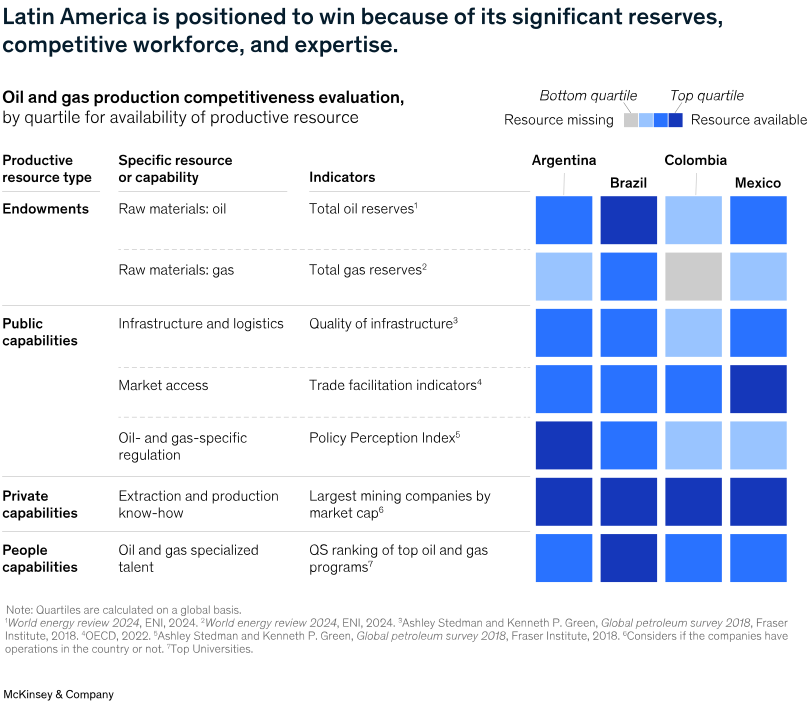
Latin America’s oil and gas landscape includes a combination of established production powerhouses and emerging players positioned to capitalize on global demand.
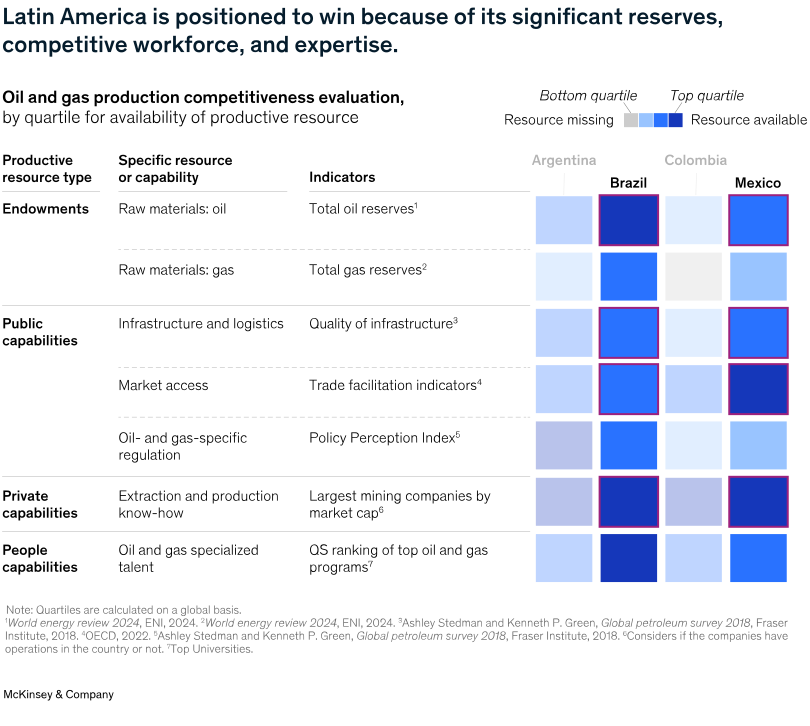
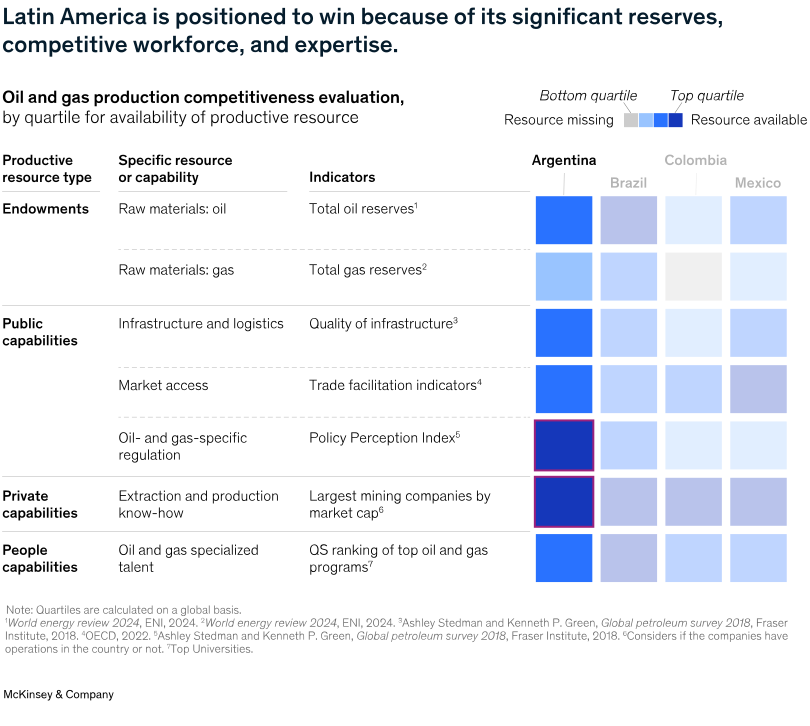
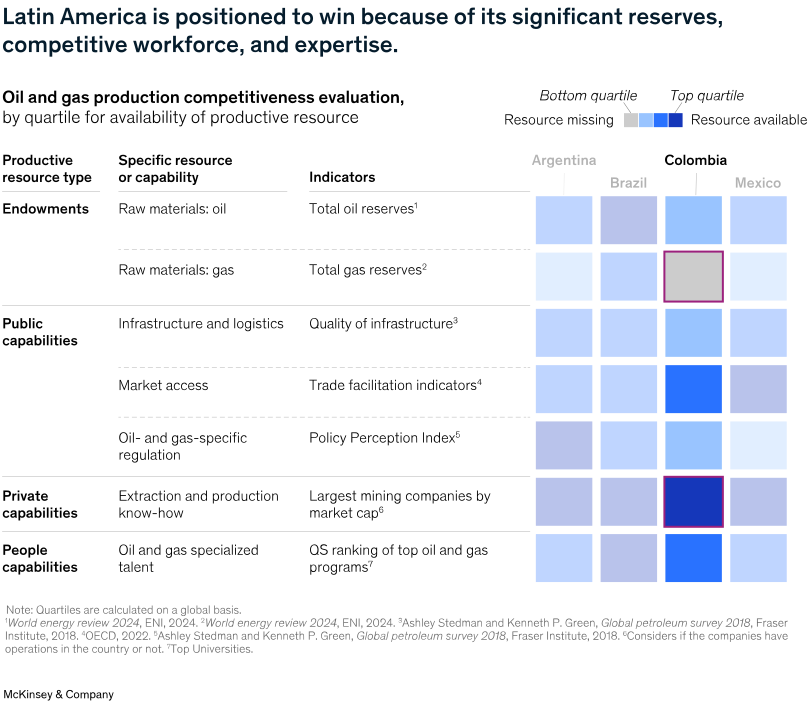
This is a condensed view of our oil and gas production competitiveness evaluation. This view does not include capability indicators for cost of capital and cost of specialized talent. These capability indicators can be found in the heat map for this sector in the full report.
Strong competitors
Brazil
- Oil: Accounting for approximately 45 percent of Latin America’s crude oil production and among the world’s ten largest producers;18 solidified its position through sustained investment in offshore deepwater drilling
Mexico
- Oil: Contributing about 20 percent of the region’s crude oil output19; produces an average of 1.6 million barrels a day,20 ranking 13th globally in crude oil production in 2022
Promising contenders
Argentina
- Oil and gas: Undergoing an energy transformation spurred by the rapid development of the Vaca Muerta shale formation; could join the ranks of the world’s top 20 exporters by 2032
Guyana
- Oil and gas: Exporting $13.4 billion annually despite being a relatively new producer; already accounts for approximately 0.5 percent of global oil production21
Emerging frontiers
Colombia
- Gas: Uncovering substantial increase in reserves in recent exploration in Santa Marta22
Bolivia
- Gas: Discovery of approximately 1.7 trillion cubic feet in natural gas in 2024, its biggest find since 200523
Increasing the growth of the oil and gas sector would require investment in the development of transportation and logistics infrastructure (including pipelines), significant foreign investment for exploration, and the adoption of advanced technologies to increase productivity.
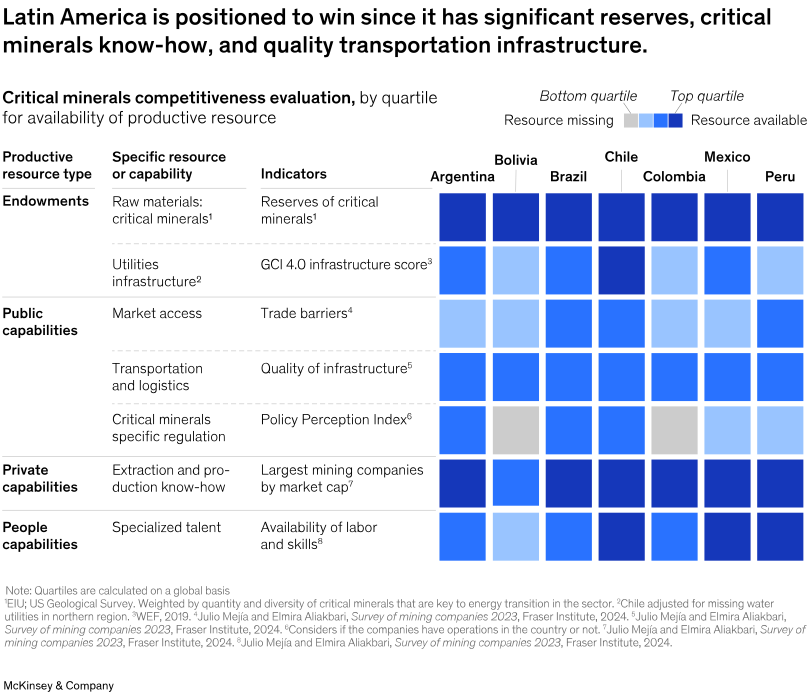
Critical minerals
Increasing critical minerals revenues by an additional $115 billion annually by 2040 would require cumulative investments of up to $495 billion.
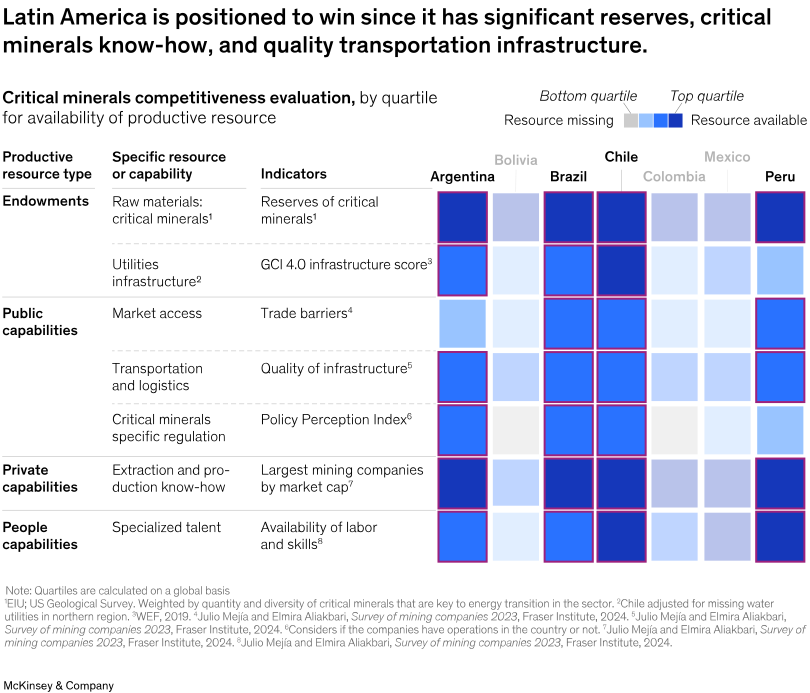
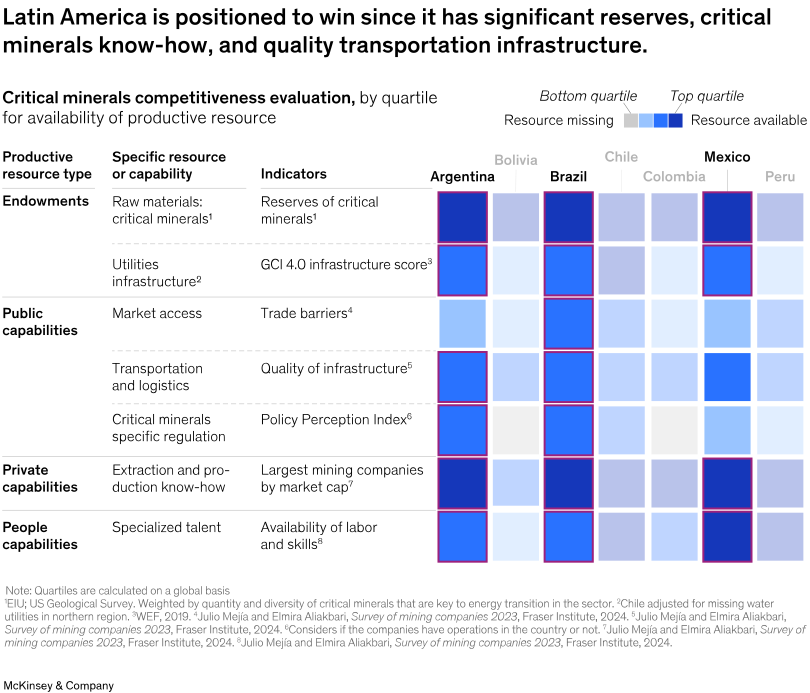
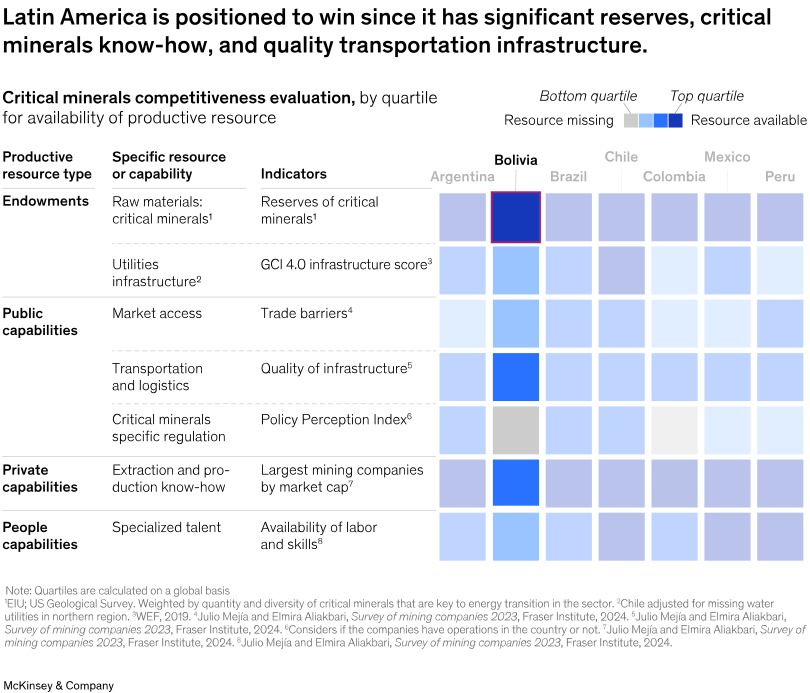
Latin America possesses substantial endowments in critical minerals essential for the global energy transition. Our analysis focused on copper, lithium, and iron ore. The region’s countries hold strategic positions in different segments of the value chain and have robust infrastructure in utilities, transportation, and logistics.
This is a condensed view of our critical minerals competitiveness evaluation. This view does not include the capability indicator for cost of capital. This capability indicator can be found in the heat map for this sector in the full report.
Global champions
Chile
- Copper: Leading the world in production of mined (unprocessed) copper24; third globally in refined copper output25
- Lithium: Home to the world’s largest reserves of lithium that can be economically extracted—estimated at 9.3 million metric tons26; second-largest producer of lithium globally
Argentina
- Lithium: Possessing third-largest global reserves and ranking third in global exports27
Brazil
- Iron ore: Maintaining position as the second-largest exporter of iron ore (after Australia)28
Peru
- Copper: Accounting for 21 percent of global copper ore exports, thanks to the world’s second-largest copper reserves and 29
Promising contenders
Argentina
- Copper: Exploring untapped potential, with roughly 7.5 percent of global copper reserves but low production; extensive mining capabilities in other ores
Mexico
- Copper: Ranking among the top 15 global producers of mined and refined copper; extensive pool of specialized talent
Brazil
- Copper and lithium: Expand production opportunity, thanks to significant reserves and substantial mining capabilities
Emerging frontiers
Bolivia
- Lithium: Qualifying as world’s largest reserves, primarily concentrated in the Salar de Uyuni30; continued efforts at regulatory modernization, international cooperation, and capability building needed to become a regional anchor in the lithium value chain
To capture this potential, countries need to address regulatory constraints and key resources. Water scarcity presents another obstacle for extraction and refining processes.
Further, countries with mining opportunities need to address environmental concerns when updating permitting processes. Strategic investments in regulatory reform, water desalination infrastructure, and advanced extraction technologies could help overcome these barriers and make Latin America the world’s premier supplier of energy transition materials.
Latin America has an opportunity to transform its productivity trajectory. These seven sectors illustrate the potential across the three themes that could leverage similar capabilities. By capturing the total economic potential by 2040, the region could substantially accelerate productivity growth.
Achieving these goals would require targeted action to close capability gaps and address structural barriers. By focusing investment and policies on these areas, the region can build the skills, infrastructure, and institutional capacity needed to accelerate economic growth and create prosperity for its population in the decades ahead.
Strategic accelerators: Unlocking growth in Latin America
The sector-specific opportunities could not only have an outsize impact but also catalyze a virtuous cycle of investment and growth. To execute this strategy, we have identified four strategic accelerators that could enable the region to increase its productivity at an economy-wide level. The first two aim to take advantage of the opportunities from shifting trade patterns; the other two are capability accelerators that could help attract investment and drive productivity growth.
Diversifying and proactively opening new trade corridors
Geopolitical tensions are altering global trade. Since 2017, commerce between geopolitically distant partners has fallen,31 indicating the reconfiguration of trade is underway. To understand the impact of factors such as tariffs and industrial policy on trade, McKinsey research explored three scenarios, developed using the Global Trade Analysis Project. McKinsey Global Institute analysis found that more than 30 percent of global trade in 2035 could swing from one trade corridor to another.32
Latin America could seek to double down on trade by opening and exploring new trade corridors. Each new one could not only create demand for the region’s production but also attract targeted investments and technology partnerships in high-growth sectors. The creation of robust trade corridors with key (and sometimes new) global trading partners would likely depend on strong agreements and cooperative frameworks. In addition, clear and predictable trade policies, together with reciprocal commitments such as local investment in priority sectors, can help strengthen the resilience and adaptability of the region’s trade network.
As noted in chapter 3 of the full report, four strategic sectors rely heavily on external demand beyond the United States: Power-to-X, agri-food, oil and gas, and critical minerals. Expanding and building new interregional corridors, such as to the Middle East, India, and Southeast Asia, could also increase Latin America’s trade with emerging markets, which are expected to see above-average growth and could offer stability amid global uncertainty.33
Enhancing intraregional collaboration and investment
Regional integration in Latin America remains limited relative to other major economic blocs. Its intraregional exports currently make up only about 15 percent of its total exports versus 60 percent for the European Union.34 Gaps in physical connectivity—particularly cross-border road and transport networks—contribute to this dynamic and remain a focus for future development.
Latin America has an opportunity to diversify its trade relations while deepening its regional integration. These twin actions could bolster the region’s resilience and strengthen connectivity among its markets. Progress would require expanding and modernizing regional trade agreements to systematically lower trade barriers, standardizing regulations, and promoting the development of cross-border supply chains and investment flows.
Regional integration can benefit most sectors, but it is essential for next-gen manufacturing. Both intermediate products (minerals, batteries, and car parts) and final products (EVs) rely on a robust supply chain. In addition, intraregional trade of energy and fossil fuels could create more-reliable energy grids.
Streamlining regulatory frameworks in key sectors
A welcoming business environment is essential for sectors where Latin America needs to attract both investment and expertise. The region’s capacity to develop complex industries such as EVs and semiconductors relies heavily on its ability to draw the right companies and technology. This effort will benefit from ongoing collaboration between public and private stakeholders to address administrative and operational bottlenecks. As laid out in the full report, a welcoming business environment created through good governance and successful investment is mutually reinforcing and can get stronger over time.
Initiatives that enhance regulatory clarity, predictability, and efficiency—particularly in priority sectors—could strengthen investor confidence and unlock stalled projects, supporting broader competitiveness across the region. Actions could involve streamlining regulatory processes and making business setup, permits, and dispute resolution more efficient while maintaining transparency and rigor. A successful effort could unlock billions of dollars in stalled projects and increase the region’s competitiveness as a manufacturing hub.
Moreover, establishing the appropriate regulatory environments could accelerate growth in sectors such as critical minerals, oil and gas, and Power-to-X, which require substantial investment and where new projects take considerable time to become operational. Efforts that enhance regulatory clarity, predictability, and efficiency—particularly in priority sectors—could strengthen investor confidence and unlock stalled projects, supporting broader competitiveness across the region.
Upskilling the future workforce
In many regions, the misalignment between educational institutions and the demands of the job market has grown considerably over the past 20 years.35 This situation is particularly relevant in Latin America: For example, 80 percent of companies in Colombia anticipate a shortage of skilled workers by 2027.36 At the same time, 84 percent of employers in Latin America plan to upskill their workforce to meet the demand for digital and tech talent.37
Efforts to strengthen skills and technology adoption would likely hinge on expanding access to high-quality education and targeted training programs. Collaborative initiatives involving government, academia, and the private sector have the potential to accelerate progress, particularly if implemented at scale. Bridging the region’s talent gap would spur growth across the economy, but such efforts would have an outsize impact on certain sectors, such as digital services, data centers, and next-gen manufacturing (semiconductors and EV production).
Over the past 25 years, Latin America’s GDP growth has trailed global averages and primarily been sustained by an expanding labor force. Now, the region must enhance its productivity to meet rising economic and social needs—including education, healthcare, and social security.
Latin America is at a pivotal moment, when strategic actions can significantly reshape its economic future. This report lays out a pathway that could enable the region to increase its GDP from $6.2 trillion in 2023 to between $8.9 trillion and $10.3 trillion by 2040, sufficient to achieve high-income status.38
The region could overcome a challenging macroeconomic context—not through undertaking wholesale change but by focusing on the success of specific sectors with the potential to unleash a new wave of investment and growth in the region. These strategic opportunities, which arise from the match between current and future global trends and the region’s distinctive assets, encompass three broad themes: revitalizing its industrial base, thriving in the digital age, and leveraging its natural resources. Successful efforts could help to extend investment across the region’s economy.
Fully capitalizing on these opportunities requires decisive action. Mobilizing capital, adding new trade corridors, deepening intraregional trade, modernizing regulation, and building human capital could substantially improve Latin America’s resilience and responsiveness to global shifts and close persistent investment and productivity gaps. The result could be a clear path to sustainable growth.
Related Articles