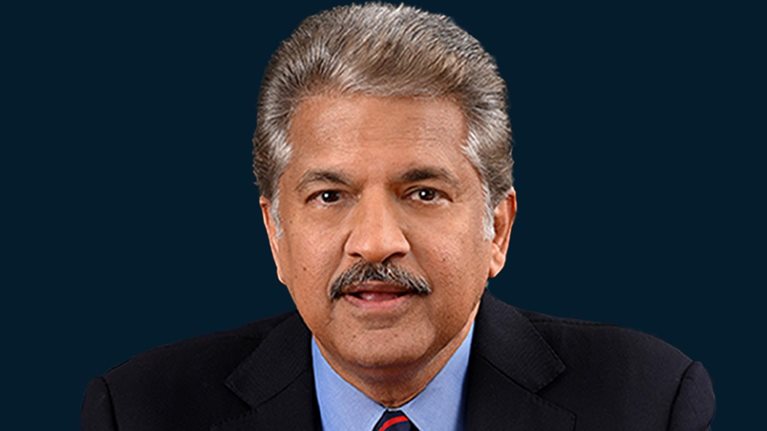
This interview is part of the Leading Asia series, which features in-depth conversations with some of the region’s most value-creating leaders on what it takes to realize bold ambitions and take them further.
Tracing its roots back to the 1830s, Ayala Corporation is one of the Philippines’ oldest and largest conglomerates, led by the Zóbel de Ayala family for nearly two centuries. During his time as chairman of the corporation, Jaime Augusto Zóbel de Ayala has expanded Ayala’s portfolio into real estate, banking, telecommunications, water, power, healthcare, education, and infrastructure, with a focus on sustainability and bringing the broader population into the formal economy.
In this Leading Asia interview, Jaime Augusto Zóbel de Ayala talks with Mukund Sridhar, a senior partner at McKinsey, about guiding the corporation through its transformation while ensuring that it always served all aspects of society.
An edited version of the conversation follows.
Mukund Sridhar: Welcome, Jaime. First, a question on longevity: Ayala is nearly 200 years old, led by seven generations. Reflecting on this, what has been the “secret sauce” behind the longevity and preeminence of the institution?
Jaime Augusto Zóbel de Ayala: A key factor has been staying relevant to the country’s changing nature and economy. I used to wonder why we were called Ayala Corporation, as the word “corporation” is a generic term, but I came to understand that it originated from our transition from a family partnership to a limited liability corporation so we could modernize and access capital markets.
During my leadership, I realized that Ayala needed to reach a broader segment of our population economically. Historically, most Filipinos were unbanked and couldn’t afford our products and services. To grow and stay relevant, we had to change our business models to address their needs.
This was reinforced when I returned to the Harvard Business School and was in a classroom discussion with Professor Kash Rangan, who spoke about doing business at the bottom of the economic pyramid. Many classmates were skeptical, but I saw the potential to build business cases relevant to the Philippines’ consumer structure and development.
This led us to develop business models that addressed a broader market, such as the first mobile prepaid models and the privatization of a public utility, addressing customer needs and economic pain points at every level. We think that adopting a long-term perspective that incorporates shared value creation for communities at large is a more sustainable way of doing business.
Finally, Ayala thrives because of purpose-driven, disciplined investment activities. We look for industries strategic to the economy’s growth that build on our ability to access cost-effective capital and talent. We further look to build a long-term sustainability agenda, including greenhouse gas emissions, human rights, and good governance.
Mukund Sridhar: That is very powerful. What I picked up was staying relevant at all times, adapting to the changing national economy and needs, while being fully committed and aligned to the country.
Jaime Augusto Zóbel de Ayala: That’s key. You cannot claim to be a progressive institution if you don’t contribute to bringing a larger percentage of the population into the formal economic system. This has required major shifts in our economic models over the years. For instance, with Bank of the Philippine Islands, we sought to expand our business model to allocate more capital to microfinance opportunities for lower-income customers.
Across the group, the same logic applied. With Ayala Land’s affordable housing brands, we built dedicated leadership teams for new business segments at different economic price points.
Globe Telecom, our telecommunications arm, initially served a postpaid premium market, and we ended up with significant credit problems. When technology allowed us to introduce a prepaid product, it widened the community’s access to telecommunications services, while lowering credit risk.
The water distribution business, given our engagement in the public utility, Manila Water, was similar. We redesigned our model to a community billing one, where we worked with community leaders to encourage everyone to make timely payments as a community group. Costs dropped dramatically.
Mukund Sridhar: I can strongly feel your mission orientation. How do you imbue the Ayala mission into your leaders?
Jaime Augusto Zóbel de Ayala: Our leaders need to understand the people-centric, aspiration- and problem-focused approach that has been our core mission for over 190 years. Over time, I have seen that leaders who thrive in Ayala are those who combine professional ambition with a sense of national purpose. They have to understand that our relevance as a company depends on reaching the broadest part of society. They must be comfortable working across very different communities and designing models that respond to real needs.
I find that younger generations come into the workforce with a desire to make a difference, which aligns with how Ayala defines its purpose. If we can continue attracting leaders with that mindset, Ayala will remain relevant for many years to come.
Mukund Sridhar: Building on that, how do you contrast bold ambition and big bets you have taken with your views on risk taking? Many CEOs we’ve interviewed appear externally to be aggressive risk-takers, but in their own minds they believe they have been mitigating risk at every step. I’d love to hear your perspective.
Jaime Augusto Zóbel de Ayala: I haven’t always gotten it right. When the 2008 financial crisis happened, I was not as bold as I should have been; we strengthened our balance sheet and were conservative. We missed opportunities, but we also lived to see another day.
I like to think Ayala does well in difficult times because we keep one eye on the impact market volatility can have on the business and balance sheet. Our careful approach has allowed us to reinvent businesses, leverage partnerships, and create lasting impact.
Where we have been more aggressive is in our ability to reinvent ourselves. We’ve consistently analyzed industries, spotted opportunities, and allocated the right resources and people to execute over the medium to long term. This allowed us to enter the energy sector with no prior background, the water public utility space, and telecommunications, where we had zero experience.
Mukund Sridhar: One last theme: How do you maintain your personal energy and drive?
Jaime Augusto Zóbel de Ayala: My energy comes from a combination of upbringing, disciplined work ethic, intellectual curiosity, the desire to create supportive partnerships, and personal practices that restore balance and focus.
My parents valued the long-term contributions of a family-led business and its role in serving society, combined with formal education and a focus on resilience. My brother and I took summer jobs to complement our academic studies, which instilled a sense of accountability and a purposeful work ethic. My father supported my studying abroad, asking only that I spend three years back in the Philippines after my studies to apply what I’d learned.
My executive team members at Ayala have been important generators of ideas, problem solvers, and execution partners. On a personal level, my wife has been supportive and an intellectual partner. I stay intellectually curious, read widely and thoughtfully, and engage with forums and academic circles.
I have found ways to manage stress by learning to isolate situations, remain calm, and prevent emotions from overriding judgment. I like the calming effect on my mental health provided by adventure motorcycling, which demands full focus on the present while challenging me physically.
Throughout it all, the sense of legacy has been a driver. Ayala is part of my identity, and contributing to an institution with real societal impact gives me purpose.