Over the past two years, healthcare leaders have shifted from questioning whether and where gen AI is relevant to focusing on how it can be used responsibly and at scale. Our latest survey of US healthcare leaders highlights several signals of gen AI’s maturation: Half of leaders report that their organizations have already implemented gen AI, more than 80 percent have deployed their first use cases to end users, and while AI safety risks remain top of mind, implementation barriers are now equally urgent (see sidebar, “Research methodology”).
Notably, half of respondents say their organizations deployed their first use cases more than six months ago. This cadence reflects increased confidence in both organizational capabilities and operational readiness, suggesting that healthcare organizations no longer view gen AI as experimental but increasingly as a core competency.
At the same time, the challenges that healthcare leaders face are evolving. Longstanding concerns around trust, safety, and governance now sit alongside the operational realities of integration. Against this backdrop, emerging interest in agentic AI points to the next stage of maturity—one in which organizations move from using gen AI to create content and support individual tasks to using agentic AI to take action and coordinate more complex processes end to end.
Advancing from proof of concept to deployment
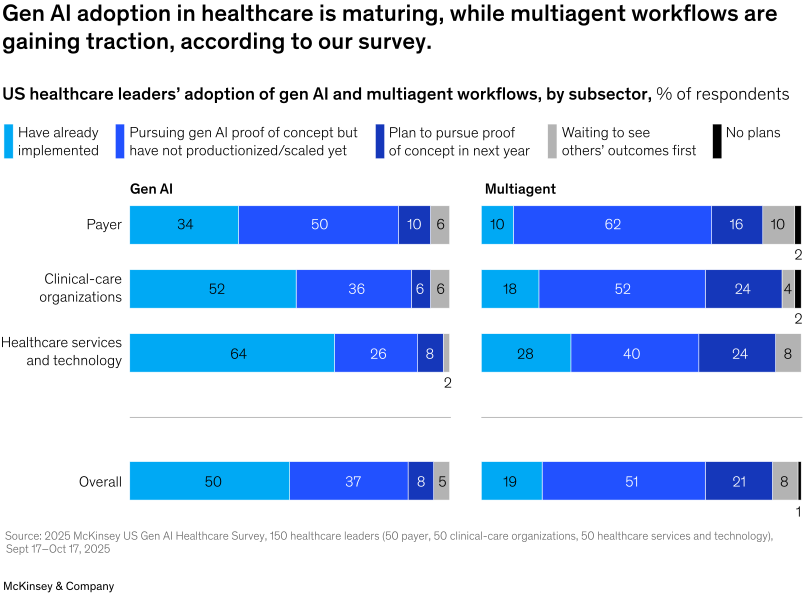
Our fourth quarter 2025 survey marked the first of our surveys in which the share of respondents reporting gen AI implementation at their organizations reached 50 percent. In the fourth quarter 2024 and fourth quarter 2023 surveys, 47 and 25 percent of respondents, respectively, said their organizations had implemented gen AI. This milestone signifies continued progression from proofs of concept to gen AI deployment. Another sign of this growing momentum is that for the first time, all respondents say they have at least some plans to pursue gen AI, indicating a decrease in organizational hesitation to use the technology.
Agentic AI is also drawing broad interest, despite its recency. Consistent with its status as an emerging AI capability, agentic AI lags behind gen AI in implementation, with 19 percent of respondents reporting that their organizations have reached that level of maturity. However, an additional 51 percent of respondents report that their organizations are pursuing agentic AI proofs of concept, and just 1 percent say their organizations have no plans to pursue AI agents.
Adoption rates vary across subsectors. Healthcare services and technology (HST) firms lead the way in implementation, while payers report implementation below 50 percent, according to our survey. The same subsector leadership pattern for implementation holds for multiagent systems, with a general lag in maturity across all subsectors compared with gen AI.
Areas of highest potential
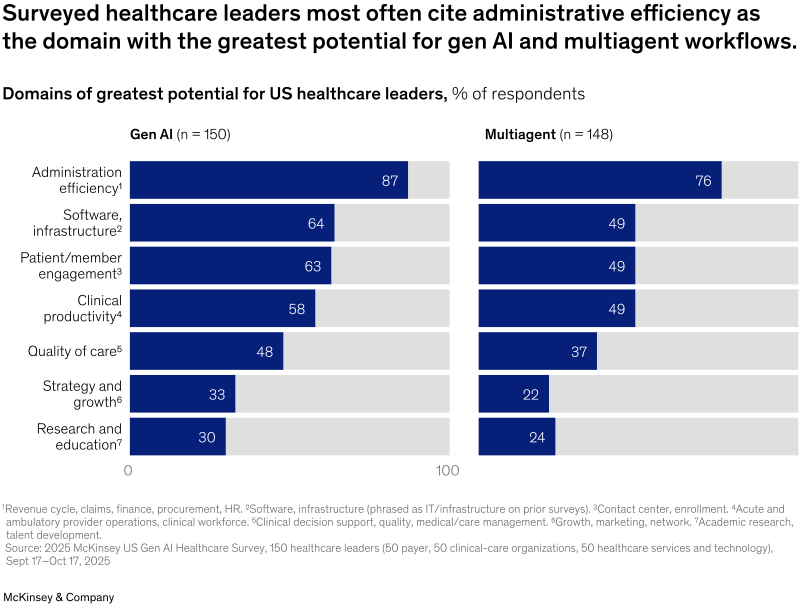
Survey respondents most frequently cite administrative efficiency as the domain with the greatest potential for both gen AI and multiagent workflows. For gen AI potential, software and infrastructure, patient or member engagement, and clinical productivity also rank prominently (each above a 50 percent response rate), but all three fall short of that level for multiagent workflows.
Where gen AI is being implemented
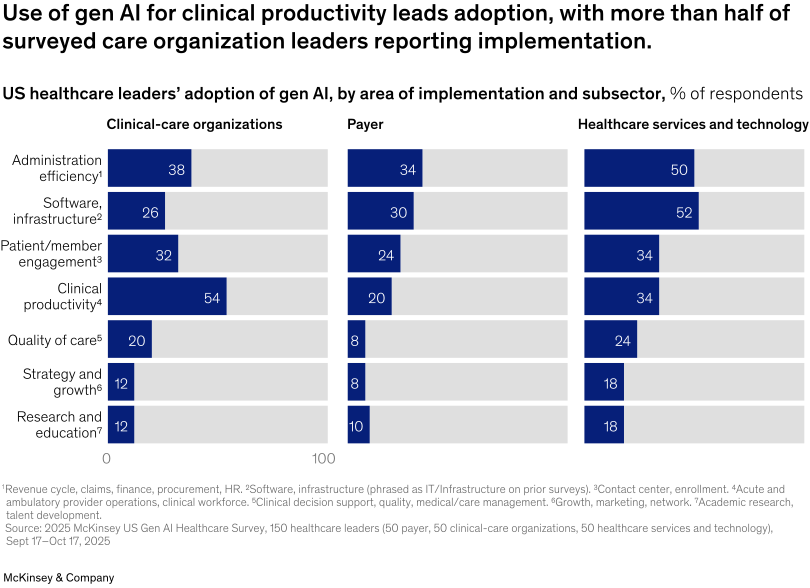
While administrative efficiency is the most frequently cited area of potential, a sector-level view of implementation indicates that clinical-care organizations are moving beyond using gen AI mostly for administrative tasks. Fifty-four percent of respondents from care organizations report that their organizations have already implemented gen AI for clinical productivity, making it the most widely adopted domain across subsectors. In contrast, several domains with high perceived potential—particularly software and infrastructure and patient or member engagement—appear less widely implemented, indicating a gap where organizations could focus next.
How multiagent systems are being used
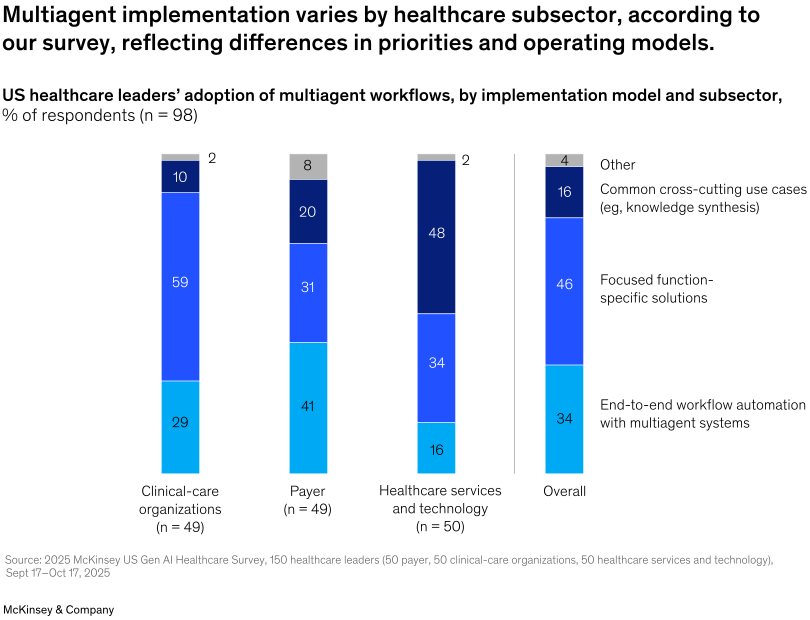
Multiagent implementation also varies by subsector. Respondents from care organizations more often report using function-specific solutions, payers say their organizations target end-to-end workflow automation, and HST leaders focus on cross-cutting use cases. These patterns may reflect underlying differences in priorities and operating models for each subsector. Care organizations may gravitate toward function-specific solutions suited to specialized clinical workflows, while payers may pursue end-to-end automation to improve efficiency across standardized processes, according to our experience. HST firms may focus on cross-cutting use cases that can be reused and scaled across various customers.
Focusing on a domain (that is, the workflow end to end) is critical. McKinsey research across industries finds that high performers in generative and agentic AI pursue a domain-based end-to-end workflow approach, using the unique properties of AI agents to unlock greater value than cross-cutting or function-specific use cases.
Barriers to scaling
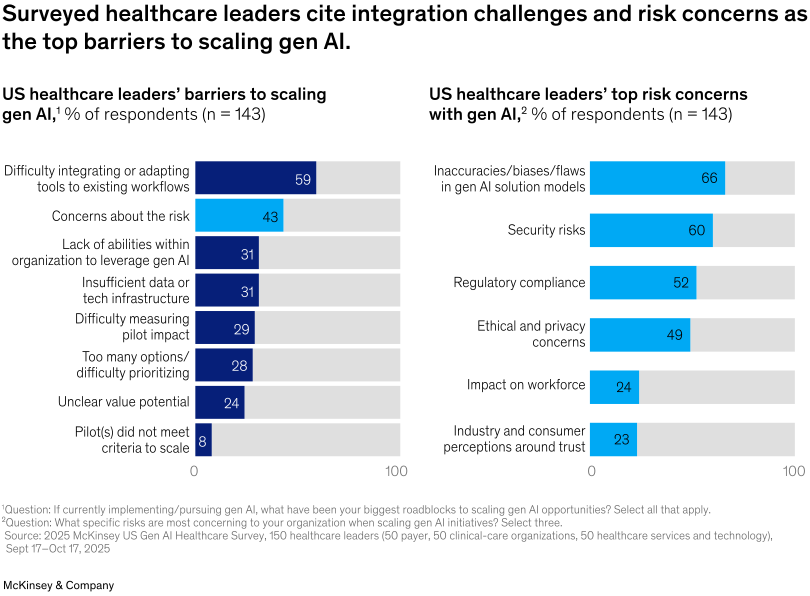
As observed in prior surveys, healthcare leaders take risk and safety seriously when scaling gen AI solutions, with 43 percent of respondents reporting it as a roadblock to implementation. Among specific risks, respondents most frequently cite inaccuracies or biases, security risks, and regulatory compliance among their top three concerns. Many leaders also point to ethical and privacy concerns.
Operational barriers are now also top of mind, with integration challenges and a lack of internal capabilities ranking as the first- and third-most-cited barriers to scaling gen AI, respectively. This may reflect increasing organizational maturity in AI use: As organizations move beyond the planning and proof-of-concept stages, the primary challenge shifts from risk concerns to embedding gen AI into complex, legacy healthcare systems, where orchestration and workflow redesign become the primary constraints.
ROI expectations
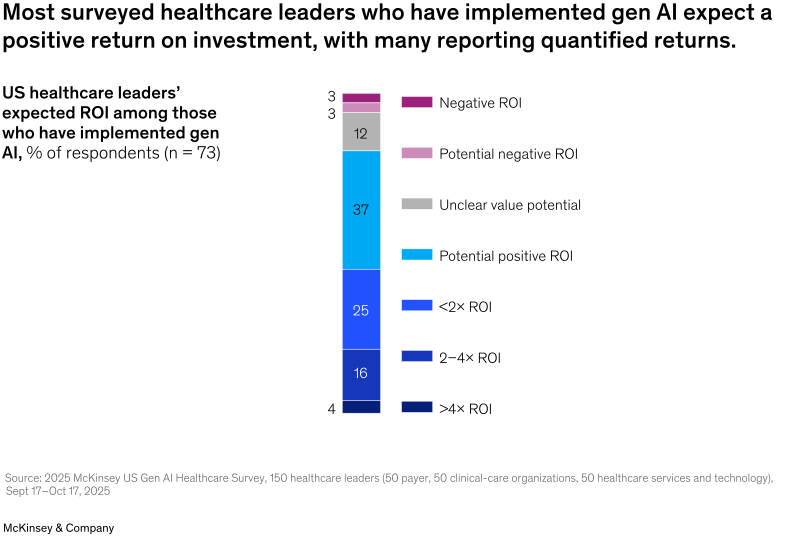
While many industries are concerned about the return on their gen AI investments, our surveys consistently show that most healthcare leaders expect a positive ROI on their organizations’ use of gen AI. In fact, the latest survey shows not only the highest overall proportion of leaders expecting a positive return (82 percent), but also the highest share of leaders quantifying that positive return (45 percent) since the survey began. Respondents who report quantified returns say ROI levels primarily range from less than two times to four times the initial investment.
Operating models and partnerships
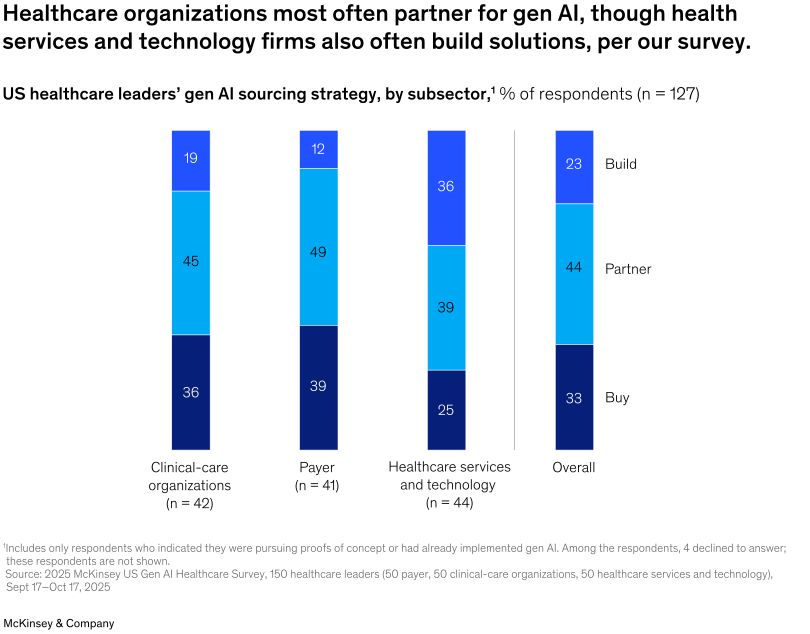
While partnering with third-party vendors to develop gen AI solutions continues to be the prevalent strategy for healthcare organizations overall and across subsectors, according to our survey, a larger proportion of HST leaders (36 percent) report a willingness to build in-house solutions compared with leaders from care organizations (19 percent) and payer organizations (12 percent). This may reflect greater implementation maturity among HST firms or a greater willingness to explore unique service offerings. Conversely, leaders from care organizations (36 percent) and payer organizations (39 percent) report that their organizations are considering off-the-shelf solutions. This may indicate a desire to incorporate AI tools quickly or more limited access to the internal capabilities required to build.
The proportion of those buying gen AI solutions has increased over the past year. In the fourth quarter 2025 survey, 33 percent of respondents who say their organizations are at least pursuing gen AI proofs of concept reported a buy strategy compared with 19 percent in the fourth quarter 2024 survey.
Taken together, our latest survey findings suggest that healthcare could be entering a more consequential phase of AI adoption—one defined less by novelty and more by discipline. As organizations continue to implement gen AI at scale, competitive advantage will increasingly hinge on how well they integrate AI into core workflows, measure and capture value, and manage residual risks as applications expand in scope and autonomy. The growing interest in agentic AI underscores this shift: Moving from isolated applications to orchestrated systems will raise the stakes for design, governance, and execution.
For healthcare leaders, the challenge ahead is not simply to adopt AI faster but to build the organizational capabilities required to sustain and scale it. Those that do will be better positioned to translate technological progress into lasting operational and clinical impact.