AI has reached the nursing floor—but mostly as an add-on, not a disruptor. Despite growing use, so far it has left the fundamentals of care delivery largely unchanged. As in our earlier research, nurses continue to express strong belief in AI’s potential, but this conviction has not translated into widespread use. Our latest survey insights from more than 500 US nurses suggest the real transformation will come not from simply deploying more AI tools but from clinical-care organizations redesigning how nursing work actually gets done, end to end (see sidebar, “Research methodology”).
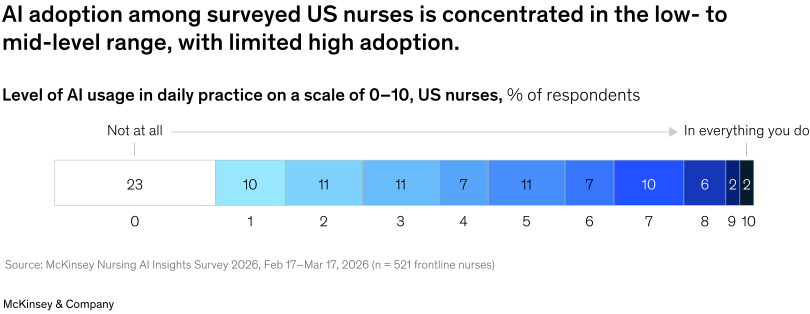
Clinical-care organizations across the United States have turned to AI as a potential solution to a familiar set of challenges: persistent workforce shortages, rising patient acuity and demand, and growing administrative burden. AI is beginning to take hold: Nearly 65 percent of surveyed nurses report using more AI tools today than a year ago, signaling strong momentum. Yet adoption remains uneven: 23 percent of nurses report no use, and only about 2 percent say AI is embedded in everything they do. The care setting also shapes adoption intensity. A higher proportion of nurse respondents from physician practices are superusers1 (21 percent) compared with those in acute care hospitals (5 percent). This suggests that certain workflows, technology investments, or organizational structures may be more conducive to AI integration and that broader adoption depends on system-level enablement and workflow integration, not individual initiative alone.
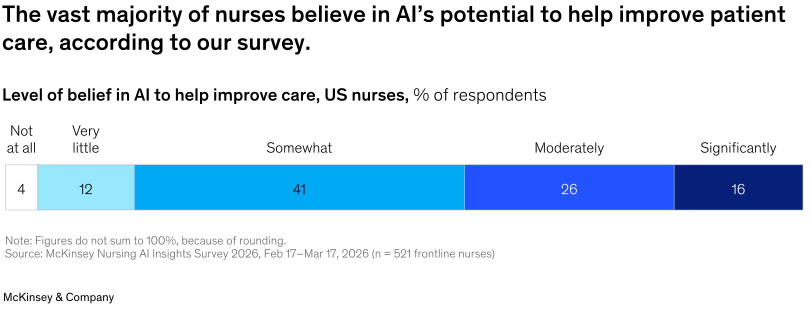
However, belief in AI’s potential is widespread. More than 80 percent say AI can help improve patient care at least somewhat, including 16 percent who believe it can do so significantly. The gap between belief and adoption underscores a broader opportunity: not simply to deploy AI but to reimagine how frontline nursing work is designed and delivered. If done well, AI could help enhance the nursing experience and strengthen nurses’ ability to deliver high-quality patient care.
AI adoption is broad but fragmented
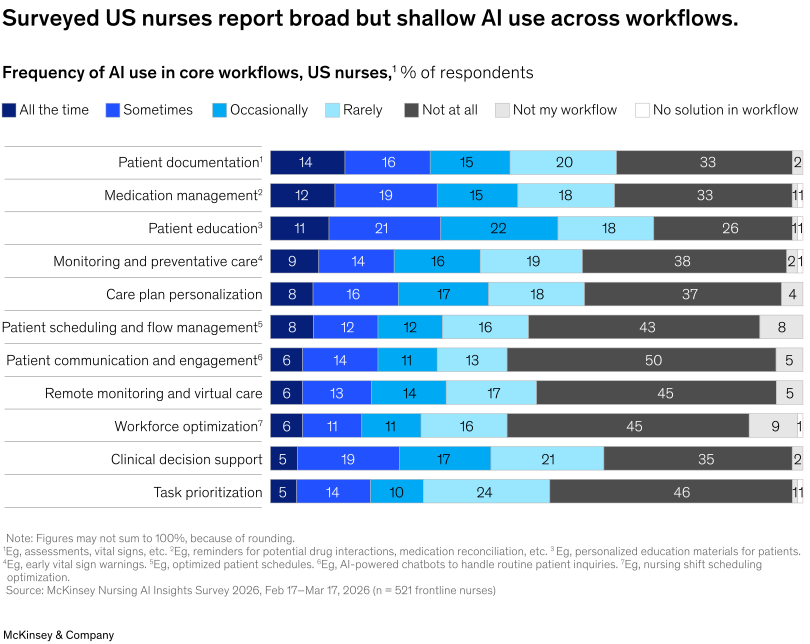
Survey responses reveal that AI usage is not confined to a small group of enthusiastic adopters. Instead, usage is distributed across the workforce but typically at low to moderate levels (Exhibit 1). More than three quarters of nurse respondents say they use AI in their daily work but at various levels of adoption. Only a small minority, roughly 10 percent, are superusers.
Despite limited depth of use, nurses say they believe in AI’s potential to help improve patient care (Exhibit 2). This suggests that the primary constraint is not nurses’ willingness but likely that clinical-care organizations are yet to sufficiently embed AI to fundamentally transform workflows.
Trust, not awareness, is the primary barrier
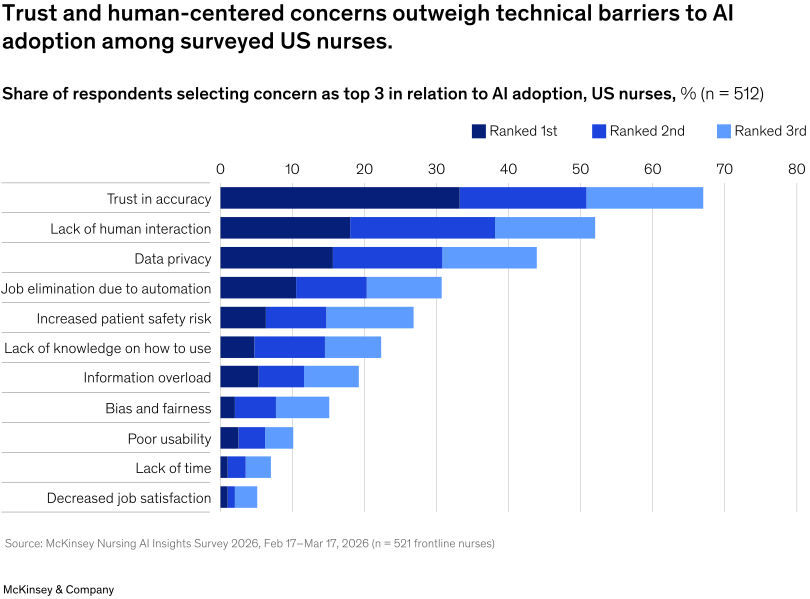
Contrary to common assumptions, lack of awareness or training is not the dominant barrier to AI adoption among US nurses, according to our survey. In fact, lack of knowledge has dropped from the third-most-cited top three concern (36 percent) in our 2024 survey to the sixth-most-cited (22 percent) in our 2026 survey. Instead, the most frequently cited concerns in the 2026 survey are trust in the accuracy of AI outputs (33 percent), followed by lack of human interaction (18 percent) and data privacy (16 percent) (Exhibit 3).
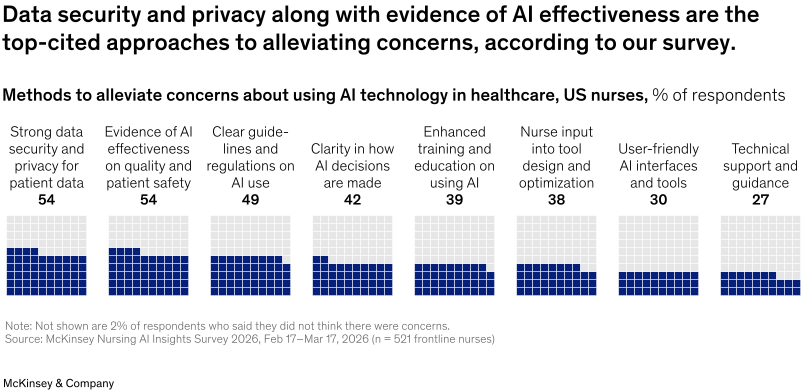
Addressing these concerns will likely require more than training. It will also involve evidence of safety and effectiveness in real-world settings, clear governance to define accountability and oversight, transparent explanations on how AI tools function and generate outputs, and thoughtful integration to ensure alignment with patient-centered workflows (Exhibit 4).
AI must evolve from task automation to role redesign
Adoption today remains concentrated in workflows such as documentation and medication management (Exhibit 5). These workflows are highly structured and repeatable, which makes them a natural application for AI workflow integration.
More complex, system-dependent, and patient-facing applications, including scheduling, workforce optimization, and patient engagement, lag behind. These areas face tougher challenges in terms of interoperability, trust, and workflow design; each application requires substantial change and risk management that make progress inherently difficult. These areas point to where true role evolution and the next wave of value will need to emerge.
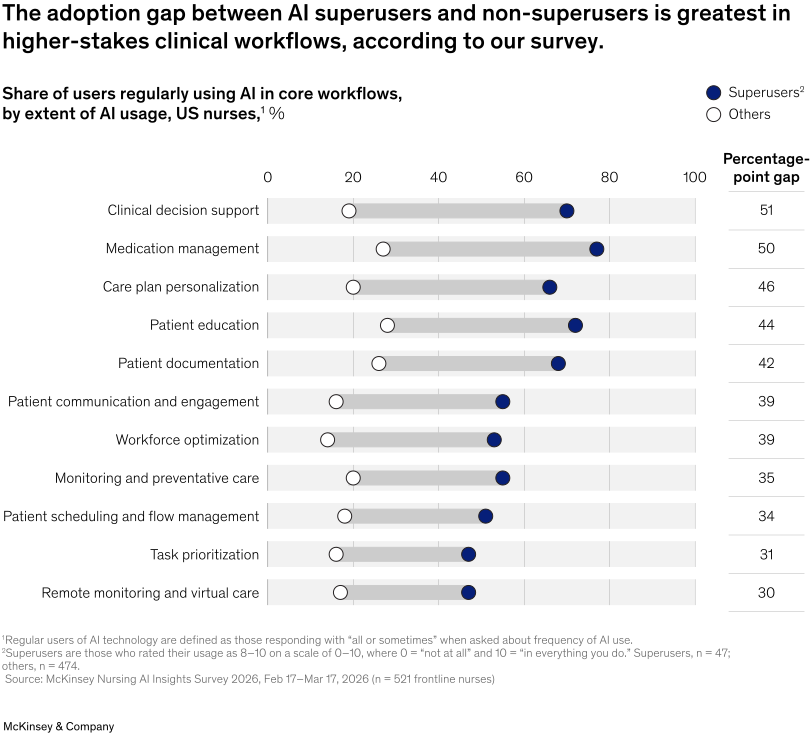
However, adoption patterns diverge sharply when comparing AI superusers with others in our survey (Exhibit 6). Superusers lean more heavily into high-stakes workflows, such as medication management and clinical-decision support, compared with their counterparts (77 versus 27 percent and 70 versus 20 percent, respectively). This divergence suggests that while many nurses are experimenting with AI, a smaller group is beginning to integrate it into higher-value, decision-intensive activities.
Taken together, these findings reinforce a familiar reality in healthcare: Technology adoption alone rarely delivers impact. Full value is typically realized when workflows are reimagined around new technologies. This is true of AI in the nursing workflow, as well. The real opportunity lies in reconfiguring how work is distributed across nurses, broader care teams, and digital tools—with changes aligned to clinical practice and supported by training. Realizing this potential will require that clinical-care organizations move beyond point solutions and toward system-level redesign of roles and workflows.
Done well, AI has the potential to enable nurses to spend less time on administrative work, focus more on clinical judgment and patient interaction, and practice more consistently at the top of their license. Mercy Health implemented AI-enabled nursing workflows to streamline care coordination, rethinking how work occurs across teams and care settings.2 It reduced nurses’ documentation time for end-of-shift notes by 83 percent by deploying a gen AI care plan in partnership with Epic; implementation was led by frontline nurses and achieved 85 percent adoption systemwide within 30 days.
How to reimagine frontline nursing with AI at the core
Clinical-care organizations should not treat AI implementation and adoption as a stand-alone initiative. Rather, it should be approached as part of a larger opportunity to redesign frontline care delivery.
The rewired approach to digital transformation focuses on three areas of enterprise capabilities: value alignment, delivery, and change management. It offers a practical lens for how clinical-care organizations can unlock value from AI for their organizations, including within nursing.
Align value by reallocating work across roles and technologies
Clinical-care organizations can redesign workflows end to end to shift away from using point solutions at the task level. Reimagining the nursing workflow requires alignment among senior leadership, including chief nursing officers, on a clear transformation mission and strategy. With that alignment in place, organizations can then translate strategy into action by reassessing how work is performed at the task level. That starts by clearly defining patient care needs and delineating what nurses—and only nurses—can do, what other members of the care team could support, and what AI or other digital tools and enablers can help improve.
For example, organizations could continue to rely on nurses’ experience for hands-on assessments, their clinical judgment for decision-making, and their ability to build relationships with patients. AI could support nurses by identifying early clinical warning signs in patients, surfacing relevant patient history and medical information, and enabling more personalized, responsive interactions that strengthen patient trust. Stanford Hospital reports using AI as a real-time connective layer that predicts patient risks and prompts earlier, coordinated nurse–physician patient interventions to improve outcomes.3 Nurses receive AI-generated risk-score alerts directly within the hospital’s existing electronic health record (EHR) system, which automatically pulls patient data every 15 minutes and pushes notifications to the care team. Another example is HCA Healthcare, where AI-enabled nurse scheduling automates staffing decisions to save administrative time, better match skills to patient needs, and free nurse leaders to focus on supporting staff and improving care quality.4
Enhance delivery capabilities through governance and frontline staff input
Successfully embedding AI into a new operating model hinges on clinical-care organizations establishing robust governance to bolster trust and address privacy concerns. Clear accountability and safeguards can help alleviate skepticism and build confidence in AI-enabled care delivery. Additionally, engaging frontline staff directly in the design, selection, and refinement of AI tools to ensure relevance and usability is key to achieving meaningful adoption and impact. Mayo Clinic implemented a strategic generative AI framework, with human-in-the-loop oversight, nursing leadership approval, and “for nurses, by nurses” principles while embedding its Nurse Virtual Assistant directly into the EHR to consolidate patient data and streamline clinical workflows.5
Ensure change resiliency by nurturing AI fluency among the nursing workforce
While awareness is high, deeper capability building is needed to support advanced and clinical applications. Mayo Clinic is also training and engaging nurses in generative AI deployment, building workforce capability through hands-on use of tools like AI messaging and virtual assistants.6
Adoption is not yet transformative
AI is no longer a hypothetical part of nursing work. Consistent with prior findings, the majority of the workforce is already using AI, and adoption is growing. However, fragmentation, variability, and limited depth often characterize the current state of AI in nursing. The next phase of implementation will not be defined by the introduction of new tools but by the ability of clinical-care organizations to translate momentum into meaningful redesign of frontline care.
Organizations that succeed will be those that reimagine how nursing work is structured, supported, and delivered in the AI age. The future of AI in nursing is not just about algorithms; it is about building a care model that fully enables the people at its center.