From levers to systems: The new grocery advantage
North American grocery entered 2026 with a stable top line and a more demanding model underneath. The US grocery sector grew in 2025, but growth was not volume-led. Grocery sales increased 1.2 percent, driven by price increases of 2.2 percent, while volume declined 1.0 percent.1 The market grew in dollars, but shoppers bought fewer units.
That leaves grocers at a more difficult starting point. Food remains expensive for households, and consumers continue to actively manage their spending. They are shopping more frequently, reducing impulse purchases and basket size, comparing prices, using promotions, buying more private brands, and making deliberate trade-offs across brands, pack sizes, categories, and retailers.
Capital markets are reflecting this shift. While grocery remains resilient, resilience is not being rewarded equally. According to the McKinsey Value Intelligence Platform, in 2025, the grocery sector delivered a 12.2 percent weighted average TSR, below the broader S&P 500’s 18.3 percent. Within grocery, performance has varied sharply by format: Traditional formats, which hold the largest share at 43 percent, gained 1.9 percentage points since 2023, while mass formats (a 28 percent share) saw the largest decline, falling 2.2 percentage points. Meanwhile, warehouse and club remained stable at a 13 percent share, and discount and specialty formats each saw modest growth to reach 7 percent and 6 percent, respectively. It seems clear the market is not rewarding grocery as a category but models with sharper positioning, stronger economics, and more-credible paths to growth.
At the same time, competition is becoming more mission-based. Consumers are no longer shopping one way for all needs but splitting trips across value stock-ups, fresh and prepared-food occasions, convenience-led delivery, wellness-driven baskets, and fill-in missions. National players continue to benefit from scale, value, innovation, and digital capabilities, while regional players remain powerful where they have distinctive fresh, prepared, and in-store propositions.
Winning requires a differentiated offering. Most grocers have some version of strong prices, a loyalty program, private brands, fresh departments, e-commerce, retail media, or AI. The critical issue is whether these pieces work together in a way that customers can feel and the business can afford.
That represents the central shift in North American grocery: Advantage is moving from individual levers to connected systems. Value now depends on the connection between pricing, key value items, promotions, loyalty, personalization, and private brands. Store differentiation depends on the connection between fresh, prepared foods, labor, digital tools, and consistent execution. E-commerce depends on the connection between customer missions, fulfillment models, service tiers, loyalty, and profitability. Retail media depends on the connection between data, measurement, supplier planning, in-store attention, and AI-enabled discovery. AI depends on the connection between data, workflows, customer trust, and decisions that change outcomes.
To better understand these shifts, we drew on a broad range of research and market analysis. We surveyed nearly 5,000 grocery shoppers and more than 40 grocery executives across the United States and Canada. We also analyzed consumer, market, and capital-market data, as well as public company disclosures and industry developments across the sector.
This report details the seven themes reshaping North American grocery:
- Value remains the central battleground.
- Private brands are entering a new phase of growth.
- Fresh is changing how stores operate.
- Wellness is reshaping the grocery basket.
- E-commerce is being reshaped by delivery and the quest for profitability.
- Retail media is changing how grocers make money.
- AI is set to shape how grocery is shopped and operated.
While each of these themes matters on its own, the bigger story is how they come together. The grocers that win will not be those simply pulling more levers but those assembling the right levers into systems that are harder to copy.
The mandate is simple: Do not manage these shifts as disconnected initiatives. Build the system. That is the new grocery advantage.
Key themes
Value remains the central battleground
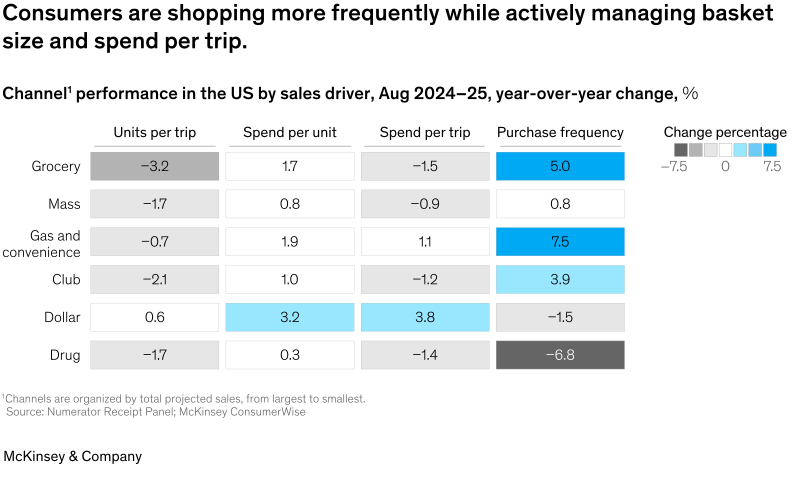
Value has always mattered in grocery, but what’s changing is how it operates. What was once delivered through discrete tools such as price cuts, promotions, or loyalty points is now being reassembled into a more integrated value system that connects pricing, promotions, and loyalty into a single customer experience. At the same time, consumer behavior has shifted from episodic responses to inflation toward more-persistent patterns of basket management and mission-based shopping. Shoppers no longer simply react to higher prices but are actively reshaping how, how often, and where they shop. This shift is beginning to appear in how grocery growth is generated. Growth is being driven more by purchase frequency—which increased by 5 percent year over year from August 2024 to August 2025—than by basket expansion, reflecting a move toward smaller, more frequent, and more mission-based shopping patterns.
Value is becoming more deliberate, targeted, and experiential
Discrete responses to inflation have evolved into shoppers increasingly making deliberate trade-offs in both what they buy and how they shop, reshaping how demand is distributed across trips and formats. More than half report reducing impulse purchases (51 percent), while many are trading into private label (47 percent), relying more on promotions (43 percent), or comparing prices more carefully (43 percent). Others are delaying purchases (35 percent), buying in bulk (34 percent), or trading down on fresh and premium items (22 percent).2 These behaviors are translating into a measurable shift in growth drivers as increased shopping frequency offsets declines in basket size (Exhibit 1). Channel performance further reflects this shift, with formats such as gas and convenience and club benefiting from more mission-based shopping patterns.
Consumers are placing greater emphasis on simplicity and consistency
Getting good value has become more important for 60 percent of consumers, while 71 percent prefer lower,3 more consistent everyday pricing over frequent promotions with higher base prices. This reflects a shift in how value is evaluated: Consumers are not rejecting savings, but they are moving away from complexity and variability toward simpler, more transparent pricing anchored in consistent pricing and clearer value communication.
Retailers are becoming more deliberate about where they invest on price
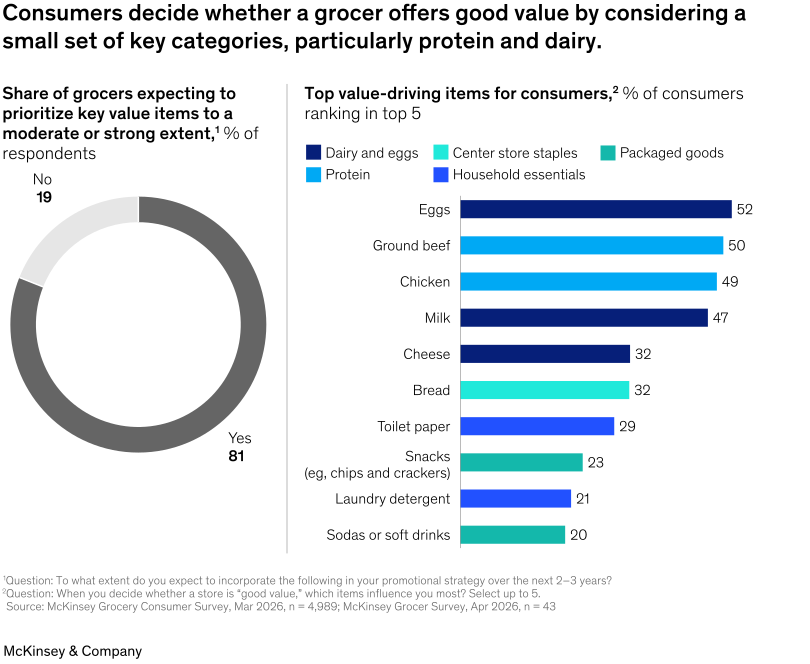
A small set of products—particularly protein and dairy items—have become increasingly influential in determining whether consumers believe a retailer offers good value (Exhibit 2). Grocers similarly expect to prioritize these key value-driving items in their pricing and promotional strategies. This reflects a more structured approach to value delivery: Rather than spreading price investment broadly across the assortment, retailers are increasingly focusing on a defined set of high-visibility items that shape overall price perception. Recent retailer actions reinforce this shift toward more targeted value investment. For example, Kroger has lowered prices on more than 3,500 items while simplifying promotions,4 and Target has focused recent price reductions on everyday essentials.5
Promotions are being rebuilt as a targeted, data-driven system rather than a series of events
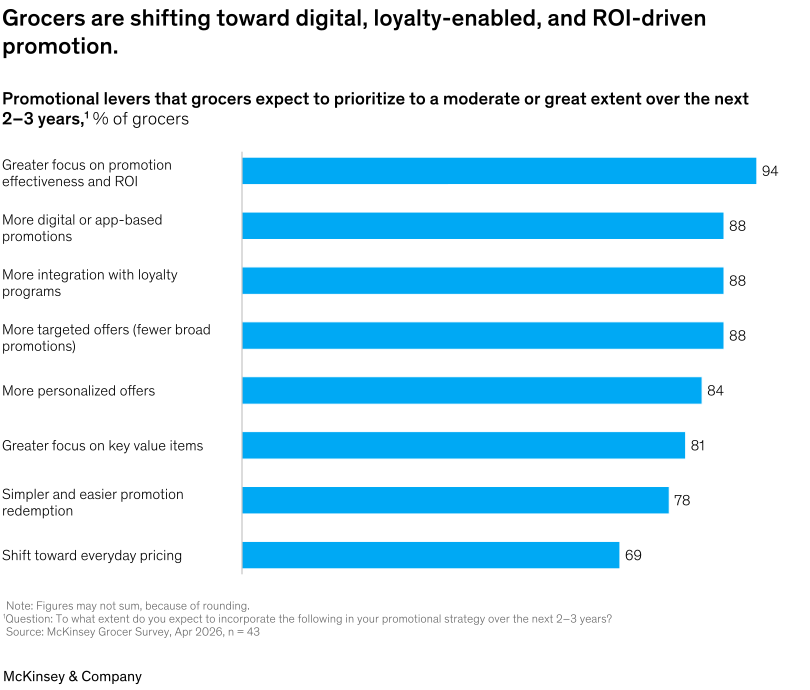
While grocers report 35 percent of promotions today are fully personalized, they expect that number to jump to 55 percent in two to three years.6 This marks a significant shift toward more-digital, loyalty-enabled, and targeted promotions, with greater emphasis on ROI, personalization, and integration with loyalty programs (Exhibit 3). It also means traditional, broad-based promotional calendars will become a more continuous, data-driven model of value delivery. The implication is that promotions are no longer a standalone tactic but part of a system designed to deliver targeted value with greater precision and economic discipline.
Loyalty is becoming the economic engine underpinning this value system
Loyalty members who redeem personalized offers generate significantly higher customer lifetime value, spending 4.3 times more annually than those who do not.7 Recognizing this impact, more than 80 percent of grocers view loyalty programs as a primary engine of value delivery.8 This reflects a shift from loyalty as an engagement tool to loyalty as a core driver of economic performance, linking personalization, promotions, and customer behavior into a single system. As a result, the ability to leverage data and drive targeted engagement is becoming a key source of competitive advantage in how value is delivered and captured.
Key takeaways
Value is becoming a system, not a lever. These shifts point to a structural redefinition of value and how competition is won, with consumers continuously managing their baskets and balancing trade-offs across price, quality, and convenience. In response, grocers are moving toward more-integrated approaches that connect pricing, promotions, loyalty, and experience. As value becomes more system-driven, advantage is shifting. It will depend less on individual levers such as price or promotions and more on how effectively retailers align these elements into a coherent, customer-centric model that reflects how consumers actually shop.
Private brands are entering a new phase of growth
For years, private label followed a familiar pattern: It gained share when consumers traded down and stabilized when pressure eased. Price gaps were the primary driver, and success depended largely on value perception.
That pattern is evolving. Even as inflation has moderated from recent highs, private label continues to grow significantly faster than national brands—by roughly three times last year.9 Consumers are no longer choosing private brands solely because of price but increasingly because they view them as credible alternatives to national brands on quality, innovation, and product experience. As trust in private brands grows, retailers are investing more heavily in differentiated assortments, premium tiers, product innovation, and sourcing capabilities. Together, these shifts are creating a reinforcing cycle: Stronger consumer acceptance is driving greater retailer investment, which in turn is improving private brand quality, differentiation, and penetration growth.
Consumers increasingly choose private brands for quality, not just price
Private label is increasingly competing on quality and differentiation. Around 85 percent of consumers believe private label products match or exceed national brands in quality, and about 69 percent say leading retailers offer private label products they cannot find elsewhere.10 This reflects a shift in how consumers engage with private label. Rather than being a compromise, it is increasingly a viable—and sometimes preferred—choice, judged not only on price but also what it offers. In fact, 69 percent of consumers say private brands innovate as much as national brands, and 10 percent say they innovate more.11 As trust in private brands continues to grow, consumers are increasingly expecting to purchase more of them: Our consumer survey found that nearly a third of consumers expect to increase their private label purchases in the next year.
Grocers are expanding how private label competes
Retailers are responding to growing demand by building private label across multiple dimensions, with a focus on innovation, clearer value tiers, and stronger differentiation. These efforts to improve private label offerings include the following:
- tiered offerings across price points, from entry value lines, such as Walmart’s Great Value, to premium ranges that rival national brands in quality and design, such as Walmart’s bettergoods
- trend-led innovation through new product launches aligned with emerging consumer trends, such as Whole Foods Market’s 365 prebiotic soda
- expansion into new categories once dominated by national brands, from premium alcohol to ready meals and pet food (for instance, Target’s Kindfull)
- a focus on health and wellness by expanding into organic, plant-based, and free-from while incorporating sustainability into product positioning and packaging (for example, Kroger’s Simple Truth and 365 by Whole Foods Market)
- differentiated branding with design and positioning that matches or exceeds national brands, such as Kirkland Signature and Walmart’s Great Value redesign
- loyalty integration, leveraging customer data to personalize promotions and accelerate private brand growth
Grocers are building internal capabilities to support private label growth
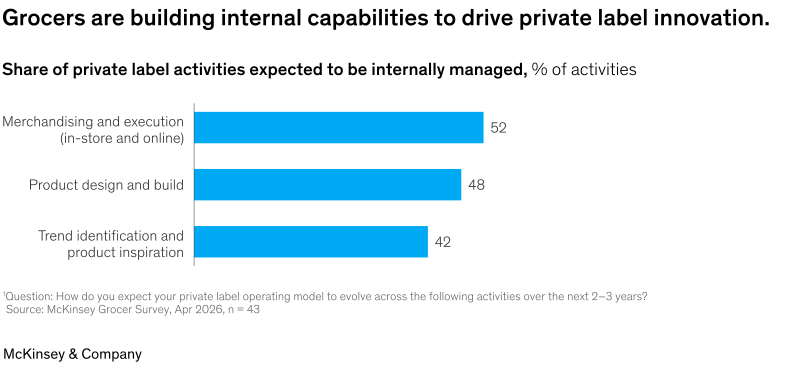
Grocers are increasingly investing to build robust in-house private label capabilities, with around 97 percent expecting to increase investment in private label innovation during the next two to three years.12 Rather than relying solely on suppliers, grocers are taking ownership of the innovation pipeline, expecting nearly half or even higher of their private label merchandising, product design, and trend identification activities to be managed by internal teams (Exhibit 4). This reinforces the move toward more differentiated and deliberate product development.
These capabilities are reinforced by greater control over both product and economics
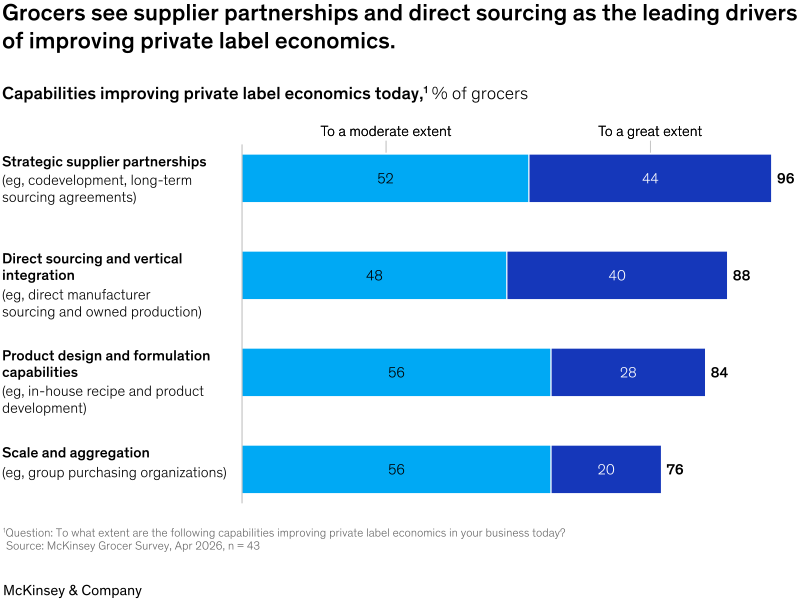
As private label becomes more central, grocers are strengthening both its products and its economic foundations. Retailers are investing across a range of sourcing, supplier, and product development capabilities, with grocers identifying strategic supplier partnerships and direct sourcing as the leading drivers of improving private label economics (Exhibit 5). These investments come with clear expectations of economic impact: Around 92 percent of grocers expect private label profitability to increase in the next two to three years, reflecting confidence not only in growth but also in their ability to use private label to actively shape margins.13
Key takeaways
The role of private label is changing. Consumers are increasingly seeking out private label products and viewing them as credible alternatives to national brands on quality, innovation, and product experience. This has resulted in retailers investing more heavily across product, portfolio, sourcing, and innovation capabilities, creating a reinforcing cycle that continues to strengthen private label penetration and competitiveness. In short, private label has moved from being a low-cost alternative to becoming a true differentiator increasingly shaping how grocers compete.
Fresh is changing how stores operate
While stores continue to account for the majority of grocery sales, what differentiates them and how they operate is shifting. Traditional center-store categories remain important, but it is fresh, prepared, and immediate-consumption occasions that differentiate retailers and influence where customers choose to shop. And as fresh and prepared foods become more important in attracting and retaining customers, store operating models are changing to deliver more consistent execution at scale.
Prepared foods are expanding the competitive set beyond grocery
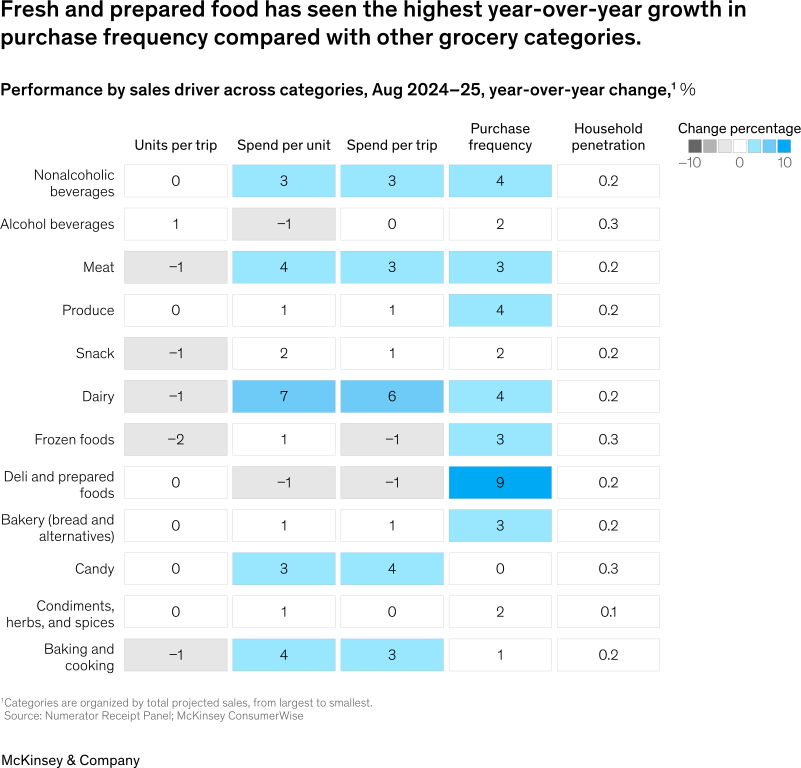
Prepared foods are competing directly with restaurants for meal occasions. Roughly one-quarter of all consumers report purchasing grocery-prepared foods as a substitute for ordering from restaurants, most often replacing quick-service and fast-casual occasions. We see that number is inversely correlated with age, with nearly one-third of those aged 18 to 29 reporting such behavior. The drivers are functional rather than purely economic, with convenience and time savings cited most often.14 The frequency of purchase of prepared foods rose 9 percent year over year from August 2024 to August 2025, suggesting consumers are increasingly turning to grocers for meal solutions.15 This means grocers are not only defending their share within grocery but also competing for a growing share of meal occasions. That suggests winning in prepared foods requires capabilities more akin to foodservice—speed, availability, and relevant assortment—rather than traditional retail execution alone.
Fresh and prepared are becoming more important in driving traffic, loyalty, and basket expansion
Fresh and prepared foods are increasingly linked to how often customers buy, reinforcing their role in driving store traffic (Exhibit 6). Consumer behavior underscores their importance: 35 percent of consumers report switching stores due to dissatisfaction with the quality of fresh foods, while 42 percent are more likely to buy additional packaged items when purchasing fresh or prepared foods.16 At the same time, prepared foods are becoming a habitual part of shopping behavior, with 61 percent of consumers buying ready-to-eat meals at least monthly. In fact, 94 percent of grocers indicate that fresh and prepared foods play a significant role in driving customer loyalty.17 These findings signal that fresh and prepared foods are becoming more than categories and are increasingly primary drivers of traffic, loyalty, and basket expansion (see sidebar, “Sprouts: A leader in fresh differentiation”).
Meat, seafood, and produce are primary differentiators within fresh
While fresh food overall drives frequency, grocers view meat, seafood, and produce as the specific strategic anchors of the perimeter of stores. These categories serve as the primary filters through which consumers judge quality and value; consequently, more than half of retailers identify them as the leading drivers for both initiating store traffic and increasing total basket spend.
Winning in fresh food depends on consistent execution that is difficult to scale
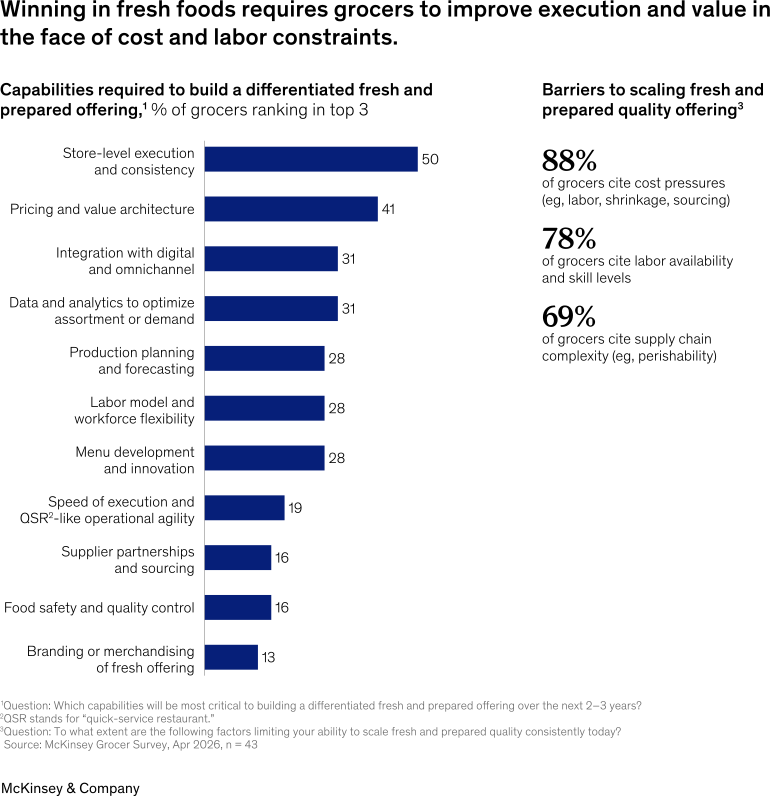
Grocers identify store-level execution—particularly maintaining consistent quality and availability—as one of the most critical capabilities for building a differentiated fresh and prepared offering (Exhibit 7). This matters because fresh performance is highly visible to customers and directly linked to switching behavior. Yet delivering that consistency is challenging, with cost pressures, labor availability, skill constraints, and the inherent complexity of managing perishable supply chains combining to make it difficult to scale high-quality execution across stores. The result is a structural tension: The capabilities that matter most to customers in fresh foods—which directly shape customer choice and loyalty—are also the hardest for retailers to deliver consistently at scale.
Key takeaways
Stores are being reshaped by the need to deliver both differentiation and execution, redefining what it takes to win. Fresh and prepared foods are becoming more important in attracting and retaining customers, while execution and consistency are becoming hurdles to delivering that experience at scale. The challenge for grocers is not choosing between the two but delivering both simultaneously. That’s why improving execution matters more than radical reinvention: Retailers able to deliver a reliable, consistent, and compelling fresh offering are likely to be better positioned to compete.
Wellness is reshaping the grocery basket
Health and wellness have long been part of grocery, but consumer preferences for wellness are becoming more specific and targeted, increasingly shaping what they buy and expect from grocers beyond the basket. Consumers are moving beyond broad notions of “healthy eating” toward targeted goals, while new forces—such as glucagon-like peptide-1 (GLP-1) adoption and moderation trends—are accelerating this change. At the same time, their expectations are expanding beyond products, with consumers increasingly looking to grocers for guidance, services, and more-integrated wellness solutions. These shifts are no longer abstract; they are beginning to materially reshape both the grocery basket and the role grocers play in supporting wellness.
Consumer preferences are becoming more specific and shifting in meaningful ways
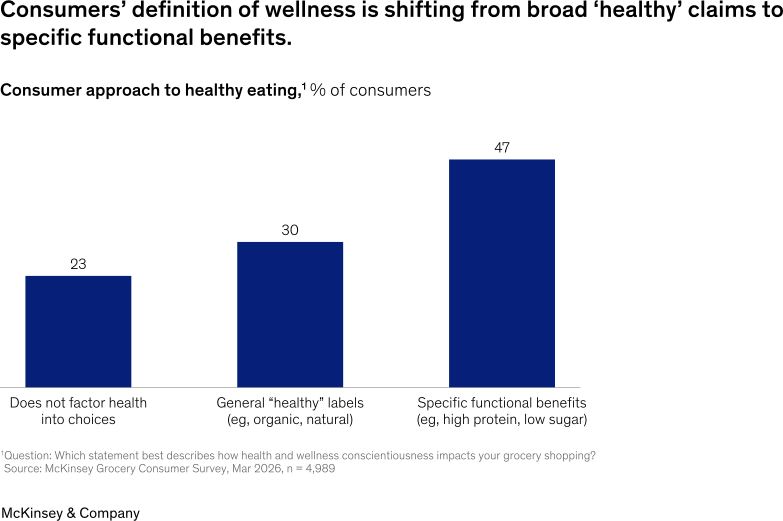
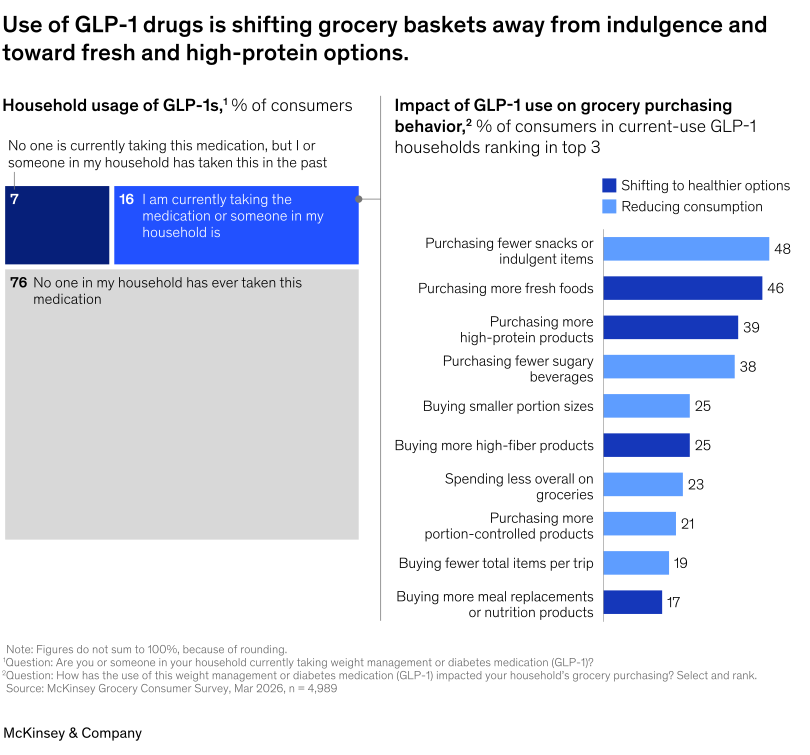
While taste still matters a great deal, consumers are increasingly making food choices based on targeted health goals rather than broad “healthy” claims. Almost half of consumers prioritize specific functional benefits, such as high protein or low sugar, over general health positioning (Exhibit 8). These preferences vary by cohort, with younger consumers over-indexing on protein, gut health, and energy and with older consumers prioritizing sugar reduction and heart health. In addition, new behavioral drivers are emerging, especially the increasing use of GLP-1 drugs. The survey showed 16 percent of consumers report current household use of GLP-1 medications, with an additional 7 percent reporting past household use, reflecting the growing influence these medications are having on how consumers eat and shop. In parallel, moderation trends—particularly in alcohol—are reshaping consumption patterns, with a net 12 percent of customers reporting a decline in alcohol consumption.18
GLP-1s are changing what consumers buy
Households using GLP-1 medications are buying fewer indulgent items,19 increasing purchases of fresh and high-protein products, and shifting toward smaller portions (Exhibit 9).
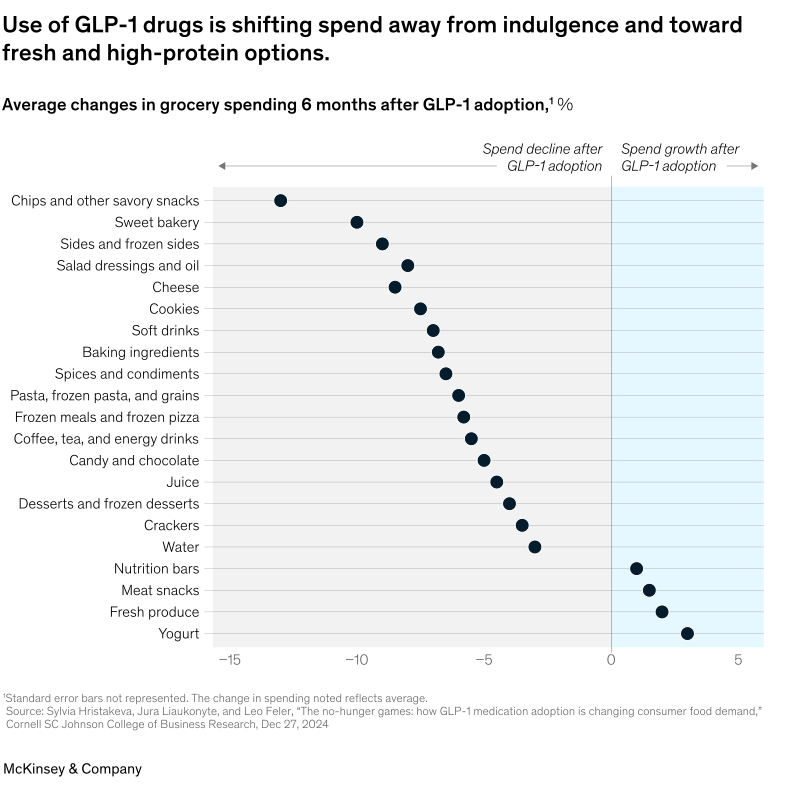
Category-level data reinforces this pattern, with declines across snacks, desserts, and sugary beverages, alongside relative growth in fresh and protein-forward categories (Exhibit 10).20 Moderation trends are reinforcing this shift, with reduced consumption of alcohol and other discretionary categories contributing to a broader rebalancing of spend. The result is baskets that are becoming more functional—less driven by indulgence and more aligned to health goals, portion control, and specific nutritional needs.
Grocers are responding by reshaping assortment and reallocating space
Grocers are actively adapting to these changes in demand. Retailers expect to expand high-protein, low-sugar, and functional offerings, with high-protein products receiving the greatest emphasis: Nearly 90 percent of grocers expect to increase shelf space allocation in the category as part of an active rebalancing within stores to meet emerging demand patterns, and most anticipate growth in space allocation of more than 10 percent over the next two to three years.
Consumers are raising expectations for wellness—and grocers are expanding into services
As wellness becomes more embedded in purchasing behavior, consumers are expecting more than products from grocers. What are they looking for? More than 60 percent of consumers say that grocers that best support wellness integrate pharmacy, food, and wellness solutions, while nearly 55 percent say such retailers provide personalized nutrition recommendations.21 Expectations are even higher among younger consumers, with more than 70 percent of people aged 18 to 29 years old recognizing integrated wellness offerings.22 Grocers are responding by expanding into wellness services. Retailers expect to integrate pharmacy and health services into their strategies, linking health conditions to nutrition guidance, recommending products aligned to prescriptions, and embedding wellness into broader customer experiences. For instance, ShopRite recently launched wellness kits for GLP-1 patients to bridge the gap between pharmacy and nutrition,23 while Ahold Delhaize is using its “Guiding Stars” data to help suppliers innovate and promote more-nutritious product lines.24
Key takeaways
Wellness is becoming a defining driver of grocery demand. Consumer preferences are becoming more specific, baskets are adjusting accordingly, and expectations are expanding beyond products into services and guidance. Grocers are actively responding to these shifts by reshaping assortment, reallocating shelf space, and building more-integrated wellness capabilities. Wellness has moved beyond being a niche trend to become a force that is actively shaping demand and redefining how grocers compete. As these dynamics continue to evolve, the pace of change is likely to accelerate, increasing the importance of how effectively grocers translate wellness into both the basket and the broader customer experience.
E-commerce is being reshaped by delivery and the quest for profitability
E-commerce in grocery is entering a new phase in which delivery is becoming the dominant mission—and profitability remains a central constraint. After rapid expansion during the COVID-19 pandemic, online grocery has stabilized as a core channel and still outpaces overall industry growth. What is changing, however, is the nature of demand and the expectations attached to it. Consumers are increasingly prioritizing convenience, while grocers are under growing pressure to make the economics of the channel sustainable. As a result, e-commerce is no longer defined by growth alone; it is being reshaped by the tension between rising demand for delivery and the need to achieve profitability.
Omnichannel engagement is becoming a driver of share of wallet
Consumers shopping both online and in-store generate a higher share of wallet than those using a single channel. Our survey found that retailers captured a greater share of wallet from omnichannel shoppers, who allocated 31 percent of their grocery spend to the retailer compared with 26 percent among shoppers who used only in-store channels.25 This underscores why e-commerce is not merely a channel but a critical component of a broader omnichannel growth strategy in which grocers serve multiple shopping missions and capture a greater portion of total spend. Grocers are also starting to experiment with social and content-driven commerce models connecting discovery directly to basket building. Walmart’s partnership with Pinterest, for example, allows consumers to add ingredients from recipe content directly into online grocery carts for pickup or delivery.26
Delivery is becoming the dominant e-commerce mission
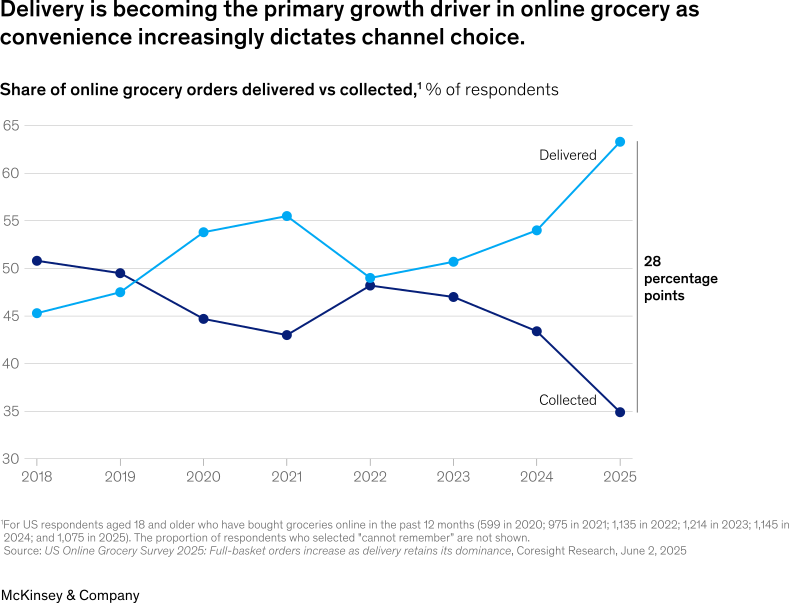
Delivery is emerging as the preferred option for online shoppers, reflecting a shift toward convenience. While the share of online grocery orders delivered rather than collected declined after the pandemic, it has since steadily increased to now represent almost two-thirds of orders (Exhibit 11). This trend is reinforced by consumer preferences: 70 percent of consumers say delivery is their preferred model of online grocery fulfilment, with the key drivers dominated by convenience factors (67 percent cited time savings as the reason for preferring delivery, 52 percent scheduling flexibility, and 45 percent ease for larger orders).27 Taken together, these trends indicate delivery is becoming the default mode for many online grocery occasions.
Convenience expectations are rising—but within clear trade-offs
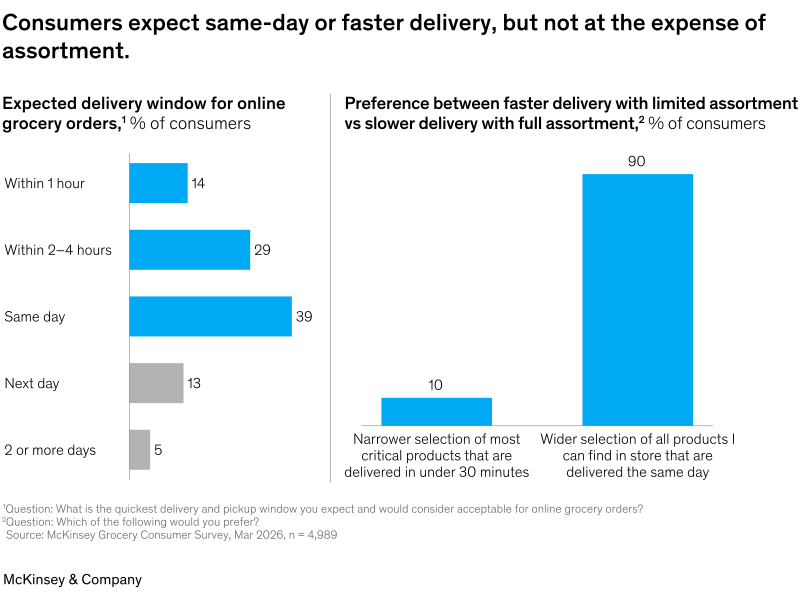
Consumers expect faster delivery but not at the expense of assortment. Most shoppers expect same-day delivery, and a meaningful share expect it within hours (Exhibit 12). However, speed alone is not sufficient. Consumers overwhelmingly prefer a full assortment over ultra-fast delivery with limited choice. This highlights a key constraint: Grocers must balance speed, cost, and assortment in designing delivery propositions.
New delivery models are expanding the frontier of convenience
Retailers are experimenting with new models to meet rising expectations. Grocers are piloting and scaling new delivery approaches, focusing heavily on their top three commonly cited priorities: expanded third-party partnerships, subscription-based delivery programs, and rapid, on-demand delivery. Industry leaders such as Walmart and Amazon, for example, continue to invest in and scale their drone capabilities to fulfill immediate-need orders.28 While these models are still emerging, they signal where the market is heading—toward faster, more flexible fulfillment for immediate-need missions, as well as toward loyalty programs offering unique benefits and free delivery. While not yet scaled, these innovations are beginning to reset expectations regarding speed and convenience.
Profitability is becoming a priority, with a focus on a defined set of actions
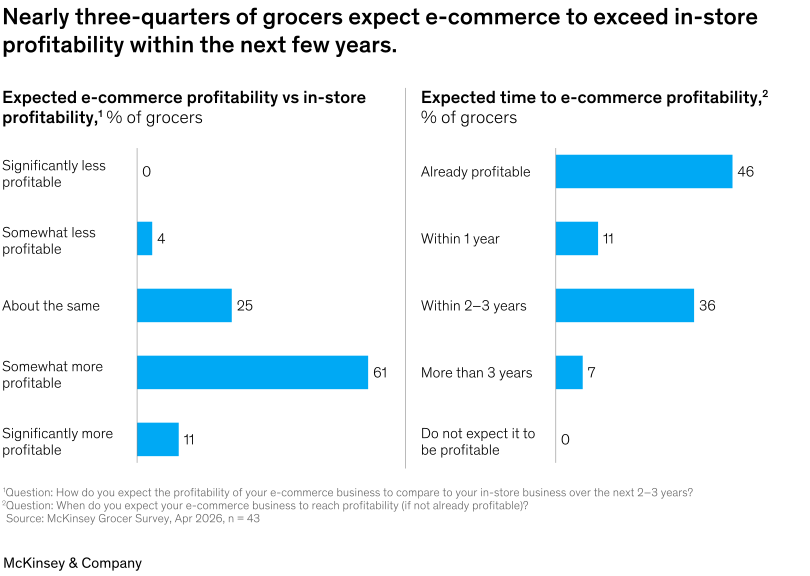
The economics of e-commerce are forcing a reset in how the channel is managed. A large majority of grocers now expect e-commerce to match or exceed in-store profitability in the near term (Exhibit 13). This marks a shift from earlier assumptions that profitability would follow scale. Instead, retailers are actively redesigning their models to improve economics by focusing on key levers such as reducing last-mile costs (cited by 52 percent of grocers as most critical for improving e-commerce profitability in the next two to three years), increasing basket size (45 percent), adjusting delivery fees and minimums (38 percent), and automating fulfillment (38 percent). These levers reflect a more disciplined approach to managing cost and revenue across the e-commerce value chain, suggesting profitability will be achieved through deliberate model design rather than scale alone.
Current fulfillment models may not scale with future demand
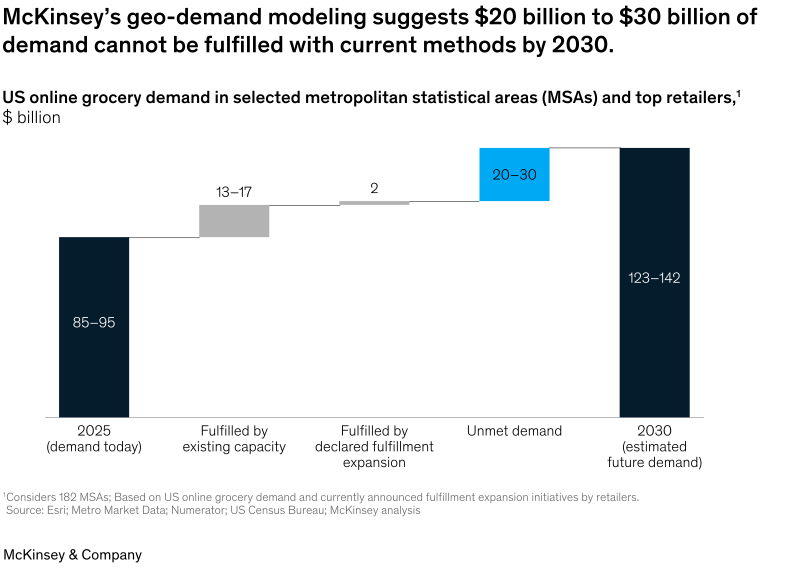
A defining feature of US online grocery is that a large majority of orders are picked inside ordinary supermarkets by staff assembling orders rather than using dedicated automated capacity. That model worked when online penetration was lower, labor was cheaper, and retailers could keep pace by getting better at in-store picking. But the pressure is now building as online grocery sales increase, especially as demand is concentrated in around 180 metropolitan areas where store footprints have barely grown, several centralized fulfilment bets have been rolled back, and manual store-based fulfilment tends to hit a ceiling at around 12 to 15 percent online penetration. Our analysis finds the industry could face a $20 billion to $30 billion unmet demand gap by 2030 (Exhibit 14), even after declared fulfilment expansion. In short, the next wave of online grocery growth may not be absorbed by adding more pickers into already congested stores but will require different fulfillment models altogether.
Fulfillment models are shifting toward greater flexibility
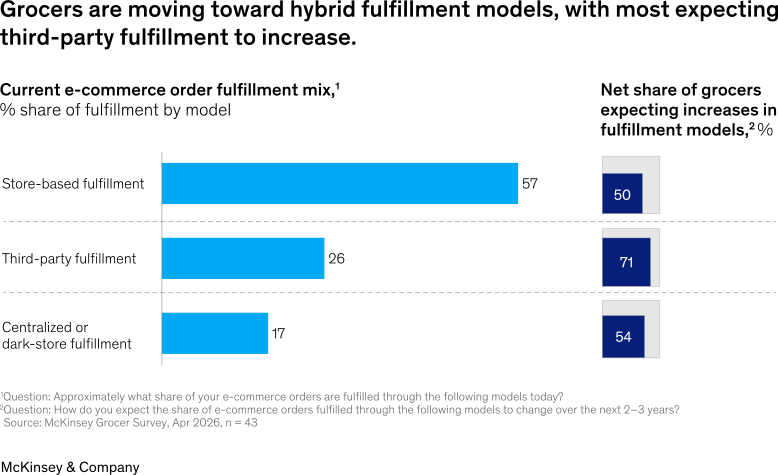
Grocers are moving away from centralized fulfillment models toward more-hybrid approaches. They are increasingly splitting fulfillment across stores, dark stores, and third-party partners (Exhibit 15), reflecting the need to balance cost efficiency with service levels across different markets and use cases. The result is a more flexible fulfillment model, tailored to local demand and economics rather than a single standardized approach.
Key takeaways
E-commerce growth is now defined by the balance between demand and economics, shifts that point to a redefinition of online sales in grocery. Delivery is becoming the dominant driver of demand, while profitability is becoming a central constraint. While the long-term trajectory remains positive, the path forward is more complex. Grocers will need to balance customer expectations for convenience with the operational and economic realities of fulfillment. In this environment, advantage will depend on the ability to scale delivery while maintaining discipline on cost and operations.
Retail media is changing how grocers make money
Retail media is moving from a fast-growing adjacency to a core part of how grocers generate profit, work with suppliers, and compete for customer attention. For years, retail media was framed primarily as a high-growth revenue opportunity—a way for retailers to monetize digital traffic, first-party data, and supplier demand for measurable advertising. That remains true, but the story has evolved. Retail media is becoming more deeply embedded in the grocery operating model. It is moving into the store, into supplier negotiations, into AI-enabled discovery, and into the broader question of how grocers improve profitability in a structurally low-margin business. Retail media has shifted from being about selling ads to becoming part of the grocery profit architecture, changing the way grocers create and capture value beyond the basket while raising the bar on measurement, technology, and commercial coordination.
Retail media resets grocery sector valuations
Grocery executives state that retail media contributes between 3 and 10 percent of total profit today, and most expect that contribution to increase during the next two to three years. What makes this important is not only the profit contribution but also the way that profit is valued. Media revenue can represent a small share of total retailer revenue while contributing a much larger share of enterprise value, reflecting the higher-margin and more scalable profile of the business. This changes retail media’s strategic significance. Grocery retail is capital-intensive, labor-intensive, and structurally margin-constrained. In contrast, retail media monetizes assets grocers already have, such as shopper traffic, loyalty data, digital engagement, and in-store attention. The result is a profit pool that can scale without the same physical cost base as merchandising, fulfillment, or store operations, changing not only grocery earnings but also how those earnings are valued.
The store is becoming a media asset
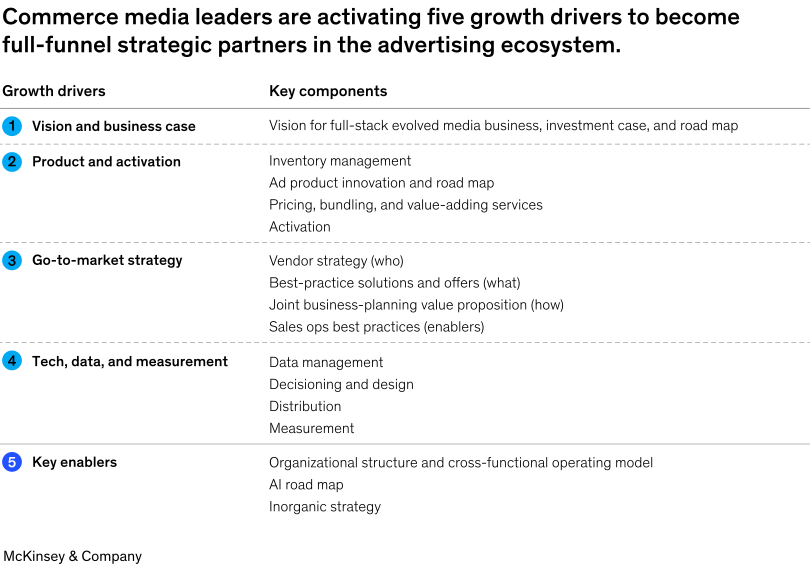
The early phase of retail media was largely digital: sponsored search, display ads, off-site targeting, and closed-loop measurement tied to online shopping. The next phase is broader. Commerce media leaders are building capabilities across product and activation, go-to-market strategy, technology, data and measurement, and the organizational enablers needed to scale (Exhibit 16), effectively moving from a collection of advertising products to a full-funnel commercial platform. This changes the role of the physical store. Grocers may not always match the digital scale of the largest platforms, but they own a high-frequency physical environment where customers make decisions every week. That makes the store monetizable media inventory, changing the retail media game. It’s no longer only about monetizing impressions online but about managing customer attention across the full journey, from digital discovery, to in-store decision-making, to post-purchase engagement. In-store screens, shelf-level media, smart carts, loyalty-enabled activation, and digital touchpoints are expanding the surface area available for monetization.
Measurement is becoming the currency that determines who wins
Realizing the promise of retail media depends on the ability to prove advertising drives incremental sales. Grocers cite as major barriers to scaling retail media measurement and attribution limitations, in-store execution capabilities, technology constraints, ROI demonstration, data quality, and integration with commercial planning. This is where the market has changed most sharply. Brands are no longer satisfied with access to audiences alone. They want confidence that media spend creates incremental growth rather than simply taking credit for sales that would have happened anyway. That is especially important as retail media moves further into the store, where measurement has historically been harder than in digital channels. This makes measurement the basis of trust between grocers and suppliers rather than just a technical capability. Grocers that can prove incremental growth will likely be better positioned to command budgets, expand partnerships, and integrate retail media into broader commercial negotiations. Grocers that cannot may risk being treated as another fragmented media network in an increasingly crowded market.
Retailers are building standalone data businesses
Increasingly, grocers are extending retail media into broader data and analytics businesses. Retailers such as Kroger (84.51°), Walmart (Scintilla), and Loblaw (Advance) are building capabilities that package shopper insights, audience analytics, measurement, and category intelligence into monetizable products for suppliers. This reflects a broader shift in how grocers view first-party data: not only as an input into media activation but also as a standalone commercial asset that can support supplier planning, category strategy, product innovation, and measurement. Over time, these data businesses may become increasingly integrated with retail media networks, strengthening retailer influence across both advertising and commercial decision-making.
Supplier relationships are moving from trade negotiations to integrated commercial partnerships
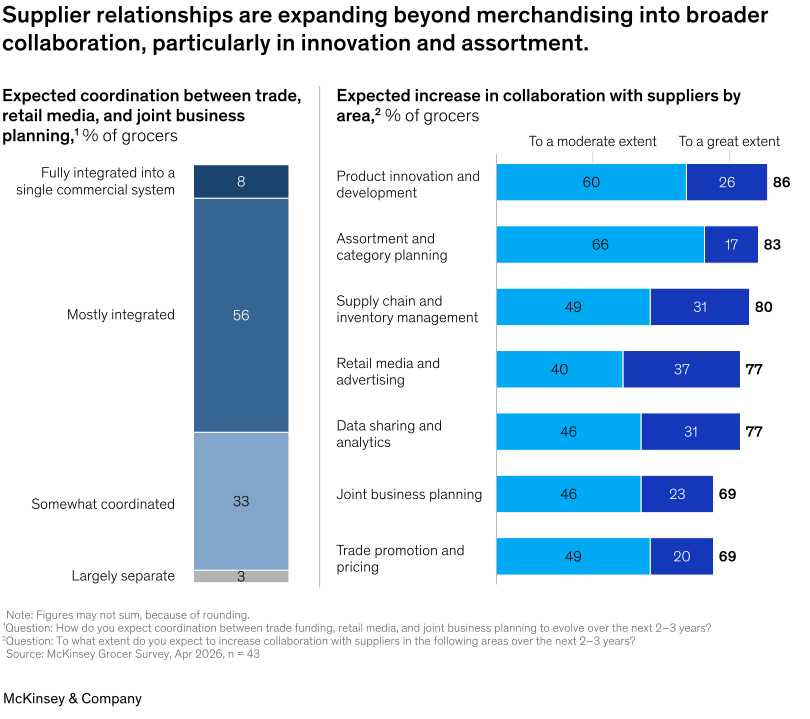
Retail media is changing how grocers work with suppliers. Grocers expect greater coordination across trade funding, retail media, and joint business planning while also expecting increased supplier collaboration in product innovation, supply chain, assortment planning, data sharing, trade promotion, and pricing (Exhibit 17). The traditional retailer–supplier relationship was anchored in negotiations over price, promotions, shelf placement, and trade dollars; retail media adds shared investment in demand generation, data, and measurable growth. The best relationships will increasingly connect media plans with category strategy, innovation pipelines, promotional planning, and customer insights. It’s a different commercial model that gives grocers a new way to capture value from suppliers. But it requires them to show up differently, as suppliers expect retail media, trade, merchandising, and category teams to operate as one system rather than as separate asks on the same budget.
AI and agentic shopping are changing where product discovery happens
The next disruption is emerging in how consumers discover and select products. Agentic shopping platforms are creating new interfaces where consumers can search, plan, build baskets, and potentially transact through AI-enabled experiences. This matters for retail media because advertising follows attention. If product discovery shifts from search bars and digital shelves to conversational assistants and AI-curated recommendations, retail media will need to evolve from placement-based advertising to influence within algorithmic decisioning. In addition to where a product appears, visibility will increasingly depend on how well a product is understood, recommended, and selected by AI-enabled shopping tools. While the risk for grocers is that external platforms could become a new front door to grocery discovery, the opportunity is to build or selectively integrate AI experiences in ways that preserve retailer control over customer data, supplier monetization, and the shopping journey. This solidifies agentic commerce as a retail media topic, as it democratizes access to retail media for retailers of all sizes.
Regional grocers still have a right to win, but the capability bar is rising
Retail media is often associated with the largest national retailers, but the opportunity is not limited to scale players. Regional grocers can compete effectively when they offer access to priority audiences, local relevance, strong retailer relationships, and ad products that meet brand objectives. What has changed is the route to competitiveness. Regional grocers don’t need to replicate the full capabilities of the largest retail media networks, but they do need credible measurement, usable ad products, and enough technology infrastructure to make buying easy for brands. Local relevance and shopper relationships are real advantages, but they only become monetizable if grocers can package them with activation, measurement, and ease of execution. This creates a sharper divide. Successful retailers are likely to be those making their audiences easiest to buy, easiest to activate, and easiest to prove. That may not necessarily be only the biggest retailers. Regional relevance can win but only if it comes with national-grade capabilities.
Key takeaways
It’s no secret that retail media is growing. The more important story is that retail media is becoming a core part of how grocers compete. It is moving from digital to omnichannel, from advertising sales to commercial integration, from audience access to incrementality proof, and from retailer-controlled search to AI-mediated discovery. Retail media is no longer just an incremental revenue opportunity or a supplier-funded adjacency but a profit system that touches the store, the digital experience, supplier negotiations, loyalty data, and emerging AI interfaces. The implication for grocers is clear: Retail media is changing where growth is found and how value is created, measured, and captured. It’s not a side project but should instead be built into the operating model with the same discipline grocers apply to pricing, merchandising, private brands, and e-commerce economics.
AI is set to shape how grocery is shopped and operated
AI has the potential to fundamentally reshape how consumers shop and how grocers operate. While only select use cases are delivering value, the technology has rapidly moved up the agenda for grocers as a potential operating system capable of increasingly connecting customer demand, inventory, labor, fulfillment, and store execution into one integrated system. While it today remains an emerging capability with transformative potential, rather than a fully realized shift, the coming years are likely to see a gradual reconfiguration of how merchandising and supply chain decisions are made, how operations are run across the value chain, and how customers interact with retailers.
Grocers expect AI to play a central role in future customer interactions
Retailers expect AI to become deeply embedded in how customers shop, with nearly half of grocers anticipating that AI agents will assist with a third or more of all transactions within the next five years. This reflects a strong conviction that AI will move beyond isolated tools to become a core part of the shopping experience, supporting how customers search, evaluate options, and build their baskets. While current adoption remains limited, this forward-looking view underscores the scale of change grocers expect AI to drive.
Grocery’s adoption of AI is evolving across three horizons
While AI in grocery is still emerging, the horizons across which it is evolving are taking shape. The first is generative engine optimization (GEO), a step beyond search engine optimization (SEO) in terms of how companies can shape their brand and product representation online to drive consumer engagement on AI platforms. The second horizon is agentic commerce, which uses AI tools on both AI platforms and retail or brand sites to build brand-native experiences that help consumers search, choose, buy, and receive goods. The third is autonomous commerce, which uses AI agents to independently execute purchases without consumer involvement (for instance, automatically restocking household goods).
Current consumer-facing applications are largely assistive, not transformational
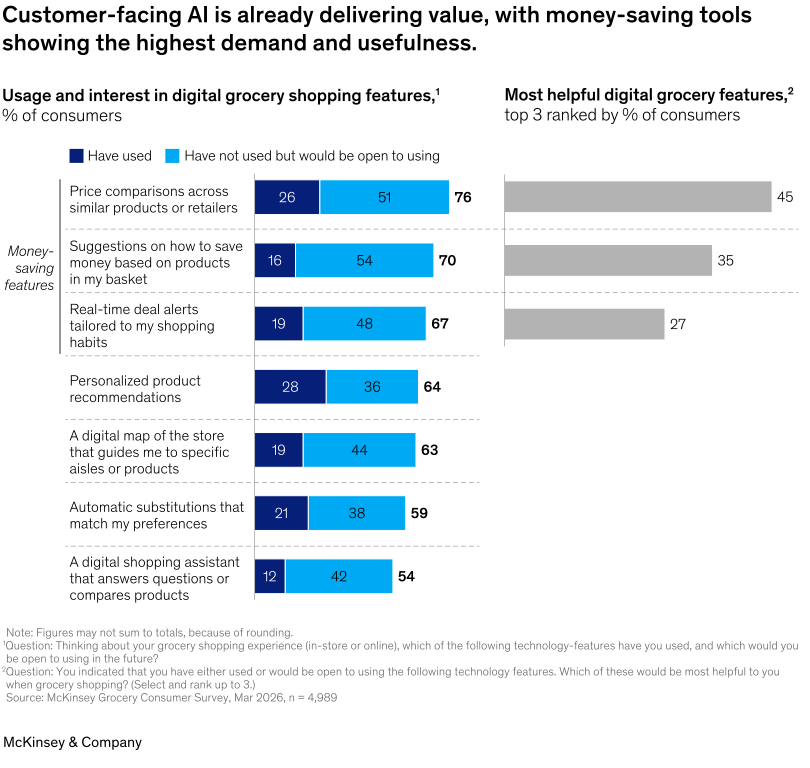
AI is already present in the shopping experience but primarily in ways that support, rather than replace, decision-making. Consumers show the highest usage and interest in applications that reduce effort and improve value without fundamentally changing how they shop, such as tools for price comparison, deal discovery, and basket optimization (Exhibit 18). While AI is, at this stage, enhancing the existing shopping journey rather than redefining it, its broader potential to reshape how customers discover, plan, replenish, and fulfil grocery missions across channels is becoming clearer. For example, there is already growing use of predictive and prefilled carts, where AI recommends baskets based on prior purchasing behavior. Major grocers are already seeing more than 20 percent of online orders come from recommended or preassembled baskets, reflecting growing adoption of low-friction, assistive shopping experiences that simplify replenishment without fully automating purchasing decisions.
Consumer trust in AI may be a barrier to adoption
The willingness of consumers to use AI decreases as the level of automation increases. For example, AI that independently builds and purchases a consumer’s weekly cart may be something many shoppers are not yet ready to use, but AI that helps compare products, identify healthier alternatives, or automatically apply relevant promotions may feel more palatable and easier to trust (Exhibit 19). This highlights a key dynamic: Openness to AI is closely tied to maintaining control. This means near-term adoption is likely to be concentrated in assistive use cases, with more-autonomous applications gaining traction more gradually.
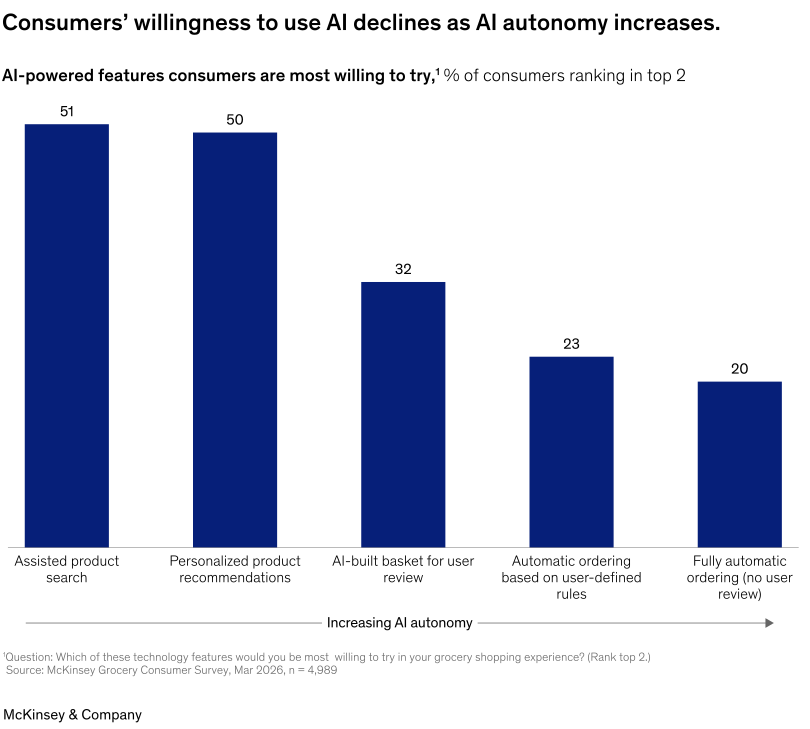
This suggests that scaling AI will depend as much on improving trust among consumers worried about control, accuracy, transparency, and data privacy as on improving capabilities. For non-users, this trust is built on a sense of control. The top three factors that would increase their interest are the ability to easily turn the feature off, the power to override its suggestions, and access to human support if something goes wrong. For grocers, this implies that driving adoption will require actively addressing these concerns—not simply deploying new features. One thing history tells us, though, is that once experiences become embedded into existing customer journeys and deliver clear convenience, adoption can accelerate rapidly.
Investment is focused on areas closest to commercial impact
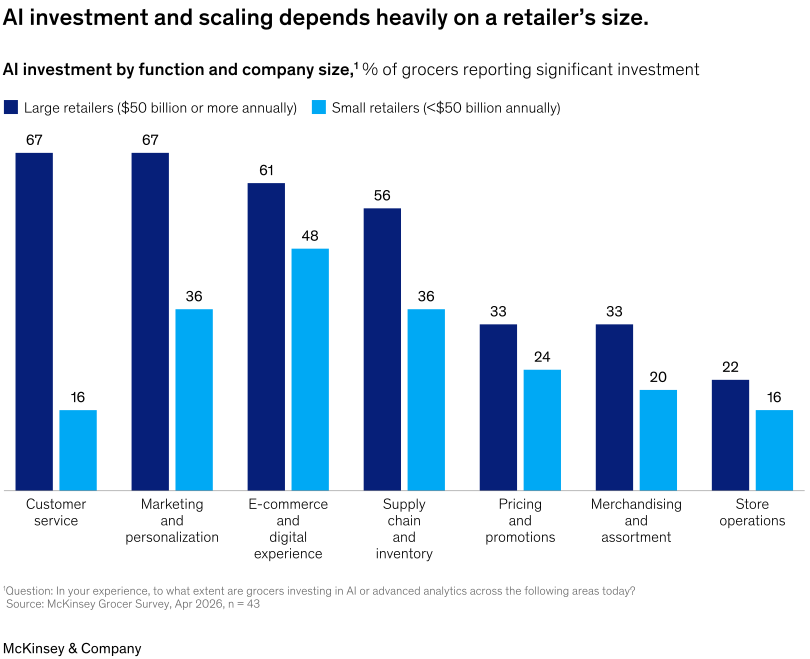
While waiting for the dust to settle on how customers will adopt AI in their grocery shopping experience, most grocers are prioritizing investment in domains where AI can deliver near-term value and leverage its potential to empower real-time decision-making. On the customer-facing function, investments in e-commerce and marketing are the focus, with e-commerce being the main channel in which agentic commerce is executed. The marketing function is furthest along in real, scalable AI use cases such as copywriting and editing, campaign planning, and ad buys. AI also has the potential to increase the efficiency and growth of retail media networks, a key high-margin growth engine. In operations, supply chain has the most clearly defined use cases, which are closer to commercial application (Exhibit 20). This reflects a pragmatic approach to adoption. Rather than pursuing broad, end-to-end transformation, grocers are focusing on targeted applications that can improve conversion, enhance promotions, and strengthen operational execution. Scaling and operationalization will be the likely next step, with grocers working to more seamlessly embed AI into workflows to improve productivity, consistency, and economies of scale.
Leading grocers are beginning to embed AI into core experiences
Most grocers have recognized that customers are using commercial chatbots in their day-to-day lives and are starting to invest in GEO to shape how their brands show up in these powerful tools. A small group of retailers is starting to integrate AI directly into customer and operational workflows, with AI-powered search, recommendations, and conversational assistants added into retailer platforms (for example, Amazon’s Rufus and Walmart’s Sparky). This suggests that adoption is more likely to scale when AI is seamlessly integrated into existing experiences rather than introduced as a standalone layer.
AI is emerging as a lever for internal process transformation across functions
Beyond customer-facing applications, AI is beginning to create value across both core retail functions and enabling functions throughout the grocery value chain. While adoption remains uneven, retailers are increasingly identifying opportunities to embed AI across merchandising, supply chain, store operations, marketing, and support functions, with the potential to improve growth, productivity, and decision-making (Exhibit 21).
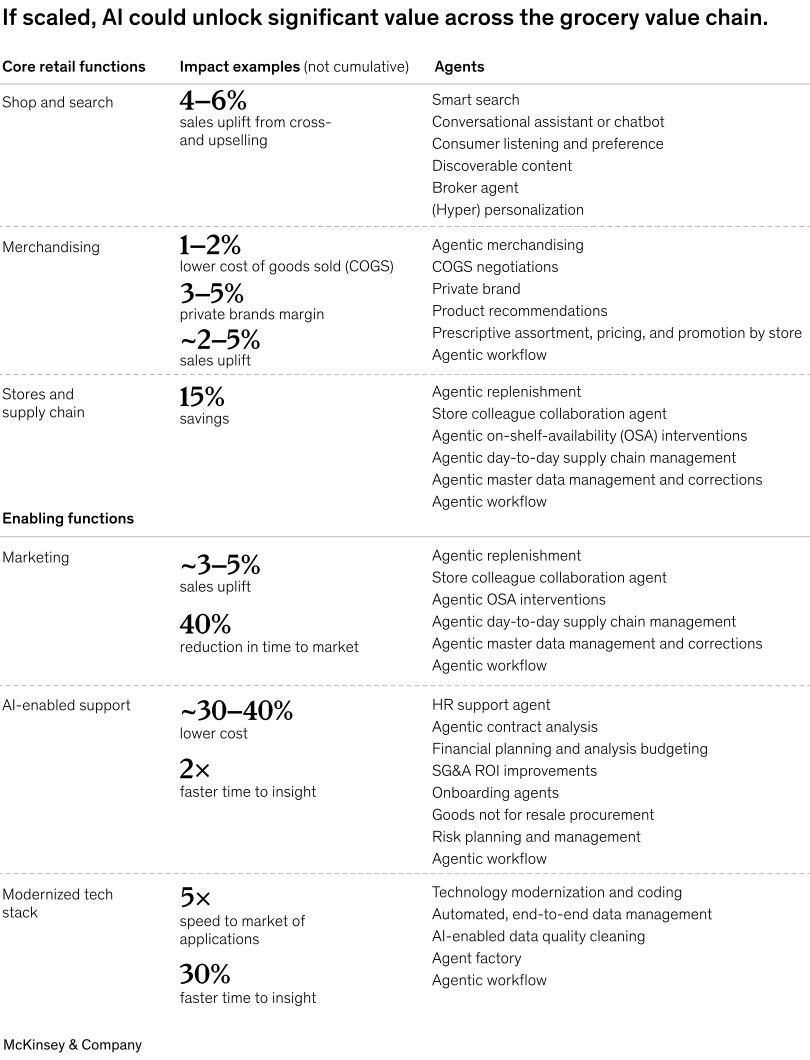
AI is beginning to create value across core retail functions
Retailers are exploring or deploying AI from sourcing to store operations, connecting supply chain reliability with more efficient customer fulfillment. The potential impact spans everything from improved labor productivity through smarter task orchestration and workforce deployment (with the goal of lowering shrink and waste with improved forecasting and inventory precision), fulfillment efficiency gains in pickup and delivery operations, and reduced managerial overhead. Grocers such as Albertsons, for example, are using AI to improve forecasting for volatile fresh categories, such as produce and meat. Kroger, through its partnership with Instacart, is embedding AI-driven capabilities into the digital shopping and fulfillment experience to improve delivery speed, operational efficiency, and order reliability.
Retailers are also beginning to apply AI inside stores to improve execution and consistency. Increasingly, grocers are pursuing a dual objective: improving profitability through operational efficiency while also enhancing the customer experience through better store execution.
Technology is reshaping store operating models to improve execution and consistency
AI is showing real potential in addressing the challenge of delivering consistent execution at scale in stores, which are shifting toward more standardized workflows and clearer task prioritization and away from highly manual, judgment-driven operations. AI-powered digital tools are beginning to support this transition by providing better visibility into inventory, guiding task prioritization, and helping associates respond more effectively to issues in real time (Exhibit 22).
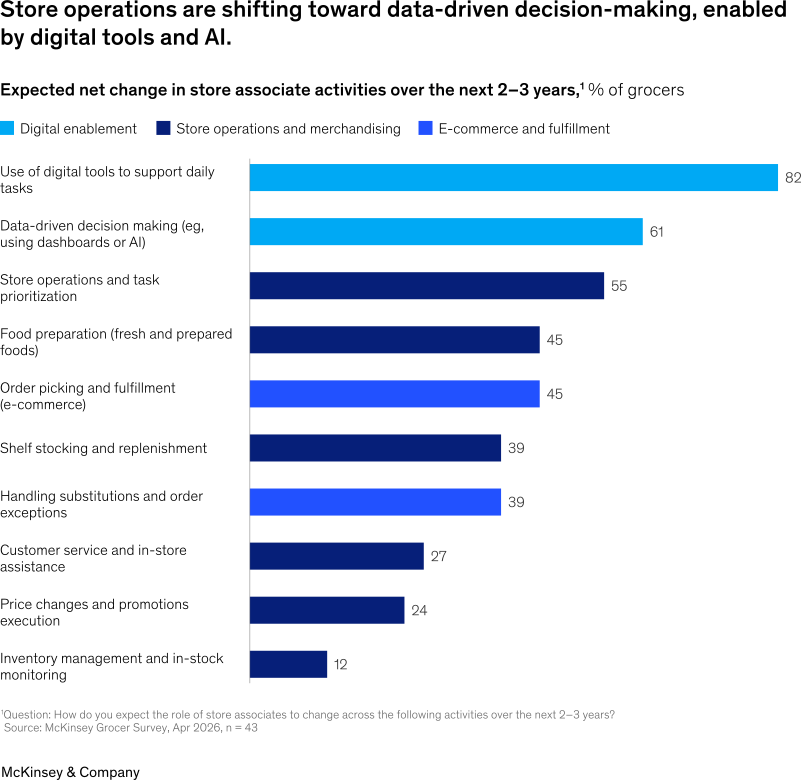
Leading retailers are scaling these capabilities through AI-powered associate apps, with a particular focus on the decision makers within a store or district. For instance, Walmart is piloting AI-driven tasking—turning process guides into clear, step-by-step instructions for frontline associates—while Target has introduced “Store Companion,” a gen AI chatbot that provides store associates with instant answers for operational questions and procedures.29
Rather than fully automating stores, these tools aim to improve decision-making and help associates, managers, and field leaders execute consistently in a more complex environment. These capabilities remain in the early stage of development and are unevenly adopted, with no standardized model yet in place across the industry. But over time, this reshaping of store operations—combining better processes with improved decision support—has the potential to meaningfully improve execution.
Key takeaways
AI has the potential to transform grocery, but it will take time. While grocers are investing and early use cases are gaining traction, most applications remain limited in scope, and customer adoption is still developing. However, the long-term impact could be significant. Over time, AI could reshape how consumers search, decide, and purchase, as well as how grocers price, promote, and operate. Realizing this potential will depend on sustained investment, effective integration, and the ability to bring customers along the journey. In this context, AI is less a near-term disruption and more a multiyear transformation—one that will gradually redefine how grocery works.
North American grocery is entering a phase in which the old playbook is no longer enough. Price still matters. Stores still matter. Scale still matters. But none of these are sufficient on their own. The next competitive gap will come from how well grocers connect the pieces: value, loyalty, private brands, fresh, wellness, e-commerce, retail media, AI, and supplier partnerships.
Most grocers see these trends. The risk is that they respond with disconnected initiatives: a new loyalty push here, a private label refresh there, an AI pilot, a retail media team, a delivery partnership, a fresh reset. That’s unlikely to be enough. The grocers that succeed will be those able to turn such moves into a coherent model customers can feel, associates can execute, suppliers can engage with, and investors can value. There are five imperatives:
1. Make intelligent and targeted investments to drive greater impact from value
Value remains the battleground, but too many grocers still treat it as a funding question—how much to invest in price, how much to promote, how much to load into loyalty. The real question is identifying where value actually changes behavior. Consumers are shopping more frequently, managing baskets more deliberately, and looking for clearer, more consistent value. They are not asking grocers to make everything cheap but to make the value proposition easier to understand and easier to trust. That requires a disciplined system across key value items, everyday pricing, promotions, personalized offers, loyalty, and private brands.
The incentive for grocers is simple: If customers cannot explain why a retailer is good value, much of that value investment may not be working hard enough. Broad price cuts can dilute margin without changing perception. Promotions can create activity without loyalty. Loyalty programs can generate engagement without changing share of wallet. Value leaders will be those that know exactly which investments shape perception, which drive trips, which grow basket, and which should be stopped.
Leadership question: Where are we spending value dollars that customers do not notice, believe, or reward?
2. Give customers a real reason to choose you—or risk becoming interchangeable
Many grocery banners still rely on convenience, habit, and location. While those advantages are not disappearing, they are becoming less defensible. Consumers have more choices, more channels, more delivery options, more prepared-food alternatives, and more ways to compare value. In that environment, being “good enough” may be a dangerous strategy.
There are several examples of how grocers can create real distinctiveness through particular value propositions, including private labels that move beyond low-cost alternatives, fresh and prepared foods that drive traffic and loyalty, wellness propositions that reflect specific health goals, and store experiences that deliver consistently in the moments that matter. These should not be treated as separate strategies. Together, they answer one question: Why should a customer choose this banner over another?
The hard part is choice. Not every grocer can simultaneously be the leader in fresh, prepared foods, wellness, private label, price, delivery, and experience. Trying to be distinctive everywhere usually produces mediocrity everywhere. The better path is to choose the few battlegrounds where the banner can credibly win and then over-deliver with enough consistency that customers notice.
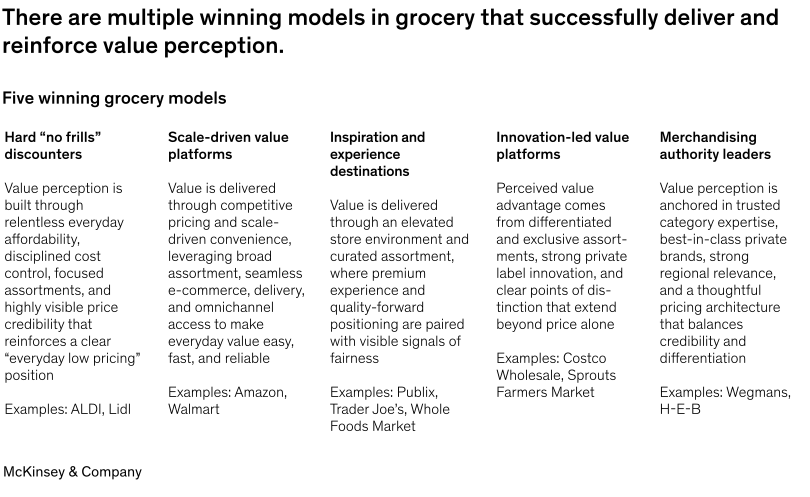
Importantly, there is no single model for creating value in grocery. Leading retailers have built strong value propositions through a variety of approaches, each anchored in a distinct set of capabilities and customer benefits (Exhibit 23).
Leadership question: What would customers miss if our banner disappeared tomorrow?
3. Elevate the customer experience through technology and execution
There’s no point pretending the store can be reinvented overnight. But the store is being asked to do harder work. It must deliver stronger fresh and prepared-food propositions, support more-complex omnichannel activity, enable wellness and private label differentiation, and increasingly serve as a media asset—all while labor, cost, and supply chain pressures remain high.
That means the next store agenda should not start with technology for technology’s sake. It should start with customer moments where poor execution destroys trust: issues such as out-of-stocks, inconsistent fresh quality, weak prepared-food availability, unclear value communication, poor substitution decisions, and associates who lack the information to act quickly. Digital tools and AI matter most when they help associates make better decisions and execute more consistently.
The best store operators will not be the ones with the most pilots. They will be the ones that convert technology into better routines, clearer priorities, faster issue resolution, and more consistent execution at the store level. In grocery, operational excellence is not back-office. It is the customer experience.
Leadership question: Are we using technology to improve the work that actually changes customer behavior, or are we just digitalizing complexity?
4. Drive profitability through optimized fulfilment and digital missions
Online grocery is no longer an optional channel, but growth without economics is not a strategy. Delivery is becoming the dominant e-commerce mission, omnichannel shoppers are valuable, and convenience expectations continue to rise. But the cost to serve remains unforgiving. Grocers cannot simply scale orders and hope profitability follows.
The next phase requires grocers to manage digital by mission and economics. Same-day delivery, scheduled delivery, pickup, store fulfillment, automated fulfillment, and third-party models should not be evaluated as one blended e-commerce business. They serve different customers, have different cost structures, and create different value. Some missions may be worth subsidizing because they deepen loyalty or support retail media. Others may need fees, minimums, assortment limits, service tiers, or operational redesign.
Retail media changes the equation further. Digital traffic, loyalty data, and in-store attention are becoming monetizable assets. That does not mean retail media can be used to excuse poor e-commerce economics. It means grocers need a more complete view of value: order margin, customer lifetime value, supplier monetization, media revenue, and share of wallet.
Leadership question: Which digital missions create profitable customer value, and which are we scaling despite weak economics?
5. Turn data, AI, and retail media into one commercial engine—or watch them become expensive side projects
AI, retail media, loyalty, personalization, pricing, promotions, and supplier planning are often managed as separate agendas. That structure is increasingly obsolete. AI will influence how consumers search, compare, and build baskets. Retail media will influence how suppliers fund growth. Loyalty will influence how value is personalized. Pricing and promotions will need to become more targeted and measurable. These are not separate capabilities; they are parts of the same commercial engine.
This is where many grocers risk underperforming. AI pilots may generate excitement without changing decisions. Retail media may generate revenue without being integrated into category strategy. Loyalty may collect data without improving customer economics. Supplier negotiations may remain focused on funding rather than joint growth. The result is a stack of promising initiatives that never becomes a new way of running the business.
The winners will connect customer data, product data, pricing, promotions, loyalty, retail media, supplier planning, and AI-enabled decisioning into a single operating model. That does not require pursuing every use case. It requires discipline: Pick the decisions that matter most, wire the data and incentives around them, and measure whether outcomes improve.
Leadership question: Are we building a commercial engine or just accumulating tools, teams, and dashboards?
The next advantage will come from coherence
The next grocery winners are unlikely to be defined by a single breakthrough but how well they make the business work as a system. Value must connect to loyalty. Loyalty must connect to personalization. Personalization must connect to retail media. Retail media must connect to supplier planning. Private label must connect to sourcing and brand strategy. Fresh must connect to store execution. Digital must connect to profitability. AI must connect to real decisions.
That is the standard now. Disconnected excellence will not be enough. A grocer can have a strong loyalty program and still waste value dollars. It can have a promising AI roadmap and still fail to change how work gets done. It can have a retail media business and still leave supplier value on the table. It can have strong fresh ambitions and still lose customers at the shelf.
For CEOs, the imperative is not to do more but to make sharper choices, fund the few capabilities that matter, and force the organization to connect them. The next grocery leaders will not win by chasing every trend. They will win by making the right systems impossible for competitors to copy.