Foreword: Our commitment to Ohio’s future
Our commitment to the state of Ohio is deep and personal. For more than 60 years, McKinsey has been a proud partner in Ohio’s journey, working alongside leaders across the public, private, and social sectors. With our established office in Cleveland and our recently opened office in Columbus, our roots here are not just a matter of business; they reflect a long-term partnership grounded in a shared history and a profound belief in the state’s potential. This report, The future of Ohio: Playing to win in the next economy, is born from that enduring commitment and our desire to contribute to a prosperous future for all Ohioans.
We believe Ohio stands at a critical juncture. While we have made tremendous progress as a state, there is more work to do to translate that progress into durable growth amid the disruptions now taking place. In a global economy being reshaped by geopolitical dynamics, technological advancement and new competitive forces, the state has a precious opportunity to solidify its position in the economy of the 21st century. This report is an invitation to continue a statewide dialogue about how Ohio can leverage its unique strengths—from its industrial heritage to its growing innovation hubs—to not only compete but also win in this new era. It is also a call to action for us as leaders, especially us Ohioans, to move with intention and focus and to strengthen the bold spirit that has long defined the Buckeye State.
Economic value in the coming decades is likely to be led by growth and dynamism in several global arenas of competition. We strongly believe that Ohio has a “right to win” in several of these, based on its strengths across human capital, geographic assets, established sector platforms, and proven formulas for public–private partnership. However, success is not predetermined. It requires bold, deliberate, and collaborative leadership.
As we look to the future, our hope is to help build a more sustainable and inclusive Ohio. This mission is personal for us. This report provides an analytical perspective on economic trends, opportunities, and potential scenarios for Ohio. While decisions regarding economic development priorities, public policy, and investment remain the responsibility of public and private sector leaders, we offer this report as a starting point for that essential dialogue and reaffirm our steadfast commitment to partnering with leaders across the state on the journey ahead.
Executive summary
- Ohio has momentum, but the next era raises the stakes. The state faces an urgent choice: Act decisively to become an innovation leader, or risk losing competitive ground to states making bolder choices amid major economic shifts.
- Three bold goals can make that choice tangible. Ohio can pursue the following: growth that places Ohio among the top five US states, durable population gains that reverse demographic headwinds and outmigration, and shared prosperity measured by real progress for residents across every region and demographic group, with top ten workforce participation nationally.
- Ohio has made clear progress, but there is more to do. Despite its position as the nation’s seventh-largest economy, its increasingly diversified base, and its growth in priority sectors, Ohio’s economy-wide GDP growth is projected to underperform many peers; demographic headwinds and the outmigration of educated workers heighten the risk that the state remains broadly capable but insufficiently distinctive. The challenge is not whether Ohio has momentum but whether it can concentrate it in the sectors, places, and capabilities most needed to drive growth during the next decade.
- Disruption is here. The global economy is being reshaped by two powerful forces: the rise of new, high growth “competitive arenas” and the transformative potential of AI, which will redefine the nature of work and jobs in the state (with nearly 60 percent of work hours theoretically automatable by existing technologies).
- High-potential sectors present a clear path to victory. Ohio has a “right to win” in specific arenas, but it requires sustaining momentum in strongholds such as energy storage and e-commerce, investing to avoid stagnation in areas such as future air mobility, and making strategic bets on high-potential arenas including the semiconductor infrastructure stack (fabrication plants, data centers, and power generation). In this report, the “right to win” means more than aspiration: It means pursuing demonstrated specialization, growth momentum, investable projects, talent depth, and scaling those advantages across more than one Ohio region.
- Ohio needs to accelerate. As disruption grows, Ohio’s challenge is to convert its assets and investment into future capacity fast enough. Ohio ranks fifth in CNBC’s 2025 ranking of the top states for business but scores lower on measures of investment, ranking eighth among states in private nonresidential construction spending and 16th in R&D spending. Ohio has the ingredients to accelerate, and strengthening investment will help.
- Ohio must take bold action. To secure its future, Ohio should move quickly and intentionally. Success requires a coordinated strategy that mobilizes investment in key arenas, prepares the workforce for an AI-driven future, and prioritizes inclusive prosperity for all its residents. The strategy should also be statewide, combining the industrial, research, logistics, aerospace, healthcare, and bioscience assets of Central, Northeast, Southwest, Northwest, Western, and Appalachian Ohio.
Introduction
Ohio is no ordinary state. It has a proud legacy at the center of “making America.” From the heart of the Midwest, it rose to a position of prominence as a powerhouse of manufacturing, logistics, and natural resources. Some of the world’s greatest innovators, pioneers, and leaders called Ohio home, from the Wright brothers to Thomas Edison, John Glenn, Neil Armstrong, and seven US presidents. Its values shaped influential leaders such as Harriet Beecher Stowe, John D. Rockefeller, and Jesse Owens. And the state has nurtured scores of the world’s most important companies and technological innovations, from Procter & Gamble and Goodyear to the inventions of the lightbulb, cash register, advanced space propulsion, and powered flight.
While Ohio remains the country’s seventh-largest state economy1—and ranks among the world’s 25 largest2—its broad base and Midwestern modesty can make it hard to choose where to lead. Can it forge ahead as a global leader among the most important economies of the next 50 years? Or will it lose competitive ground to bolder leaders that embrace the opportunity from tectonic shifts shaking the United States and global economy?
In the decade to come, the next era of growth in the United States may be captured by fewer than ten states. This report is about whether Ohio is one of them.
The choice is up to Ohioans. Competing and winning in an increasingly disrupted world requires the state rediscover its edge. That means understanding the competitive arenas where growth will most likely come from,3 identifying the sectors in which Ohio has a right to win, and placing strategic bets that can help its economy—and citizens—prosper. But taking this path also demands acting with a clear vision of Ohio’s ambitions, an understanding of the disruptive impact of AI (and the energy it demands), and the steps its public and private sectors can take to seize the opportunity.
The message is simple: Ohio can be one of the few US states to lead in the next economy if it chooses where to invest, builds the infrastructure to support that choice, and ensures the gains translate into broader prosperity. But without sharper choices and real collaboration, Ohio’s future is less certain.
While the state has the population and the economic base to compete, winning takes more: a stronger start-up ecosystem, faster inflows of private capital, a larger and better-skilled workforce, and public policy that serves business and residents together. This report lays out the challenges and opportunities of this period of change, especially as AI reshapes the nature of work, and the actions Ohio’s key stakeholders can consider to drive sustainable and inclusive economic growth and prosperity.
Ohio today: Potential despite headwinds
Ohio has no shortage of strengths, from its location and affordability to its breadth of industries and history of public–private partnerships. These give it a clear ability to win a greater share of next-generation growth. Yet there are also significant factors working against it, such as demographic trends, a dispersed urban footprint, unequal growth, and the outmigration of educated workers. Critical factors include the following.
Strengths
- Location. Ohio’s position in the heart of the Midwest gives it an enviable, built-in advantage: The state is within a one-day drive of 60 percent of the population of the United States and Canada4 and has the fifth-largest interstate system in the country.5
- Affordability. Ohio’s cost of doing business is below the US average and is the lowest among peer states, driven by below-average unit labor and energy costs.6 It is also one of the most affordable states for citizens,7 ranking as the seventh lowest for cost of living in 2025, with prices roughly 7 percent below the national average.8
Strengths with headwinds
- Economic performance. Ohio is the seventh-largest US economy9 and has engineered a substantial postrecession turnaround, accelerating annual real GDP growth from 0.4 percent (2000–10) to 1.8 percent (2010–24). Despite this momentum, Ohio’s overall economic growth still lags behind the 2.4 percent national average and is projected to underperform many peer states.10
- Education. The state’s education system boasts 272 postsecondary institutions, ranking sixth among all states, and it ranks eighth nationally with approximately 172,000 graduates each year.11 But while some initiatives seek to retain and attract educated residents—such as FindYourOhio—the state’s outmigration of residents with a bachelor’s degree or higher remains above peer states (50 percent compared with 46 percent, respectively12), signaling an opportunity to strengthen Ohio’s position.
Opportunities for improvement
- Industry. Ohio’s manufacturing growth has lagged behind that of the state and of its service sectors. Manufacturing generates 14 percent of Ohio’s GDP as of 2025, down from 19 percent in 2005, and its share is expected to fall to 11 percent by 2050.13 While the state’s economic diversification is cited as a positive factor behind its stellar credit rating, such relatively rapid shifts can stretch the ability of Ohio’s workforce to adapt, resulting in acute talent gaps in sectors including healthcare, skilled trades, and technology.14 The goal, then, is not to reverse diversification or restore the old manufacturing mix but to build on Ohio’s industrial base in higher-value, more-technology-intensive segments where manufacturing, software, energy, logistics, and research capabilities reinforce one another.
- Energy. Energy costs have been rising, especially for industrial energy: Ohio’s energy affordability dropped from 21st among states in March 2025 to 37th by March 2026 as the state’s industrial energy price per kilowatt-hour jumped 27 percent, the largest increase in the country.15
Understanding Ohio’s strengths and challenges is the starting point for any decision about its economic path. The next step is to size the external disruptions ahead—above all, the new competitive arenas set to drive outsize global growth and the power of AI to reshape work.
Leading with intention: New competitive arenas and AI’s impact
The very nature of the global economy is changing, taking Ohio with it. Dynamic industries with high growth in revenue and market capitalization have emerged, such as the arenas of competition the McKinsey Global Institute (MGI) first identified in 2024.16 MGI’s 18 potential future arenas—spanning AI foundations, digitization, electrification, hard technology, and new biofrontiers—have outpaced other industries since 2022, growing roughly four times faster in market capitalization and ten times faster in revenue.17 Looking ahead, these arenas could generate global revenue of $29 trillion to $48 trillion and profits of $2 trillion to $6 trillion by 2040. In GDP terms, that may represent 18 to 34 percent of total global economic growth.
Simultaneously, organizations worldwide are adopting AI in an effort to realize gains in efficiency and effectiveness, with recent advances in AI models that simulate human reasoning particularly likely to reshape workforces.18 That growth is already visible: Recent MGI research finds that semiconductors, cloud services, and AI software have added roughly $500 billion in revenue and $11 trillion in market capitalization since 2022, underscoring how quickly infrastructure and investments are shifting toward AI-enabled growth.19
Emerging growth arenas disrupting Ohio’s economy
One choice Ohio must make is how to position itself on the economic playing field in the coming decades. Playing for a general resurgence of traditional manufacturing is unlikely to be enough. Ohio can improve its odds by investing in high-growth advanced-manufacturing sectors that are expected to make up the lion’s share of future economic growth in areas where its existing production base, supplier networks, research assets, investment intensity, and operating costs create a practical advantage. These opportunities come at a time of national need: MGI research finds that resolving the country’s most critical supply chain exposures will likely require targeted new investment, not just a fuller use of existing factory capacity.20
The exhibits that follow bring this to life around four considerations: where Ohio is advantaged, where momentum is shifting, which workforce segments face the fastest AI-driven change, and what leaders should prioritize first.
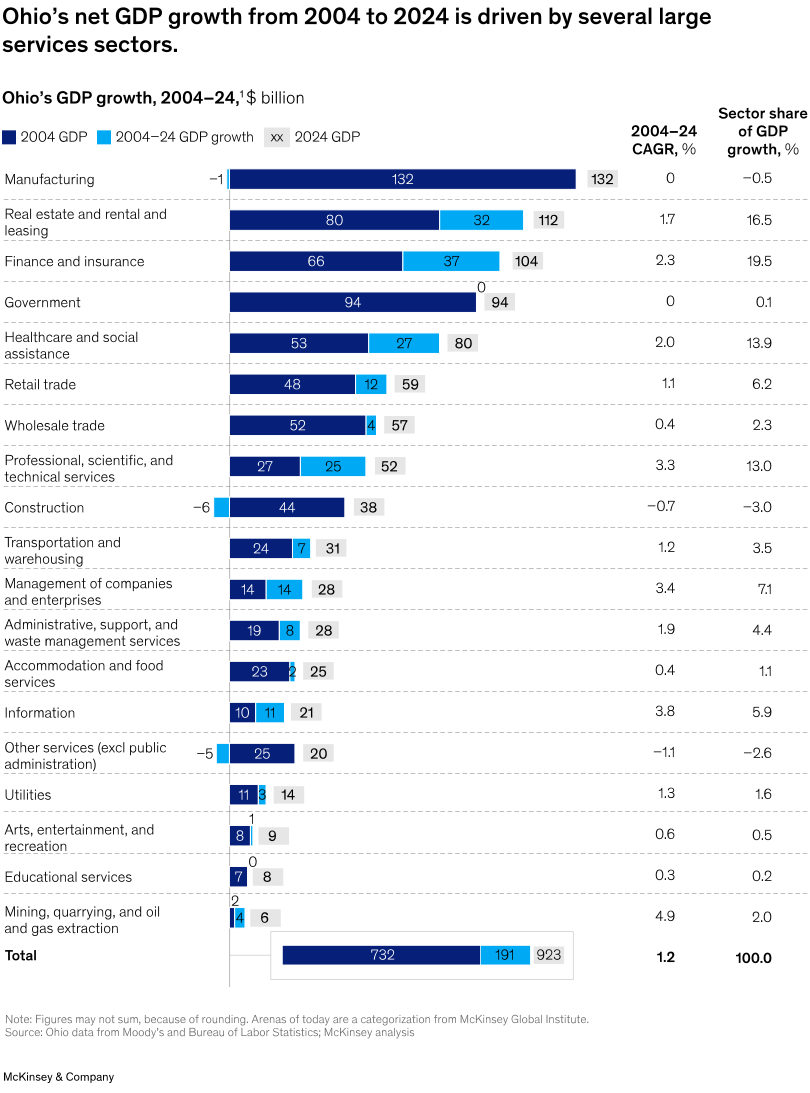
In aggregate, the manufacturing sector was a slight drag on Ohio’s economy from 2004 to 2024, making a 0.5 percent negative contribution to GDP growth, while growth from finance and insurance accounted for 19.5 percent of GDP growth and real estate rental and leasing represented 16.5 percent (Exhibit 1).21 Aggregate trends in manufacturing, however, fail to reflect underlying dynamism in the sector as Ohio transitions to more advanced manufacturing in specific sectors. Since 2004, Ohio’s output in steel products and basic chemicals has grown at annual rates exceeding 3 percent, and since 2010, battery manufacturing in the state has added roughly 2,700 jobs.22
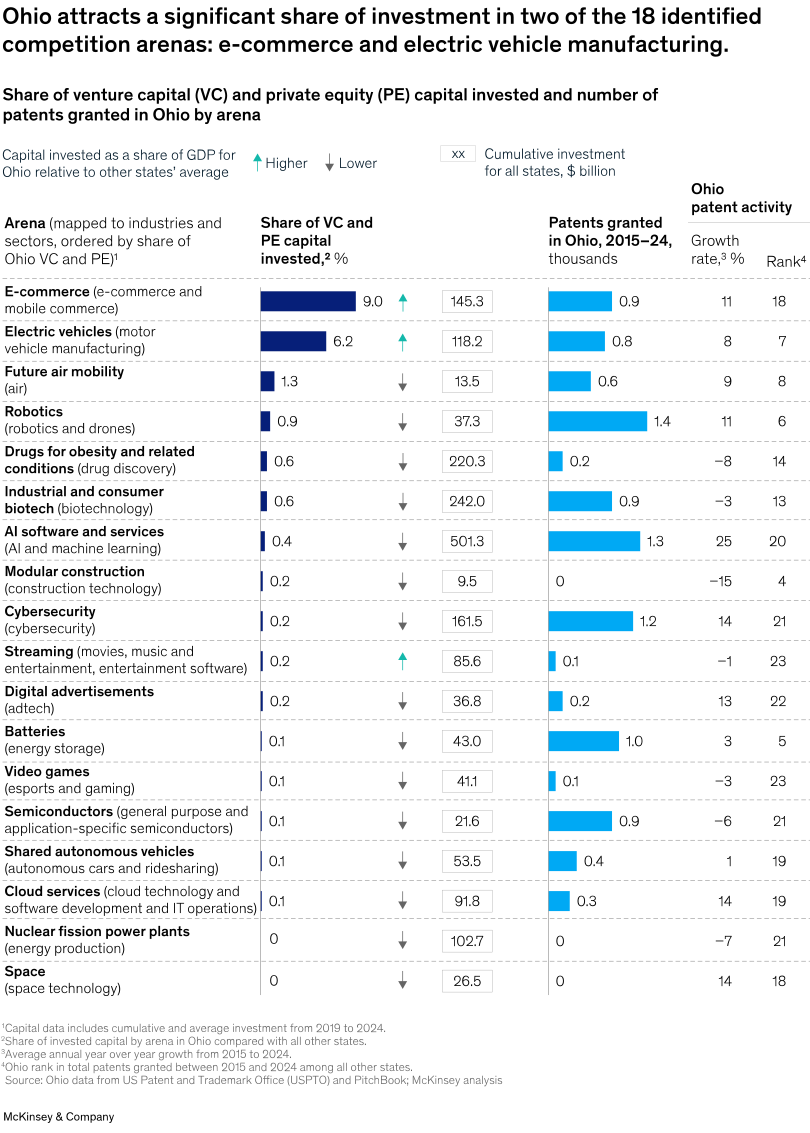
So, which of these arenas could drive transformative economic change in Ohio? The state has an existing presence in virtually all 18 identified by MGI and attracts more than 5 percent of national private equity and venture capital in two of them: e-commerce and electric vehicle (EV) manufacturing, where Ohio ranks as the third- and fourth-most-attractive US state for investment, respectively (Exhibit 2). These assets exist across Ohio and reflect assets that do not sit neatly in one metro, such as Cleveland’s healthcare and bioscience cluster; Dayton’s aerospace and defense ecosystem; Cincinnati’s corporate and commercialization base; Toledo’s glass and automotive supply chain; Akron’s polymer and advanced-materials capabilities; and Appalachian Ohio’s role in energy, manufacturing, and logistics.
The potential from AI and the impact on Ohio’s workforce
The same forces shaping high-growth arenas are already reshaping Ohio’s workforce. AI holds potentially revolutionary promise across everything from improving quality of life for individuals to increasing productivity and efficiency for organizations,23 and MGI research suggests the impact of technological change, including AI and robotics, on the nature of work will likely be profound: Nationally, 57 percent of current work hours performed by humans could, in theory, be automated by existing technologies—although human work will remain essential, especially tasks requiring social and emotional capabilities.24 In short, work will become a partnership among people, agents, and robots.
Ohio’s exposure is close to the US average, which means this rapid evolution demands stakeholders in Ohio continue revamping the workforce ecosystem as the skills employers hire for evolve as technology and ways of working change. For workers and households, those shifts will show up in changes to job responsibilities, schedules, and wages, not just in hiring demand. Exhibit 3 shows a total of 58 percent of work hours in Ohio (one percentage point higher than the United States generally) could theoretically be automated through agentic technology (44 percent) and robotic technology (14 percent), with AI enabling or amplifying much of that shift.
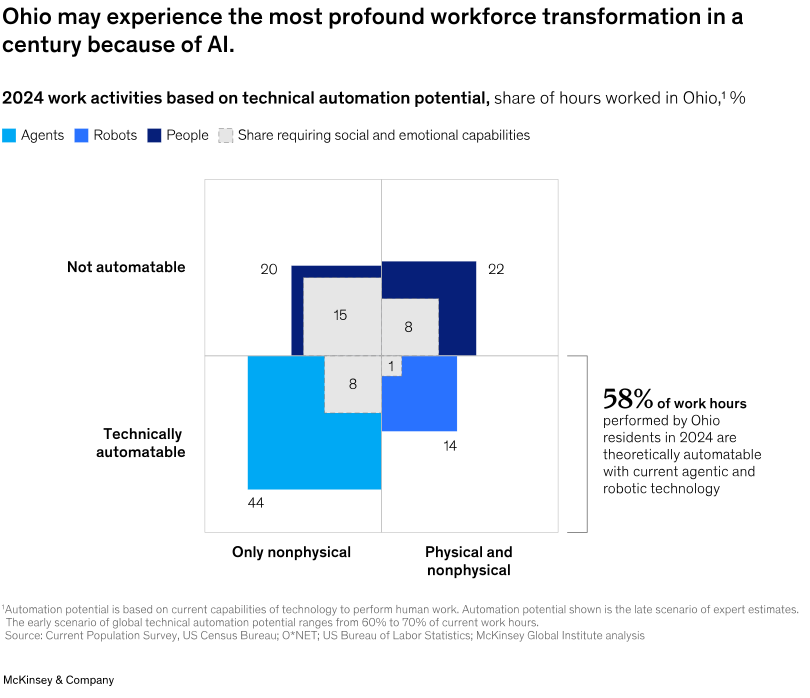
While these shares are large, a portion of such activities will continue to require social and emotional skills largely beyond the reach of automation. Further, theoretical automation is not a forecast of job losses, in part because automation may not always be cost-effective25 and because increasingly complex tasks will continue to require human inputs and interventions. History suggests new challenges are addressed by new jobs when technology increases productivity.
After all, Ohioans did not choose to convert productivity gains resulting from the arrival of the sewing machine, tractor, and nitrogen fertilizer into abundant leisure time for an agricultural society. They instead used that time to invent powered flight and advanced space propulsion that brought humans to the moon—all unthinkable in the late 1800s. As we imagine the post-AI economy, we can be confident of one thing: It’s likely to profoundly change the way Ohioans work. This change has already begun. In the Federal Reserve Bank of Cleveland’s March 2026 Survey of Regional Conditions and Expectations, just under three-quarters of Fourth District firms reported using AI in business processes during the prior six months, and 79 percent expected to do so in the next six months.26 The following exhibits about AI emphasize how roles and skills evolve—not only how much activity could theoretically be automated.
Three implications for the future of work in Ohio
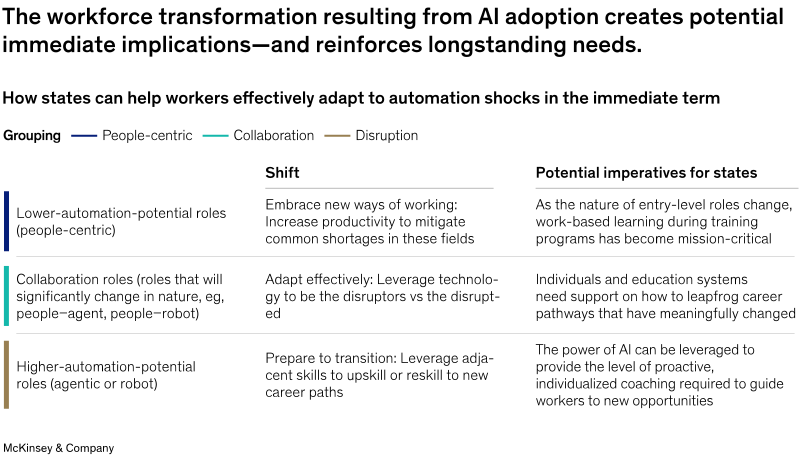
The adoption and scaling of AI and other technologies has three implications for the future of work27: Some jobs will require workers deepen social and emotional skills that machines cannot replace (such as those vital to problem-solving and communication), some will require learning how to work productively alongside agents and robots, and others will need pathways to be built for those whose roles change most to move into the work Ohio employers need. The demands will differ by role (Exhibit 4).
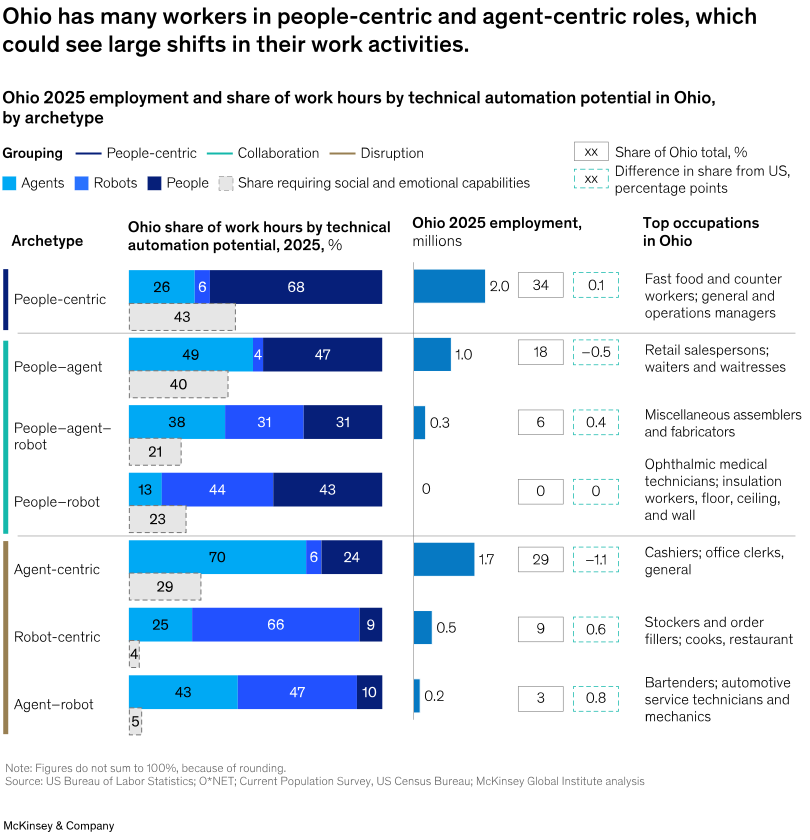
As Ohio prepares its workers for the future, proactive actions that address how work is shifting will likely be critical. For people-first roles, accelerating work-based learning during training can help entry-level workers gain valuable skills and employer connections. In “collaboration” roles, in which humans are expected to increasingly partner with agents and robots, opportunities to learn new skills and ways to work with technology can help workers become disruptors rather than being disrupted. And for roles with the highest automation potential, the power of AI could be used to help guide workers who need to transition to new opportunities (Exhibit 5).
How Ohio wins: A bold, inclusive response
Ohio cannot control the forces reshaping the world economy, but its leaders have more power than they may think over the state’s future. What’s required is strategic decisions about where, when, and how to invest, informed by an understanding of how sectors will grow and which present an opportunity for the state to lead and build competitive differentiation. Success requires action across four reinforcing fronts:
- selecting and mobilizing around arenas where the state has a right to win
- solidifying the foundation for accelerated economic growth
- maximizing the potential and limiting the downsides of AI
- prioritizing prosperity for all as a priority outcome
There are examples Ohio can learn from to create its own unique blueprint for success, especially the dynamics of growth and decline among global firms, sectors, and economies. One relevant lens is MGI’s work on productivity standouts, or the small group of firms that drive a disproportionate share of productivity growth. In the United States, 44 firms, 5 percent of the sample analyzed, generated 78 percent of positive productivity growth. These firms succeed by doing things differently, notably by making bold strategic moves, scaling productive businesses, shifting portfolios, and finding new ways to create value. Such progress benefits firms and workers alike because higher value per worker can fund faster wage growth, helping firms attract talent and support continued productivity gains.28
1. Select and mobilize around growth arenas Ohio has a right to win
Ohio has activity tied to all 18 growth arenas defined by MGI, as mentioned earlier. Exhibit 6 captures where the state stands across two dimensions. The x-axis shows the concentration of companies in and adjacent to an arena relative to the rest of the United States—that is, arenas where Ohio already has a degree of competitive advantage in terms of business activity. The y-axis shows how Ohio is trending in the output growth of these companies in its state borders relative to the national growth rate. Together, these dimensions give a view of the scale and momentum Ohio currently has in arenas which, combined with indicators such as investment and patents, can focus decision-makers on the biggest opportunities.
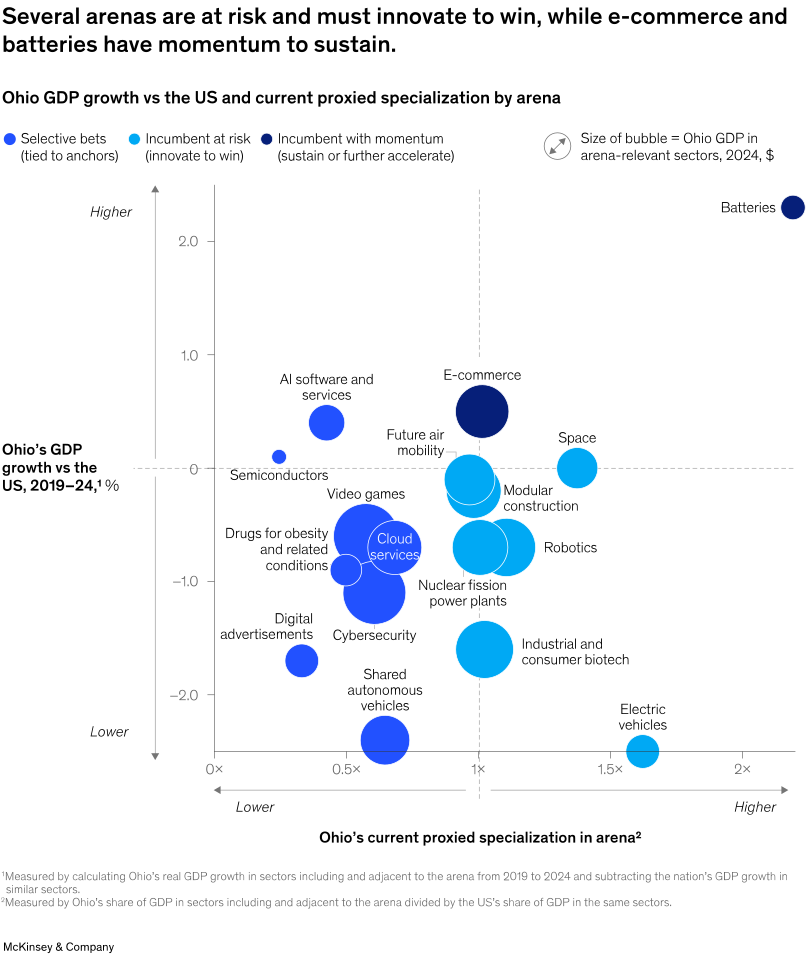
Used this way, the right to win becomes a decision rule: Sustain arenas with scale and momentum; invest where existing assets are underperforming; and advance selective bets only where anchor investments can pull suppliers, talent, research, and infrastructure behind them. These archetypes sort arenas by Ohio’s current specialization and momentum, not by long-term importance. Several of the state’s highest-stakes anchors, such as semiconductors and data centers, sit under “selective bets ” because momentum is still being built, not because they matter less. Exhibit 6 highlights where Ohio’s scale and momentum already support leadership—and where new investment may help change the state’s economic trajectory.
Where to play in a new economic era
To win in a landscape being reshaped by new technologies and industries, Ohio’s leaders have strategic decisions to make about where, when, and how to invest. Success depends on understanding which competitive arenas present the greatest opportunity for the state to build a durable advantage.
An analysis of Ohio’s position within these emerging growth arenas (as illustrated by Exhibit 6) reveals three distinct strategic paths, or archetypes, that could guide investment decisions.
- Sustaining momentum. In two arenas, Ohio already has a high degree of economic specialization29 and recent growth—the goal here would be to press the advantage. These arenas are batteries and e-commerce, where Ohio leverages its powerful logistics and transportation infrastructure. Staying ahead of the curve in capturing the rapidly growing market requires existing businesses in the state to continue to invest and innovate. New companies and investments can strengthen Ohio’s regional specialization, creating a cluster effect that spurs further growth (see sidebar “Honda–LG battery plant in Fayette County”).
- Investing to avoid stagnation. These are arenas where Ohio has an established presence and talent base but has recently lagged behind the nation in output growth. Bold innovation and investment could help realize their potential and avoid falling behind. We are already seeing examples in future air mobility (for example, Joby Aviation recently acquired a second Ohio facility30) and EVs (for example, Schaeffler invested $230 million in a new manufacturing facility31), as well as space, industrial and consumer biotech, and modular construction (see sidebar “Anduril Arsenal-1 in Pickaway County”).
- Accelerating selective bets. In a few high-potential arenas, Ohio currently has lower specialization but has a chance to win by rallying around strong regional “anchor” investments that attract entire supply chains. Examples of industries where companies are building on existing momentum include semiconductors (for example, Intel’s $28 billion Ohio One semiconductor campus) (see sidebar, “Intel Ohio One in Licking County”) and cloud services (for example, Amazon Web Services has invested $10 billion to expand its data infrastructure in Ohio32). These anchor investments should be treated as platforms for long-arc capacity building: The near-term measure is not only the announced dollar figure but whether Ohio converts each project into further, broader investments, supplier attraction, site readiness, workforce pipelines, and durable regional specialization.33
2. Solidifying the foundation for accelerated economic growth
It takes more to drive Ohio’s next economy than simply identifying and prioritizing arenas of competition. Multiple factors will determine whether the state can attract, expand, and retain businesses, from the availability of affordable energy and housing to better health infrastructure, strong schools that underpin a skilled workforce, and a regulatory environment that fosters entrepreneurship.
Improving energy availability and affordability
For a long time, Ohio’s energy rates were considerably lower than the national average and relatively stable for more than a decade, making it a desirable destination for energy-intensive industries such as data centers. However, Ohio’s energy affordability dropped from 21st among states in March 2025 to 37th by March 2026 as the state’s industrial energy price per kilowatt-hour jumped 27 percent, the largest increase in the country.34 Some price pressure reflects growth itself, because data centers, advanced manufacturing, and electrification increase demand. Harnessing the potential of AI will require Ohio to add reliable supply quickly enough to keep energy affordable for citizens and favorable for businesses, relative to state competitors.
That operating challenge is now visible in the market. The capacity auction in PJM, the regional transmission organization serving Ohio, saw clearing prices increase from roughly $29 per megawatt-day (MW-day) for the 2024–25 delivery year to $270 per MW-day for the 2025–26 delivery year, a roughly ninefold increase.35 The 2027–28 capacity auction, which cleared at $333 per MW-day, fell short of the regionwide reliability requirement for the first time in PJM history.36For Ohio, the implication is direct: Energy strategy must move beyond a low-cost advantage and become a coordinated supply, transmission, demand-management, and customer-protection agenda, especially because McKinsey analysis suggests global data center capacity needs for AI and non-AI workloads could almost triple by 2030, with AI capacity increasing about 3.5 times and accounting for roughly 70 percent of total capacity needs.37
Public and private stakeholders across Ohio have implemented multipronged initiatives to improve energy availability and affordability. For example, the state recently launched a $100 million Energy Opportunity Initiative to spur natural gas infrastructure, energy supply chain enhancements, and nuclear capacity development,38 and state legislators enacted bills to promote in-state energy generation and infrastructure.39 Private projects to expand energy generation capacity include Guernsey Power Station’s 1.8 gigawatt (GW) power plant40 and Meta’s partnership with Vistra, TerraPower, and Oklo to expand nuclear production, grid capabilities, and affordability.41 This investment aims to support Meta’s data center operations while contributing to 1.2 GW in new energy generation.
Data centers are now central to regional economic strategy. When sited well and with appropriate guardrails in place, they do more than consume power: They can spur new generation, speed grid modernization, and build digital infrastructure that lifts industrial productivity.42 But they force hard trade-offs, such as securing reliable power (including grid upgrades), keeping grid costs from shifting onto other ratepayers, and resolving local environmental and zoning concerns (for example, by using closed-loop cooling). In this context, data center development is less of an issue of simple land, water, and electricity use and more of a strategic challenge to build a sustainable, mutually beneficial model for AI-era growth.
A notable illustration of this balancing act is the evolving regulatory landscape, such as the July 2025 Public Utilities Commission of Ohio directive for AEP Ohio to establish a data-center-specific tariff.43 This mechanism aims to align the infrastructure costs of rapid capacity growth directly with the new demand, safeguarding other customers from cost reallocation. As these dynamics play out nationwide—shifting tax incentives, local zoning reviews, tougher grid-integration rules—long-term success for operators and regions will hinge on clear cost-allocation models, proactive capacity planning, and genuine community engagement.
Surging general energy demand driven by digitalization, advanced-manufacturing growth, and electrification is intensifying pressure for infrastructure modernization and the use of alternative energy sources.44 Georgia offers one example, though its market context differs from Ohio’s: It responded to such demands by building the United States’ first new nuclear reactors in three decades—a joint state and federal initiative that provides approximately 17,500,000 megawatt-hours of clean energy per year.45 Ohio’s nuclear power and natural gas capabilities place it in a strong position to relieve its energy and affordability challenges, but finding sustainable solutions to power residences and businesses may require targeted investments and the continuing creation of strategic energy initiatives.
Driving innovation by supporting entrepreneurship
Remaining competitive demands that the state cultivate a strong innovation ecosystem by accelerating the creation of businesses, attracting venture capital funding, encouraging the development of entrepreneurial clusters, supporting underrepresented business owners, and playing to the state’s industry strengths.
Ohio’s technology and innovation ranking was sixth in 2025, up from 12th a year earlier.46 The state’s Innovation Hub programs capitalize on foundational developments and nationally ranked academic R&D in engineering and life sciences and patent filings to create a lasting talent pipeline to fuel growth and new product developments.47 Successful innovation hubs generate cross-sector investments while creating sustainable interconnected communities.48 For example, Minnesota’s position as a leading global health technology cluster is driven by initiatives such as MedTech Hub 3.0, the central role of the University of Minnesota as an academic and research institution, and deep involvement of public and private sectors to bolster growth.49
Ohio can leverage its existing strengths to capture venture capital and private equity growth as well as support and attract the entrepreneurial talent needed to drive business success. Ohio’s current hub map also helps make the strategy statewide. Cincinnati, Cleveland, and Columbus anchor the state’s original innovation districts; newer hubs in Dayton, Northwest Ohio, Akron, Youngstown, Athens, and Piketon connect aerospace and defense, glass, polymers, advanced manufacturing, and energy-related strengths to distinct regional economies. Akron shows how this model can work in practice. The Akron Sustainable Polymers Tech Hub builds on the region’s century-long strength in rubber and polymers, bringing together industry, the Greater Akron Chamber, the University of Akron, federal investment, and entrepreneurial infrastructure such as the Bounce Innovation Hub. Selected for tech hub investment by the US Economic Development Administration in 2023 and awarded about $51 million in 2024, the hub is projected to support more than 4,000 jobs and roughly $5 billion in regional economic impact.50
Making Ohio easier to build businesses in
A competitive foundation is also administrative. Ohio already starts from a position of strength: CNBC ranked Ohio fifth in its 2025 ranking of the top states for business, as well as first for infrastructure and second for cost of doing business.51 Yet certain measures of investment in the state fall outside thresholds of the top five. Specifically, Ohio ranks eighth among states in private nonresidential construction and 16th in R&D spending.52 To accelerate growth through investment, Ohio’s government can be a source of competitive advantage.
Ohio can build on existing digital platforms—such as the Ohio Business Gateway, which helps businesses complete government tasks, submit transactions, and make payments across state agencies,53 and the LPI eLicense Portal for licensing, permitting, and inspections54—to make state and local government faster, more transparent, and easier to navigate. The goal should be a visible reduction in friction: one digital front door; plain-language requirements; predictable service-level commitments; and faster decisions across high-volume interactions such as construction permits, business formation and licensing, workforce credentials, tax and incentive administration, and benefits eligibility. Done well, AI and digitalization can turn administrative efficiency into another reason builders, employers, entrepreneurs, and residents choose Ohio.
3. Maximizing the potential and limiting the downsides of AI
While the full impact of AI on the way we work continues to evolve, its disruptive potential already seems clear. As noted earlier, 58 percent of Ohio residents’ work hours in 2024 could theoretically be automated with existing agentic AI and robotic technology, and about 2.4 million Ohioans are employed in roles that could see large-scale changes in activities.55 Workers and households are not passive inputs in that transition. They decide whether training is feasible; whether a job move is worth the risk; and whether wages, benefits, childcare, healthcare, and geographic access make participation possible. That is why the AI response must connect directly to the inclusion, health, housing, and education agenda that follows.
Work in the future increasingly looks like it will be a collaboration among humans, agents, and robots—all powered by AI. Human skills will endure, although they will be applied differently. And the economic impact on individuals, companies, and countries will likely be profound. Tackling the task of preparing workers for an AI future must take place at all levels, including states. Ohio has an opportunity to proactively shape the extent to which the state’s workforce is best prepared.
Helping Ohio’s workforce become future-ready
Talent is the lifeblood of a vibrant and growing economy. Ohio’s workforce agenda starts with workers and households who can afford to stay; who can move for opportunity; who can take time for training; and who are excluded by care, health, housing, or transportation barriers. Employer demand still matters, but the state will meet those needs only through measures that improve job quality and make participation realistic for more Ohioans. The state’s labor force participation rate of roughly 62 percent ranks 29th nationally,56 short of the about 66 percent that would put Ohio among the top ten.
The challenge is compounded by demographics. The state’s population is aging (Ohio ranks 20th among states in the share of its population over age 65),57 with diminishing birthrates and shifting sectors transforming the workforce. Closing the participation gap therefore depends both on attracting working-age adults from out of state and on activating residents already here. Encouragingly, Ohio has momentum: Its net domestic migration turned positive from 2024 to 2025, reversing the trend of net domestic outflows in prior years.58
A clear benchmark can sharpen this agenda. A JobsOhio-supported Economic Innovation Group analysis ranked Ohio 14th on its Workforce Competitiveness Index, behind Indiana at fourth and Michigan at eighth.59 Ohio’s advantage is that the same levers that close that gap—such as graduate retention, high-tech credentialing, employer-led training, and affordable places for skilled workers to live—may also help the state become more competitive across the 18 competitive arenas.
The state has already made concerted efforts to increase labor force participation rates and prepare for upcoming workforce disruptions. The JobsOhio Relocation Incentive provides financial incentives to offset the costs of recruitment and relocation for out-of-state STEM and technical workers in ten high-demand and undersupplied areas.60 And in November 2025, JobsOhio launched AI Ready Ohio in partnership with several companies and Ohio universities—among the country’s first state-led AI workforce certification programs—offering AI certifications for workers, professionals, and executives, with statewide expansion now underway.61 The TechCred program accelerates digital capacity building through structured employer reimbursements for eligible tech credentialing, and Ohio continues to leverage the Industry Sector Partnership Grant Program to enhance educational and business partnerships.62
Clustering also improves a region’s odds of long-term economic success when policies, education, and infrastructure join to drive workforce development.63 For example, the Indiana Economic Development Corporation is pursuing LEAP, which seeks to align workforce needs with upcoming STEM talent demands.64 Workforce participation expansion and stronger private employer investment efforts can strengthen Ohio’s existing initiatives, including their innovation hubs.
These efforts show how Ohio could continue to attract workers to the state, retain graduates, and ensure workers have real agency to learn the skills and attain good jobs increasingly required in the AI era.
A significant structural barrier for many is the lack of affordable and accessible childcare. Ohio ranks 40th among states in childcare access, affordability, and policy in 2026.65 A study by the U.S. Chamber of Commerce Foundation revealed that Ohio’s economy loses an estimated $5.5 billion annually due to childcare-related issues. This figure includes a $1.5 billion loss in tax revenue and costs associated with workforce disruption.66 The childcare gap is a major driver of parents leaving the workforce, with 70 percent of parents of young children reporting they have missed work or class due to childcare issues and 33 percent of those experiencing employment disruptions in the past year leaving their jobs entirely as a result.67 This burdens households and shrinks Ohio’s available workforce. Making childcare more accessible and affordable is among the most concrete ways to move the state toward top ten labor force participation nationally.
Expanding access to education and labor market alignment
Education is a vehicle for economic prosperity. Indeed, about 172,000 students graduate annually from Ohio’s 272 higher education institutions, and the state ranks sixth nationally in the number of such institutions.68 Yet its higher education outcomes rank only 41st nationally,69 with lower college completion rates among Black and Hispanic students compared with White students,70 and declining higher education enrollment.71 The state’s pre-K–12 outcomes are more positive, ranking 15th nationally.72 Yet Ohio struggles here as well, with significant gaps in learning outcomes by race and region, including a learning outcomes gap of about 30 percentage points between White and Black third-grade students73 and limited access to early education, ranking 35th for access for four-year-olds and 23rd for three-year-olds.74
Ohio has sought to capitalize on its relatively stronger pre-K–12 outcomes through retention efforts and continues to work to improve educational outcomes. The Ohio Department of Higher Education utilizes State Share of Instruction (SSI) to increase residents’ education affordability, access, and completion rates. SSI provides performance-based operating subsidies to decrease instructional expenditures for nearly 60 public colleges and universities.75 As another example, neighboring Michigan has enacted Michigan Reconnect, which matches adults older than 25 who do not have an undergraduate degree with employers to create lasting relationships and improve educational outcomes. Ohio has long recognized the economic power of education, and it can continue to maintain an active role in attainment through multiparty coordination that addresses barriers and allocation challenges.
4. Prioritizing prosperity for all as a priority outcome
A state may grow or slow, but even worse is growing slowly while the gains reach only a few. Beyond winning the new arenas and guiding its workforce through the age of AI, Ohio’s central aim must be that every resident shares in the growth ahead. By doing so, Ohio can not only broaden and deepen the prosperity of its citizens but also continue to drive the state’s attractiveness as a place for people to live and companies to invest. Inclusion is therefore not a separate social objective after growth is achieved; it is a condition for whether the growth strategy succeeds at scale, because housing, health, childcare, education, and regional access determine whether all people can participate in the sectors Ohio is trying to grow.
Driving housing affordability
In addition to childcare and education, housing presents a significant infrastructure challenge for Ohio. The median house sale price in Ohio is 34 percent below that of the United States,76 and single-family homes sell for roughly half the national median in the Akron and Cleveland metros, an increasingly powerful draw for talent and remote workers. But Ohio’s population growth exceeds the US average in some of its metropolitan areas (for example, in Columbus, which grew 11 percent from 2014 to 2024, compared with average US population growth of 6 percent77), resulting in limited housing availability and reduced affordability, especially for the lowest-income renters and households on fixed incomes.78 Ohio ranks 26th nationally for affordable housing for the most vulnerable populations, with 37 affordable and available rentals per 100 extremely low-income renter households.79 In fact, 73 percent of extremely low-income households spend more than half of their income on rent, up from 66 percent five years ago.80 Affordable housing is both a resident need and a competitive asset; getting it right supports prosperity for all Ohio residents while strengthening Ohio’s draw for talent and businesses.
The Ohio Housing Trust Fund empowers nonprofits and private businesses seeking funding to aid vulnerable populations and provides essential support and funding to maintain safe housing for Ohio residents, with 75 percent allocated to those earning 50 percent or less of the area’s median earnings.81 The state and its peers have also been actively creating and maintaining programs to address housing needs. Minnesota, for example, has implemented state-specific zoning to encourage development, such as reducing parking requirements to decrease the costs of building multifamily homes.82
Yet additional proactive approaches may be required in Ohio to both strengthen support for homeowners and renters—through tools such as eviction prevention and home repair assistance that keep existing units in service—and increase the housing supply, especially by expediting the permit process, unlocking underutilized land and property, and rehabilitating the existing housing stock. Modernizing outdated building codes is a prerequisite: Columbus’s 2024 zoning overhaul, its first comprehensive update in decades, and Austin’s permit reform, which halved initial site plan review times, show what’s possible.83 The capacity gap presents an opportunity that Ohio’s private and public entities can utilize.
Improving healthcare outcomes
Ohio is a hub for premier healthcare systems, research, and innovation, particularly in Northeast Ohio, where Cleveland Clinic, University Hospitals, MetroHealth, Case Western Reserve University, Cleveland State University, and state and JobsOhio partners formed the Cleveland Innovation District. To date and statewide, however, that has not fully translated into its residents being healthier. Ohio ranks 39th nationally for health outcomes,84 has a substantial chronic-disease burden, and spends more on healthcare relative to most other states.85 More than two in three (69 percent) Ohioans experienced at least one healthcare affordability burden in the past year, and 80 percent worry about affording healthcare in the future.86 When care is unaffordable, people defer treatment, miss work, and avoid job moves or training opportunities, making health affordability a practical constraint on workforce participation and AI-era mobility.87 In addition, accessibility challenges contribute to higher uninsured rates and unhealthier populations in rural Ohio.88 Medicaid coverage continues to be critical for healthcare access among rural, low-income, and aging residents across Ohio, and there remains much work to be done to ensure equitable access to services, especially for children and young adults.
On the spending side, the Federal Rural Health Transformation (RHT) Program administered by the Centers for Medicare and Medicaid Services is designed to offset some (though not all) Medicaid spending reductions affecting rural communities and provide better rural healthcare outcomes.89 In 2026, Ohio will receive $202 million in RHT programmatic funding.90 One peer example in relation to costs is Indiana’s 2025 legislation tying nonprofit hospital tax status to statewide average pricing benchmarks, alongside expanded price transparency and direct-to-employer plan requirements.91
Further progress means shifting from treating illness to building health—more community-based prevention; integrated clinical and social supports; and targeted help for rural residents, low-income families, children, and older adults. This is an economic strategy as much as a health strategy: Healthier residents can participate more fully in the workforce, learn more effectively, and raise productivity.
Focusing on underserved regions and populations
Closing the gap between underserved communities and the rest of the state must be an explicit goal of Ohio’s growth strategy. The McKinsey Institute for Economic Mobility finds that improving outcomes and decreasing disparities is an imperative given that in many Ohio counties residents in lower-opportunity neighborhoods—disproportionately Black and Latino households—trail their county peers by 30 to 50 percent on measures such as housing, healthcare, and educational opportunities.92
Encouragingly, the earnings gap between those with and without college degrees in Ohio has been narrowing. Wages for high school graduates older than 25 without college training increased by about 55 percent from 2014 to 2024, outpacing the rate of inflation, and while those with a bachelor’s degree or higher earn about 1.6 times more than high school graduates without, that is down from a gap of roughly 2.0 times in 2014.93 Generally, there are signs of increased opportunities for those without a college degree.
Yet 12.7 percent of people in Ohio live in poverty,94 and there remain significant differences in earnings by race and ethnicity. Despite improvement in the past decade, Black and Hispanic Ohio residents in 2024 earned 67 percent and 76 percent, respectively, of White workers’ earnings on average, reflecting differences in occupation, industry, geography, and access to opportunity.95 Growth has also been distributed unevenly across Ohio. For example, while GDP in the Columbus region increased by 33 percent since 2014, Cincinnati’s GDP grew by 25 percent, and Cleveland’s output rose by 12 percent.96 Discrepancies also appear across rural and urban lines, with more rural areas such as Ohio’s Southeastern region recently facing unemployment rates roughly two percentage points above the state average.97
This is why the economic strategy should name and mobilize regional assets directly. Columbus can be a growth engine without becoming the whole story; Cleveland, Cincinnati, Dayton, Toledo, Akron, the Mahoning Valley, and rural and Appalachian communities each bring assets that make the statewide strategy more credible and more resilient. In particular, research by the McKinsey Institute for Economic Mobility finds taking a differentiated approach to rural economic development across the diversity of rural communities could lead to sustained economic growth.98 This place-based lens should include transition stories in the Mahoning Valley and Youngstown, where advanced-manufacturing and energy-related investments can help industrial communities move from legacy concentration to new capability. It should also include older industrial neighborhoods in Toledo and Dayton, where access to training, transit, childcare, and quality jobs will determine whether regional assets translate into household mobility.
The state has deployed policies and strategies to narrow opportunity gaps within underserved regions and populations. Ohio legislators enacted a Regional Partnerships Program to improve prenatal-to-workforce outcomes,99 aiming to improve upward mobility in communities with increased poverty levels and reduced educational attainment rates. State housing initiatives seek to address housing shortages that hinder workforce participation or hiring—for example, the Residential Economic Development District Program encourages regional coordination to align public grants and private incentives to create workforce housing near local labor markets.
The foundation of Ohio’s economic competitiveness strategy hinges on unlocking educational excellence, workforce participation, increased housing opportunities, and health equity. The state’s long-term economic success depends on it. By tracking statewide prosperity and mobility metrics, coordinating statewide standards with regional flexibility, and embedding long-term affordability, Ohio can drive its business development and realize its growth potential.
Conclusion
Ohio has real advantages, from an at-scale economy that is the seventh largest in the nation to a deep industrial base, a strong energy and logistics platform, leading research institutions, and a central location within a day’s drive of most of the country. These are foundations to build on. But the next era will not reward broad capability alone. It will reward the states that make deliberate choices in selecting the arenas where they have a genuine right to win, concentrating investment behind those choices, and ensuring the gains reach residents across every region. The work ahead is less about reinvention and more about focus, directing Ohio’s existing strengths toward the sectors, infrastructure, and workforce capabilities that will define competitive advantage over the next decade.
These ambitions can be made concrete through a set of goals to which the state holds itself accountable: pursuing top five growth among US states, reversing demographic headwinds into durable population gains, and achieving prosperity visible in real household progress across every region and demographic group, with workforce participation in the national top ten. Behind each headline goal sit the specific measures that tell Ohio whether the strategy is working, including the following:
- growth: top five real GDP growth nationally, rising share of GDP from arena-aligned sectors, private nonresidential construction and R&D spending moving into the top five, and private-capital inflows per capita climbing toward peer benchmarks
- people: sustained, positive net domestic migration; workforce participation in the national top ten; and increased retention of in-state college graduates and accelerated in-migration of skilled workers to Ohio
- capability: AI and advanced-skill credentials issued per capita, new firm formation in priority arenas, permitting and licensing decision times benchmarked to leading states, and venture and growth capital deployed into Ohio-based companies
- prosperity: real median household income growth across every region, narrowing urban–rural and racial earnings gaps, reductions in childcare and housing-cost burdens, and movement up the national health outcomes rankings
An action plan for Ohio
The following agenda translates the report’s four pillars into a practical leadership plan. It is intentionally selective; the point is not to do everything but to align agencies, regions, employers, educators, and civic partners around the actions most likely to change Ohio’s trajectory.
Table
|
Strategic priority |
What state leadership can do |
|
Mobilize around growth arenas |
Make strategic choices about where, when, and how to invest determined by existing strengths in all of Ohio’s regions, specifically the following:
|
|
Solidify Ohio’s economic foundation |
Accelerate reliable and affordable energy generation and transmission to handle AI-driven demand growth and keep energy affordable for citizens and favorable for businesses. Drive innovation by supporting entrepreneurship through statewide innovation districts, venture capital attraction, and support for the entrepreneurial ecosystem. Make Ohio’s government efficiency a source of competitive advantage through transparent and easy-to-navigate services that benefit businesses and residents alike. |
|
Maximize the potential of AI for Ohio’s workforce |
Help Ohio’s workforce accelerate into the future where robots, agents, and humans collaborate by incentivizing training tied to the evolving needs of employers. Further expand access to labor market–aligned education and labor market alignment. Consider ways to increase residents’ education affordability, access, and completion rates. Increase childcare supports that make training and labor force participation realistic for more Ohioans. |
|
Prioritize prosperity for all and significantly increase workforce participation |
Extend Ohio’s lead in driving housing affordability near places of work by enacting a unified, statewide initiative to address housing shortages and unlock underutilized land. Improve health outcomes, especially in rural areas, by expanding community-based prevention and integrate clinical and social supports. Target investments to ensure older industrial communities, underserved urban neighborhoods, and Appalachian regions can actively participate in the new economy. |
Only about half of US states have the critical mass of population and economic size enabling them to aspire to truly seize economic advantage. By making the right decisions and acting quickly, Ohio could break free of its peers and lead again. The task is not incremental improvement; it is to place concentrated bets, remove friction, build fast enough, and ensure every region can participate. If Ohio acts with that level of ambition, it can move from a state with momentum to a standard bearer for the next economy.



The authors wish to thank Anu Madgavkar, Ben Safran, Ben Saft, Chad Cramer, Emily Lurie, Euney Kim, Jeffrey Zhiqi Liu, Jennie Nevin, Julia Madureira, Katherine Linzer, Kevin Mei, Kevin Russell, Lauren Yayboke, Robblyn Branch, Stephanie Savir, Suhayl Chettih, Tim Bacon, and Todd Wintner for their contributions to this report.