Though recent developments suggest potential for shifting dynamics in the Gulf region, disruption continues to reshape global travel patterns, alter airline economics, and test the resilience of tourism markets worldwide. People still want to see the world, but geopolitical tensions and potential continued airfare increases are leading some travelers to take a wait-and-see approach—hoping for greater clarity and confidence before booking their journeys. Some could hope to offset expected higher transportation costs by spending less on accommodation and experiences. Others may find it more difficult to reach the destinations they want to visit.
Travel companies can use this moment to take stock of how recent disruption has affected travel, and it is worth assessing what changes could persist going forward. Amid geopolitical uncertainty, hospitality players tend to face shorter booking windows as guests make last-minute decisions. Airlines can grapple with disrupted air corridors, rising fuel costs, and weakened connectivity through key hubs—which can increase operating expenses and result in higher fares on major international routes. For Gulf economies that have strived to position themselves as global aviation crossroads and tourism destinations, the disruption has been especially acute, causing declines in passenger flows and hotel revenues.
While recognizing that the dynamics of this situation are fluid, this article suggests considerations for tourism stakeholders looking to meet the moment with well-formed strategies.
Do people still want to travel?
In many markets, demand is intact. But uncertainty has delayed bookings, reshaped travel patterns, and influenced spending and channel choices. Travelers still crave flexibility as they wait for geopolitical dynamics and travel pricing to evolve.
For example, McKinsey’s Italian consumer 2026 summer travel survey indicates that as of May 20, 74 percent of Italians said they intend to travel this summer, but 63 percent had not fully booked. This suggests that demand persists, but travelers are seeking to maintain their flexibility. Fifty-six percent of respondents said their travel plans were affected in some way by geopolitics, but only 3 percent canceled outright. Meanwhile, 24 percent of respondents said their desire to wait for further information and news before solidifying travel plans was a barrier to booking.
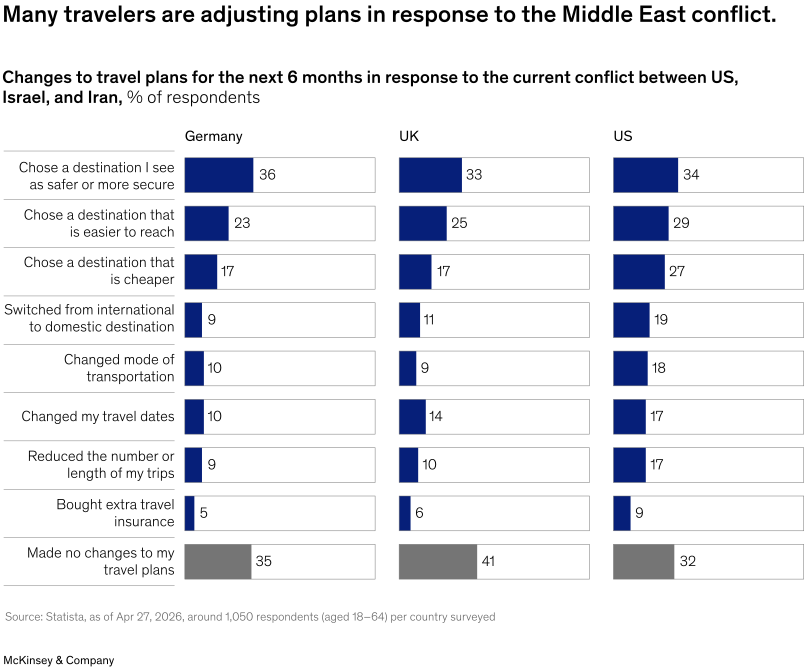
There is further evidence that traveler behavior has been materially affected by the Middle East conflict. As of late April, roughly 60 to 70 percent of travelers across the United States, Germany, and the United Kingdom said they were adjusting their travel plans over a six-month horizon. Safety is the dominant decision driver across all three of these markets, ranking ahead of convenience and price (Exhibit 1). The United States shows the strongest behavioral shift, with American travelers more likely to switch from international to domestic travel and to change their mode of transport. Some are relying more heavily on travel agents for confidence and verification during a time of flux.
Can travelers still get where they want to go?
Finding flights has become more difficult for some travelers. Facing rising costs and traveler uncertainty, airlines across the globe reduced their scheduled offerings. Many airlines—and especially low-cost carriers—began to trim their weaker routes in the face of fuel cost pressure. There could be further capacity reductions related to fuel costs volatility.
Meanwhile, connectivity through Middle Eastern air hubs became significantly challenged as a result of the conflict. As travelers begin to be routed through alternative hubs, the total number of international passengers connecting via Middle Eastern hubs fell by 5.1 million (a roughly 53 percent decrease) year over year from March to April 2025 to March to April 2026 (Exhibit 2). It’s worth noting that the region’s central location and previously established global connectivity could aid its recovery as a travel and aviation hub. Some Gulf travel operators are using this period as an opportunity to refresh and upgrade offerings, which suggests confidence in a recovery.
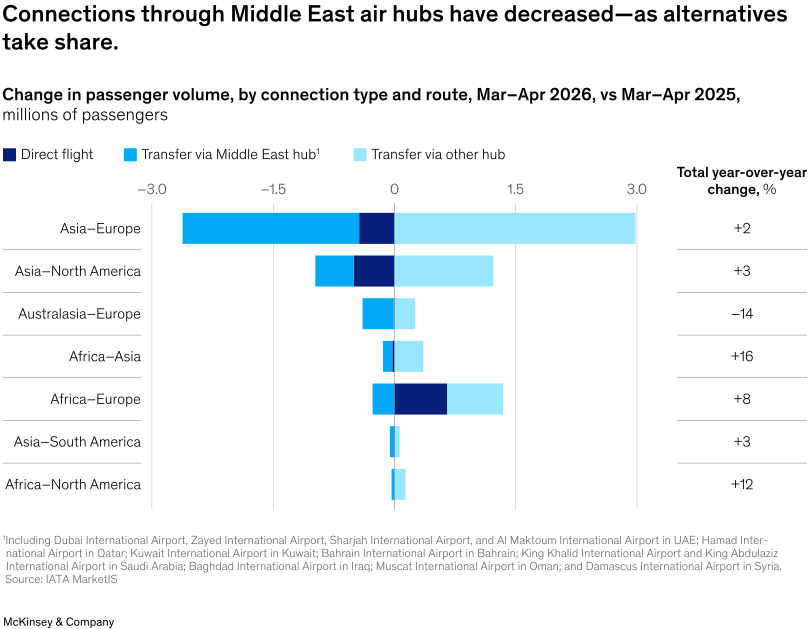
For most markets, connections via Middle Eastern hubs are being at least partially replaced by connections through alternative hubs outside the Gulf region. For instance, Istanbul has seen increased traffic as an alternative connection point. Other traffic is being replaced by direct flights that bypass connections altogether. For instance, some Chinese airlines have added more direct flights to Europe. Chinese and Turkish carriers have added more than 4,000 flights to their schedules for June through November 2026, accounting for roughly 56 percent of total capacity added by the top ten airlines.
McKinsey analysis examining more than 90 tourism demand variables indicates that the total number of available airline seats and the presence of direct flights are the two most significant factors in a destination’s ability to attract international leisure visitors. An increase in direct flights on certain routes could potentially lead to reshaped travel flows.
How much could airfares rise?
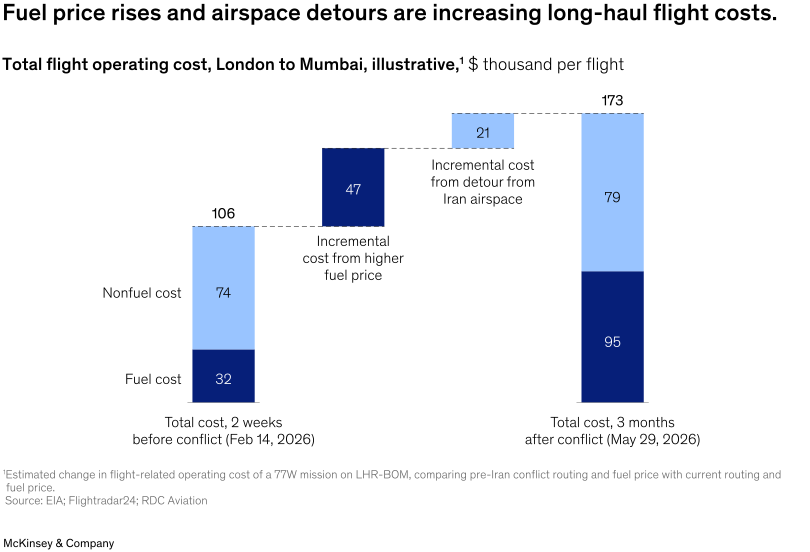
Airfares have been under pressure as constrained airspace and higher jet fuel prices drove up costs for airlines. As an illustrative example, a flight from London to Mumbai—traveling a greater distance because of restricted airspace in the Gulf region—could see a 63 percent increase in cost versus a pre-disruption baseline (Exhibit 3). The potential result for such a flight could be ticket price increases ranging from roughly 13 to 44 percent, assuming costs are passed on to passengers.
Where could demand shift as Gulf region travel faces headwinds?
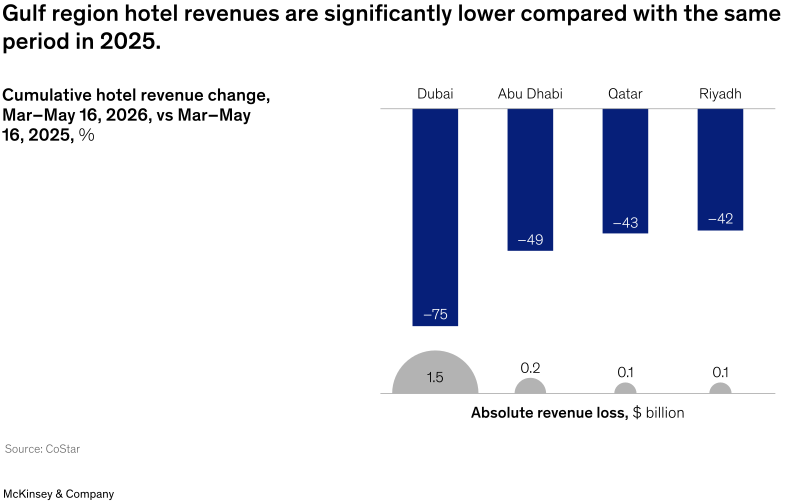
Many travelers are revising plans to visit the Gulf region amid geopolitical tension in the Middle East. Most Gulf region markets are experiencing significant declines in accommodation revenue (Exhibit 4). Dubai has seen the largest effect, with a 75 percent year-over-year drop in room revenue—equating to a $1.8 billion decrease. Luxury hotels have faced particular challenges as high-end demand has tended to be more crisis sensitive than mass-market and domestic demand.
Where is demand shifting to and gaining momentum? Early signals suggest many travelers are choosing to stay closer to home (Exhibit 5). Europeans who might have visited Asia in the past could be more likely to book travel to, for example, a Mediterranean destination such as Tangier or Tunis.
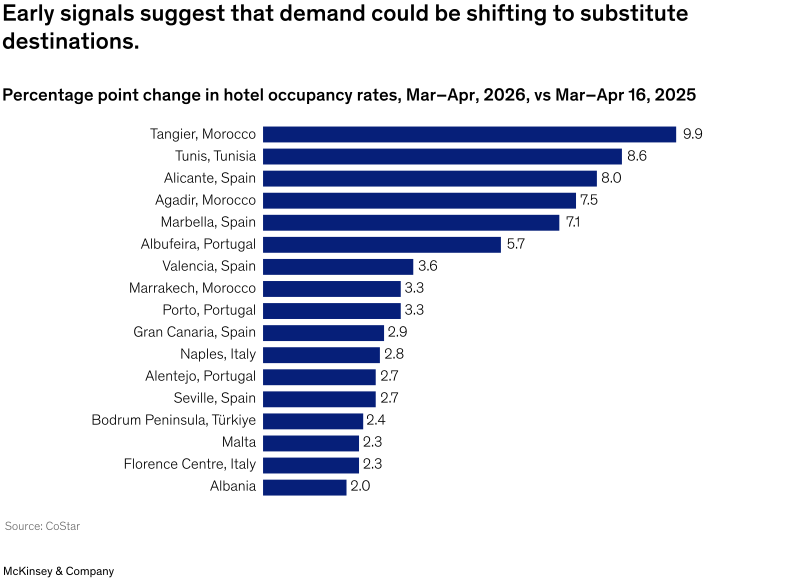
Gulf destinations are not the only ones that have seen reduced traffic: Small or remote destinations that lack point-to-point flights and are more reliant on Gulf-connecting traffic could face particular challenges. For instance, the Seychelles and Maldives, which are highly dependent on Gulf connections, have seen significantly fewer arrivals since the beginning of the conflict.
How long could effects on tourism last?
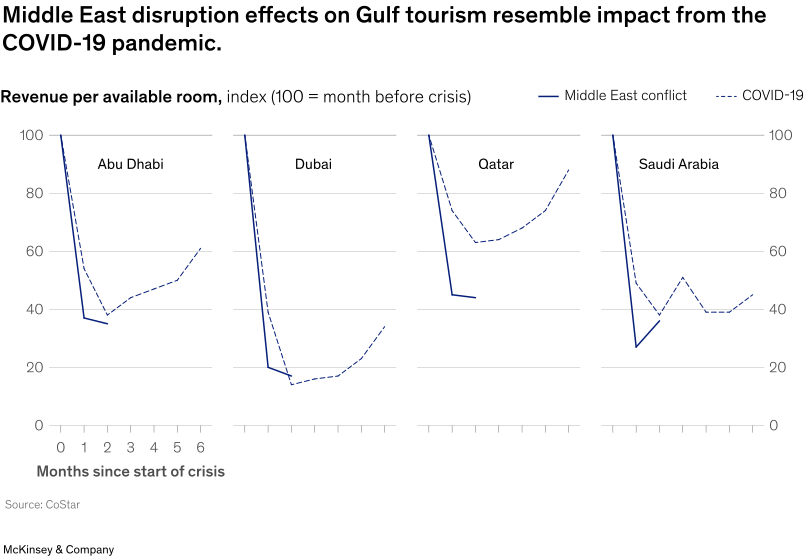
Hospitality revenue declines in some Gulf markets have reached levels not unlike those seen during the beginning of the COVID-19 pandemic (Exhibit 6). If a similar pattern holds, there could be a six- to nine-month recovery horizon. But the recovery path in this case will depend in large part on geopolitical resolution—and safety and security events could prove to have more lasting effects on tourism than a pandemic. Downside risk could relate more to the duration of the decline than to its depth. And even after travel volumes recover, value could still lag, as it can be difficult to climb back to previously established price points.
How can travel stakeholders adjust and respond?
Travel players can implement several strategic interventions to prepare for and mitigate business impacts, and accelerate recovery, during a time of volatility.
Airlines could face challenges relating to recovery shape, loyalty resilience, and fuel costs:
- If disruption eases, airlines can monitor the recovery trajectory and take a segmented approach to both network adjustment and pricing. Some markets or segments could have higher tolerance for elevated risk and lower sensitivity to price. Airlines could align closely with stakeholders to reshape brands and regain share through targeted marketing and incentives.
- High-yield customers could churn. Airlines can stress-test loyalty-tier architecture and improve retention of at-risk members through measures such as status extension and accelerated qualification.
- Margin erosion caused by rising fuel costs can continue even after demand stabilizes but can be counteracted through a variety of airline actions.
Hospitality companies could need to navigate complications relating to forecasting, pricing, and demand displacement:
- Legacy forecasting models can become unreliable as booking and cancellation windows shrink, which can cause commercial decisions to lag the market. Hospitality companies can improve forecasting by checking demand signals more frequently.
- Unchecked discounting can make it hard to recover margins once the disruption passes. Hospitality companies can consider installing price floors and creating a pricing logic tailored to crisis conditions.
- As demand shifts away from some markets, those markets can lose share that is hard to regain. Employing tactics such as creating a precision acquisition program can target traveler demand pools that are at risk of being displaced. Tailored offers can encourage more resilient high-net-worth segments to return.
Tour operators could need to revamp booking, contact center, and cost-based approaches:
- Service breakdowns and cost leakage can rise sharply during periods of disruption, when ultra-short booking windows exacerbate difficulties. Through a redesigned process for rebooking and reaccommodation, companies could put in place scaled exception management, ready-to-go playbooks, and prebuilt workflows so problems aren’t handled ad hoc, mid-crisis.
- Contact center costs can rise and response times can slow when disruptions lead travelers to want more certainty and assistance. Agentic AI copilots could help ease high-friction service journeys.
- Inflexible cost bases can become burdensome in weaker demand environments. A structural cost reduction program can reinforce near-term efforts to boost productivity.
Geopolitics is increasingly influencing the economics and psychology of travel. While consumer appetite for exploration remains resilient, travelers are becoming more cautious—delaying decisions and rethinking destinations. Travel stakeholders that can respond with agile operations, well-tuned customer strategies, and careful pricing could be best positioned not only to withstand turbulence but also to capture shifting demand as global travel flows are reshaped in real time.
Related Articles

Geopolitics and the geometry of global trade: 2026 update

Five steps to turning geopolitical volatility into an advantage