At a glance
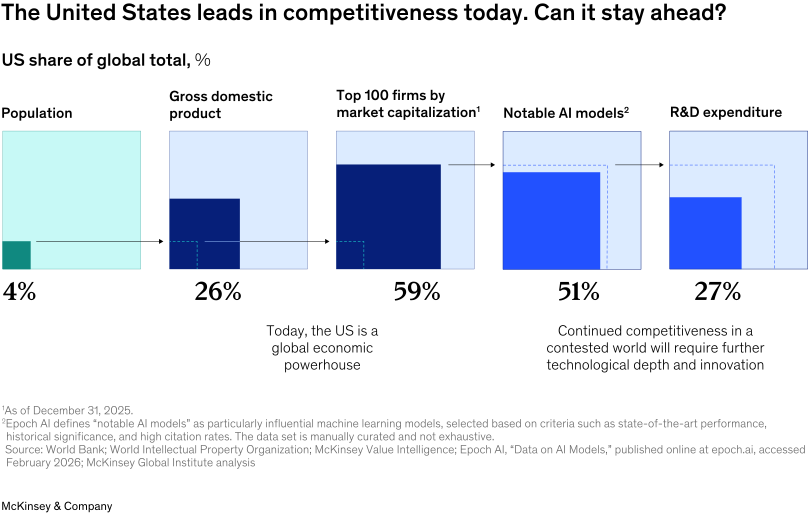
- At 250 years old, the United States is the world’s most competitive economy. It generates 26 percent of global GDP and is home to 59 of the world’s top 100 firms. In the past several years, accelerating US productivity growth and announced foreign direct investment inflows have sharpened its edge over other advanced economies.
- It’s a new world. AI is unveiling an ever-expanding realm of possibilities, just as geopolitical contention is growing and fertility rates are falling. The United States is a global technology leader today and spends 27 percent of the world’s research and development dollars—but will that be enough to sustain its current 59 percent share of top firms?
- Some US historical competitive advantages are becoming liabilities. Current generations owe it to future ones to address deteriorating fiscal health, eroding infrastructure, declining educational achievement, fading manufacturing know-how, and sustained disparities in income and wealth.
- Safeguarding an economic edge requires evolving, as America has before. The United States has repeatedly adapted its economic model to meet, and then shape, new technologies and geopolitical realities. Since the country’s founding, American competitiveness has shifted but sustained across four historical chapters: agricultural, industrial, scientific, and digital. A new one is coming.
- A culture of innovation and natural abundance are abiding strengths on which to draw. By our count, Americans created or supported 76 of the 100 most important inventions since 1776, from steamboats to smartphones, from the electrical grid to generative AI. Over its history, the country has profited from twice as much agricultural land per capita as any other large economy, and it was largely self-sufficient in energy for 200 years, including since 2019. These are just a few examples of its resource wealth.
- We the people will write the coming chapter. Collective effort from American individuals, business, and government can ensure energy abundance, an infrastructure backbone, education that builds minds and skills to match new technology, and the financial strength to pay for it all. The prize is continued growth, national economic security, and economic opportunity for everyone.

Listen to this episode of The McKinsey Podcast on what drives the US’s competitive edge—and what leaders need to do to maintain that edge in the AI era
Introduction
It began with a startling act of rebellion. In July 1776, delegates from 13 British colonies declared their independence, dissolved their bonds with England, threatened war, and pledged “our Lives, our Fortunes and our sacred Honor” to each other and their newly united states.
One delegate described the mood in the room as a “pensive, awful silence.” The new nation’s leaders harbored grave reservations. All were acutely aware of the potential consequences of their choice: ruin, prison, war, and death. At a remove of 250 years, it’s hard to conceive of the courage that the founders summoned as each walked to the desk and picked up the quill.
Their courage paid off. Over two and a half centuries, the country has transformed from a collection of agrarian colonies into the world’s largest and most influential economy. American firms shape global markets, accounting for more than half of the world’s market capitalization. US innovation ecosystems define the frontier of science and technology; 76 of the 100 most influential innovations of the past 250 years came at least in part from American minds and hands. Average living standards have exceeded those of any other large nation for the past 100 years, even as affordability remains an issue. By these and many other measures, the United States today is the most economically competitive country in the world.
America’s enduring economic edge was never inevitable. The United States, like most every nation, has been shaped by extraordinary difficulties—wars, recessions, depressions, and pandemics. But America has consistently come through in ways that others have not. In large measure, that’s thanks to two foundations of American economic competitiveness that it has relied on again and again: a culture of ambition and individual achievement, and a bountiful natural endowment.

Enterprise AI: The decision you can’t delegate
May 21, 2026, 11:30 am - 12:15 pm EDT / 5:30 - 6:15 pm CET Join McKinsey partners for a discussion on the decisions that belong on the CEO's agenda: How do you move from productivity to durable competitive advantage? What does it mean to lead a workforce that is one-third human and two-thirds agents? And why is AI architecture now your single most consequential strategic decision?
Through every chapter of the past 250 years, the United States has harnessed these foundations, not in a fixed economic model but through flexible institutions that have made the next adaptation possible. And it has done so collectively. “We the people”—farmers in the fields, tinkerers in backyard workshops, teachers in schoolrooms, machinists at forges, seamstresses at machines, developers pulling all-nighters to invent world-changing code—have built an American economic powerhouse.
Today, the United States possesses immense economic strengths anchored in its twin foundations. But if history is any guide, these will carry the country only so far. The challenges are clear and present: a mounting national debt, eroding infrastructure, slipping test scores, fading manufacturing know-how, and sustained disparities in income and wealth. The question America confronts today is not how to celebrate its past but whether it can once again find a new alignment of its resources, ambitions, institutions, and policies to secure competitiveness in the next chapter of its story.
Much is at stake: individuals’ access to productive employment and affordable essential goods, businesses’ ability to scale and take risks, and government’s capacity to raise funds and ensure national economic security.
This report examines the arc of US competitiveness, past, present, and future. America’s history of reinvention holds compelling lessons as the nation confronts a future of immense if uncertain opportunity.
At 250, the United States is the world’s most competitive economy
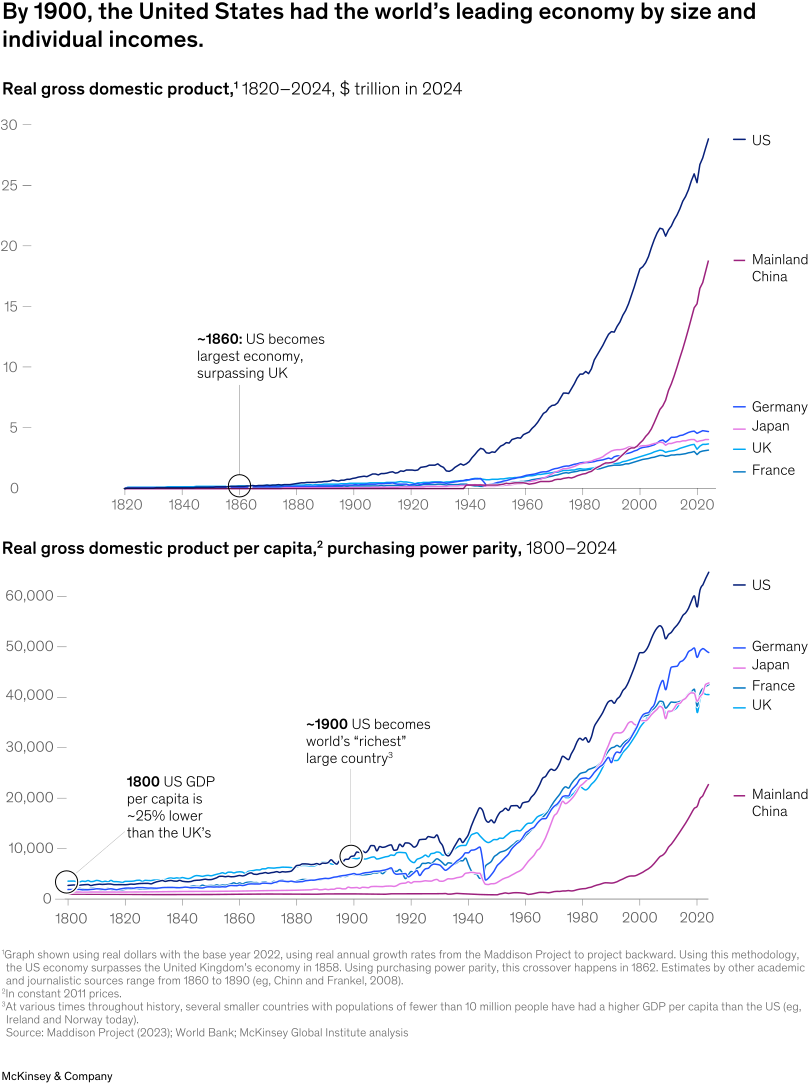
Over the course of 250 years, the United States has transformed from a small agrarian economy to the world’s leading economic power, a position it has enjoyed for more than a century. Today it has the highest income of any populous country (Exhibit 1).1
American firms have undergone a spectacular evolution, from small textile mills in New England to world-leading industrial powerhouses to platform technology companies that shape everyday lives around the globe. American innovation, once a matter of adapting tools developed elsewhere to local settings, has gone on to set the global technology frontier. Over time, rising productivity has steadily lifted household living standards and created economic opportunities for millions.
The combination of leadership in global markets, powerful innovation ecosystems, and individual economic opportunity and prosperity can be summed up in one phrase: economic competitiveness (see sidebar ”Defining—and measuring—competitiveness”).
Today, the United States has 4 percent of the global population but generates 26 percent of GDP, and it accounts for more than 50 percent of market capitalization (Exhibit 2). It has exceeded many of its rich-country peers in labor productivity and growth, especially in recent years, when productivity has accelerated at levels unseen in other major economies.2 Leadership in technology also continues to underpin US competitiveness: The country is home to a plurality of the world’s top-cited scientists and has the most notable AI models.3 Announced annual inflows of greenfield foreign direct investment (FDI) have roughly doubled from the prepandemic period.4 And today, as it has since roughly 1900, GDP per capita exceeds that of other major economies.
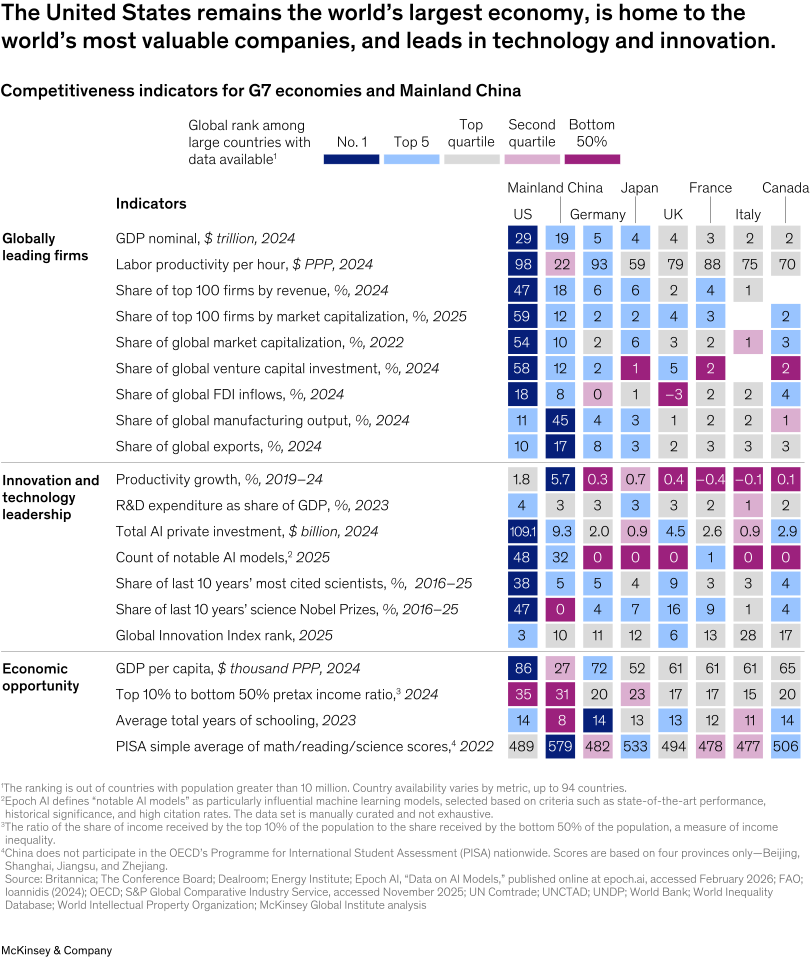
These are cause for celebration. But there are also reasons for reflection. The United States is no longer the global leader in manufacturing and trade. Its lead on technology is narrowing amid greater competition with China.5 And the picture of household well-being is mixed: Although aggregate measures show high levels of income, many households feel they can no longer keep up economically, contributing to low levels of public trust.6
Here we examine the hallmarks of economic competitiveness: globally leading firms, leadership in technology and innovation, and economic opportunity.
US firms lead global markets
American companies make up more than half of the top 100 firms globally by market capitalization and revenue (Exhibit 3). From start-ups to large corporations, they attract an outsize share of capital from global markets. US firms hold more than half of global public equity funding and receive more than 50 percent of global venture capital (VC) investment.7 These valuations are supported, at least in part, by the fact that US firms have the highest levels of productivity, and rates of productivity growth, among firms in G20 economies.8 Large US firms excel on a range of other corporate performance metrics; compared to European peers, they have 30 percent higher returns on invested capital and 50 percent faster top-line growth.9
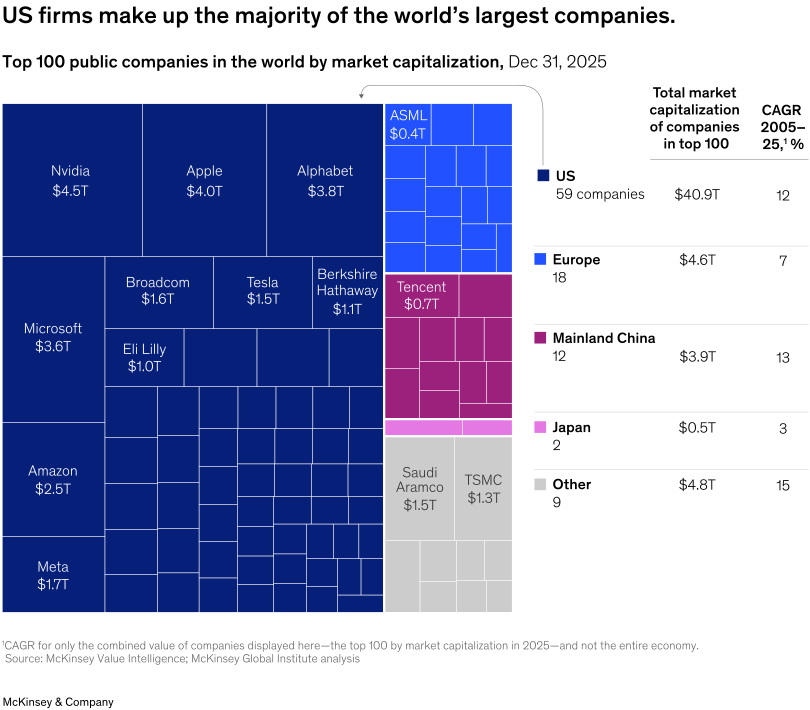
To be sure, a sizable share of US market capitalization is connected to the technology sector. Yet US firms lead across a range of sectors and are present in the upper echelons of all of them.10
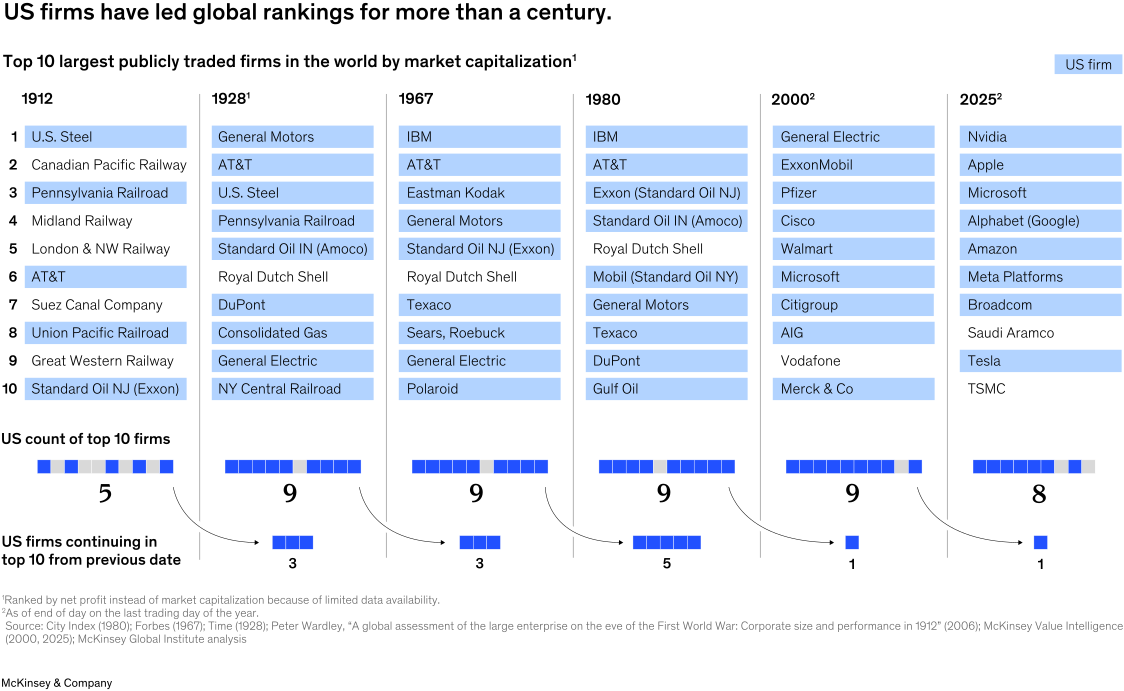
US market leadership is not a recent development: The United States has been the preeminent home to the world’s top companies for more than a century, even as these companies have themselves turned over (Exhibit 4). Over the past 25 years, for example, only Microsoft has remained in the top ten global firms by market capitalization. The sectoral composition has also shifted, from industrials and energy through the 1980s to almost entirely technology today.
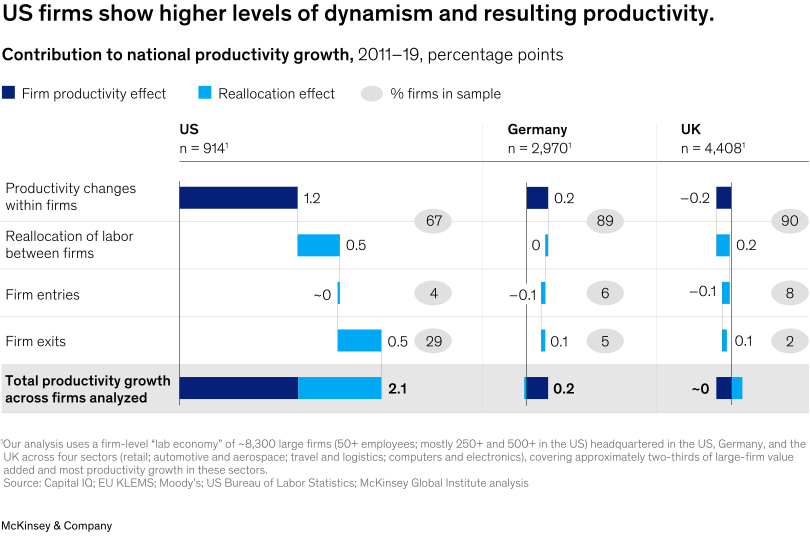
Fundamentally, US firms’ outperformance is rooted in greater dynamism: They exhibit higher rates of labor reallocation, market entry and exit, and growth of young firms.11 That dynamism translates to higher national productivity growth (Exhibit 5).12
US manufacturing leadership has receded
Notably, one major sector in which the United States no longer has a leading global market share is manufacturing. China began expanding its industrial capacity in the 1980s, then ramped it up on a large scale in the 2000s, surpassing the United States in share of global manufacturing output in 2010. Today, China produces nearly half of global manufacturing output, compared to 11 percent for the United States.13
US manufacturing has also lost ground domestically as the economy has shifted toward services. Over the past 50 years, manufacturing’s share of both GDP and employment has declined from more than 20 percent to less than 10 percent today.14 This halving of manufacturing employment is equal to about 19 million jobs today. These were mostly middle-class jobs, and they have been offset by growth in high-skill jobs in the knowledge economy—for example in technology software and finance—along with lower-skill services jobs, such as home cleaning.15 Between 2000 and 2018, for example, the share of all US jobs with wages in the middle of the income distribution fell six percentage points.16
The shift to services has had additional economic implications. For one, as the United States began to import the goods it consumed, it tilted from trade surplus to trade deficit. Before 1976, the United States was a net exporter; it then became a net importer, with a trade deficit hovering around 3 percent of GDP over the past decade.17 And over time, the United States has lost some of its capacity to produce a wide range of products—from sports shoes to smartphones, dysprosium to data processors, ships to chips—presenting questions about future resiliency.18 Of course, some of these products matter more for national security and future economic competitiveness than others. Today, 40 percent of US imports, worth more than $1 trillion, are considered critical, or “central to resilient, diverse, and secure supply chains to ensure economic prosperity and national security.”19
Nevertheless, the United States remains the second-largest manufacturer and trading partner for the world, accounting for 10 percent of the world's total exports. With an output of $7.3 trillion, including in many of the same products or categories where it imports large volumes, and a workforce of almost 13 million, the United States retains a strong manufacturing base on which it might build capacity in industries that will become increasingly important in the future, including semiconductors, electrification, and next-era hardware such as robotics and autonomous systems.20
New manufacturing capacity is more than just factories. Also needed are an educated and skilled workforce that can fill shortages in fields such as engineering; a strong national balance sheet to support the needed financing; and restored investment in infrastructure, especially for energy.
US leadership in innovation and tech continues as new pressures emerge
Continued high valuations hinge on whether recent accelerations of productivity will indeed translate to higher economic (and earnings) growth over the long term.21 Higher productivity growth rates, especially in recent years, have been accompanied by higher rates of business investment and R&D spending, a positive sign for long-term growth potential. The United States leads the world on R&D spending in absolute terms, and, among major economies, as a share of GDP. Large US firms (those with at least $1 billion in annual revenue) have expanded their investment and R&D spending more rapidly than peers in other major economies. Compared to European peers, for example, they have 60 percent greater investment and 80 percent greater R&D intensity, and they have increased their investment and R&D at more than triple the European rate (Exhibit 6).22 Big tech firms drive much of this disparity.
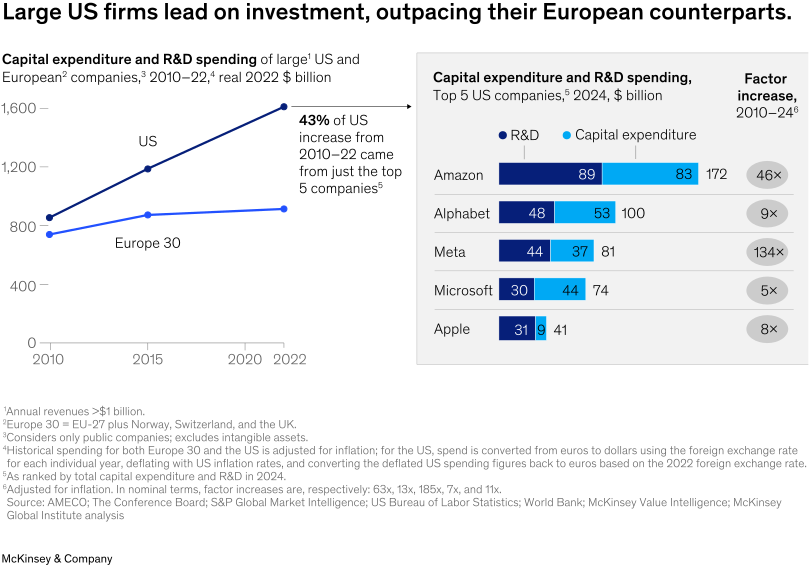
Private-sector investment in frontier technologies exceeded $1 trillion between 2021 and 2024, complemented by more than $50 billion in federal R&D funding.23 The return on investment is striking: America has outperformed in intellectual property and critical technologies. The World Intellectual Property Organization ranks the United States near the top of its Global Innovation Index.24 And compared with other major economies, the United States has more than a tenfold lead in private investment in AI. Today, the nation leads the world in the number of notable AI models, accounting for more than half of the world’s total.25
Another effect: Flourishing US knowledge ecosystems of universities and venture capital–backed start-ups attract and develop many of the greatest minds from all over the world, paving the way for ongoing success in science and technology. Today, nearly 40 percent of the world’s leading scientists, or those in the top 200,000 globally by citations, are based in the United States; no other country has more than 10 percent.26 Half of the scientific Nobel Prize winners over the past decade call America home.27
Competition in critical technologies is heating up
Past success does not guarantee future results, of course, and the US lead in technology is narrowing as China becomes more competitive. Some are now warning of a second “China shock,” should China displace American leadership in critical technologies.28
Beyond simply focusing on the gaps of the past, the United States needs to prepare for leadership in the industries that will be most important in the coming decades. Future competitiveness increasingly hinges on leadership in critical technologies, such as AI, robotics, biotechnology, quantum computing, high-performance batteries, and space-based technology.29
Economically, these technologies promise great gains for profits and wages. Geopolitically, they will be critical for protecting national security; their dual-use (military and civilian) nature means firms that develop them will be on both frontiers. In all these areas, China has made rapid progress and, in some cases, has taken the lead.
In remarkably short order, China has moved from producing low-cost goods to leading the world in complex, capital-intensive industries such as electric vehicles and photovoltaics.30 This shift is now extending beyond manufacturing into research-intensive domains once dominated by advanced economies. In biotechnology, for example, China’s output in drug discovery has grown more than tenfold since 2013.31 As of 2024, China surpassed the United States in number of clinical trials and in the count of clinical-stage molecules.32 Altogether, China’s life sciences industry is no longer confined to generic biologics or follow-on products, and it is now playing a leading role in generating sophisticated novel biologics.33
In the domain of AI, while America still has the most sophisticated AI models, China has more robots than the rest of the world combined.34 The United States has approached AI as a product unto itself, focusing on screen-based text and images. China’s approach, however, has emphasized AI’s deployment in the physical world, with intelligent machines that can see, decide, and act in real time.35 For example, Chinese firms are integrating AI into industrial robots that learn from their environments, drones that analyze visual data onboard while in flight, and autonomous vehicles whose core intelligence runs directly inside the vehicle rather than in the cloud.36
Recently, China has also established a strong presence in the realm of fundamental scientific research, advancing the frontiers of knowledge.37 From 2017 to 2023, China overtook the United States in most cited research in fields including machine learning, quantum sensors, advanced integrated circuit design and fabrication, adversarial AI, natural language processing, and high-performance computing (it already led in other fields, including electric batteries and advanced magnets).38 In some instances, China is deploying this research in practical uses with tangible output; for example, China developed the world’s first quantum satellite.39 Although most cities with dense populations of highly cited researchers are American, Beijing saw the largest absolute inflow from 2019 to 2023.40
To lead in critical technologies in the decades to come, the United States will need not only to establish an edge in today’s emerging technologies but also to make the discoveries that uncover tomorrow’s. The nation will need to support innovation ecosystems and continue to attract—and build—talent. Currently the United States graduates fewer engineers than China, both in absolute terms and relative to population size.41 Even more fundamentally, in K-12 education, the United States lags behind both its own historical record and other major economies. The 2024 National Assessment of Educational Progress showed a downward trajectory in math, science, and reading; only about a third of eighth-grade students were proficient.42 The Programme for International Student Assessment found that American 15-year-olds score lower on average in math than their peers in all other G7 economies.43 A robust public education system rooted in general knowledge and problem solving has been a historical strength of the United States.44 The question today is how to restore that advantage.
Average incomes are high, but prosperity is uneven
Beyond scale of firms and leadership in technology, a final component of competitiveness is economic opportunity, or the extent to which growth translates to household prosperity in the form of higher incomes. Economic opportunity drives a virtuous cycle with innovation, as the potential for high incomes (and access to resources, such as start-up capital) attracts and retains top talent. Higher broad-based wages fuel thriving consumer markets, a longtime driver of American growth. More broadly, when individuals have higher living standards, they tend to be more productive, fostering further growth.45
Today, the United States remains a place of immense economic upside, producing high average incomes; no other country of ten million or more people has a higher GDP per capita (even in purchasing power parity terms). The story is particularly pronounced for Americans in high income brackets: The paychecks of the top decile of American earners are 10 to 50 percent higher than those of peers in major European economies and Canada. Perhaps less well known, Americans in the top 40 percent of income earn more than their counterparts in major European economies, and the top 20 percent earn more than their peers in Canada.
The story changes for the bottom half of the income distribution, with American incomes lagging behind those of major European economies and Canada (Exhibit 7).46 The bottom quintile of American incomes has been gaining ground recently, but the gap remains wide. Among major economies, the United States has one of the widest gaps in income levels between the top 10 percent and bottom 50 percent.47
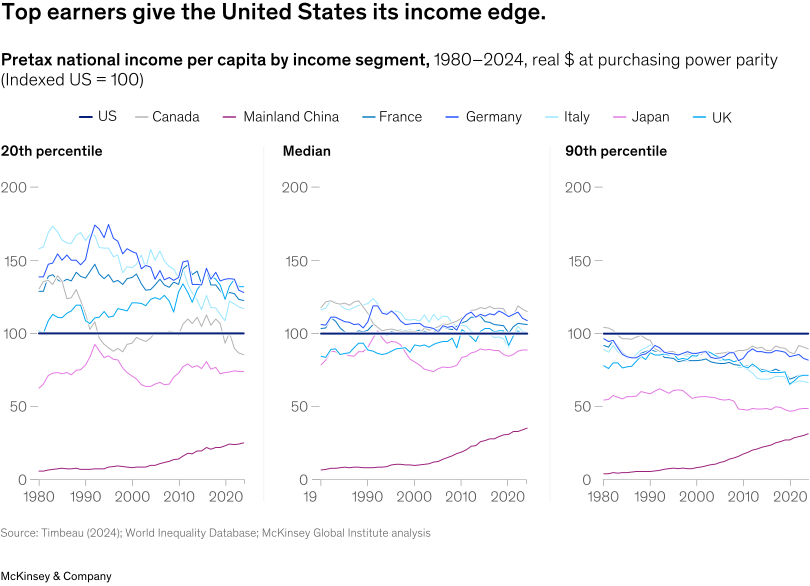
This gap in income levels has grown over the past 50 years. Although all income segments have seen real growth, market incomes (wages and asset flows) have grown the most for the top two quintiles. For the bottom 60 percent of the population, more income growth has come in the form of government benefits than from wages, and the middle quintile has seen the lowest overall growth.48
This disparity in wage growth has many well-researched causes. For example, as discussed, technological change and deindustrialization have reduced the availability of middle-wage jobs while expanding demand for both highly educated and low-wage workers.49 High returns from financial assets, meanwhile, have produced very high levels of wealth for high-income households, which tend to own more assets: The top 1 percent of wealth holders have more than $16 million in wealth per capita and collectively own 5 percent of global wealth.50 Others include insufficient human-capital development for many American workers and pressures from expanding global trade.51
Sustained disparities in real wage growth and levels, wealth accumulation, and intergenerational income mobility have contributed to a growing sense among more Americans that they will not be able to reach their economic goals. As this sentiment takes hold, it raises the question of whether Americans’ support for public policies that promote innovation and dynamism will continue.
Structural shifts, including the movement from a manufacturing-based to a services-based economy, have also led to a growing geographic dispersion of productivity levels, seen strikingly across major US cities (Exhibit 8). Over the past several decades, some have seen relatively modest productivity growth, including those in the historical Rust Belt. On the other end of the spectrum, cities with deep knowledge ecosystems have seen extraordinary gains and continue to offer high income possibilities. For example, in San Jose, California, GDP per capita has more than tripled since 2000 (see sidebar “What makes some cities more productive than others?”).52 Notably, however, the cost of living also varies by city; housing in particular tends to be more expensive in cities with higher levels of productivity and income.53

The United States remains the most competitive economy in the world on a multitude of fronts. Getting to this point has not been a straight path. There were twists and turns, transformations and reinventions. Before contemplating the future, we first turn to what can be learned from the past 250 years, telling the story of four chapters of US competitiveness.
Looking back: Four chapters of US competitiveness
As we have seen, the United States has been the world’s largest economy for more than a century. The rise of American competitiveness did not follow a linear or clear trajectory. Growth and innovation often happened in bursts, after moments of disruption and reinvention.
Taking stock of the past 250 years of US economic history, four chapters emerge (Exhibit 9). In each, the United States led global markets in at least one major area while working on new strains of innovation that planted the seeds for the following chapter of competitiveness, first in agriculture, then in industry, science, and knowledge. Major geopolitical events roughly mark the transition between chapters—the Civil War, World War II, and the end of the Cold War. Heralding the end of each chapter, disruptions tested the country, and reinventions at these turning points ultimately strengthened the US economy and its position in the world.
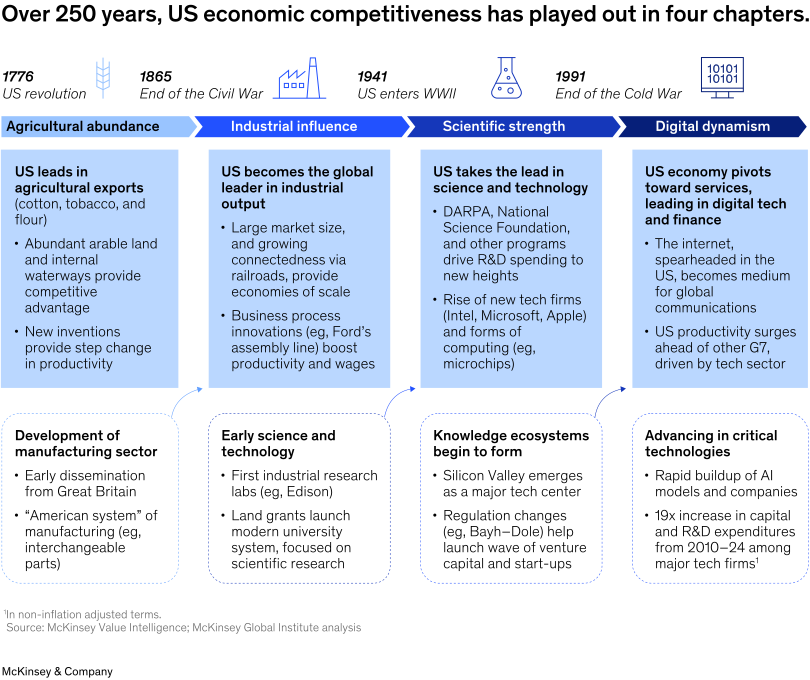
The United States has taken an incredible journey of economic development over the past 250 years. But it was not a straight path; it required reinvention along the way. In the next chapter, we turn to some of the constants: the foundations of competitiveness throughout US history.
The foundations of US competitiveness
While the nature of US competitiveness has shifted over time, a pair of distinctive foundations has remained constant—natural abundance, and a culture of creativity, innovation, ambition, and individual achievement; in a word, entrepreneurialism. These foundations provided the United States with unique advantages at pivotal moments in history. They also encouraged the development of strong institutions and infrastructure, which in turn have reinforced the foundations over time. That reinforcement can make it difficult to untangle cause and effect; indeed, each has shaped the other. What matters is that the United States has undoubtedly benefited from its twin foundations.
Favored by nature
In 1767, Benjamin Franklin wrote: “America, an immense Territory, favour’d by Nature with all Advantages of Climate, Soil, great navigable Rivers and Lakes, &c. must become a great Country, populous and mighty.”54 He was prescient. Over time, the country’s natural abundance and geographic positioning have provided plentiful energy and mineral resources, vast stretches of arable land, and access to internal and international trade routes. The depth and diversity of these resources set the United States apart (Exhibit 10).
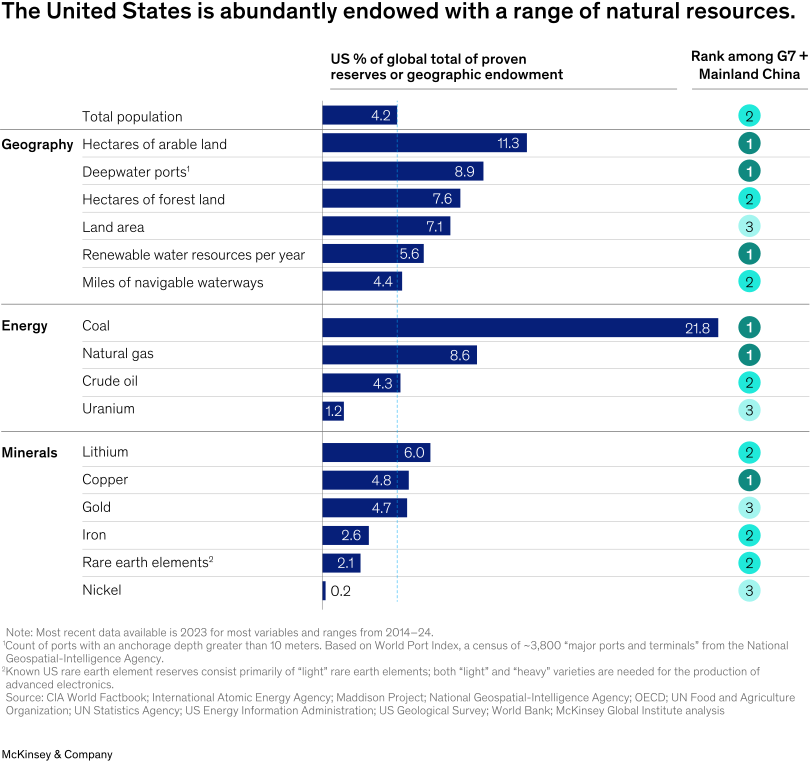
The importance of various natural resources evolved across time. In the first historical chapter, arable land and navigable waterways were essential for agriculture and transportation of products across the country.55 An expanding frontier brought forth increasing access to minerals, energy, and land. In Europe, such expansion and ensuing infrastructure development typically required compensating landowners, which did not always occur in the United States.56 In the second chapter, fossil fuels such as coal and oil, along with minerals such as iron ore, powered industry and provided raw materials. In the third chapter, as science and technology took off, mineral access was a source of strategic advantage; deposits of copper, bauxite (aluminum-containing ore), and uranium supported electrification, aerospace, and nuclear power. In the fourth chapter, the United States was more connected than ever before through global trade, but even then, domestic minerals still provided an advantage. The internet backbone depended on fiber optics and its components (copper, gold, and aluminum) and plentiful energy.
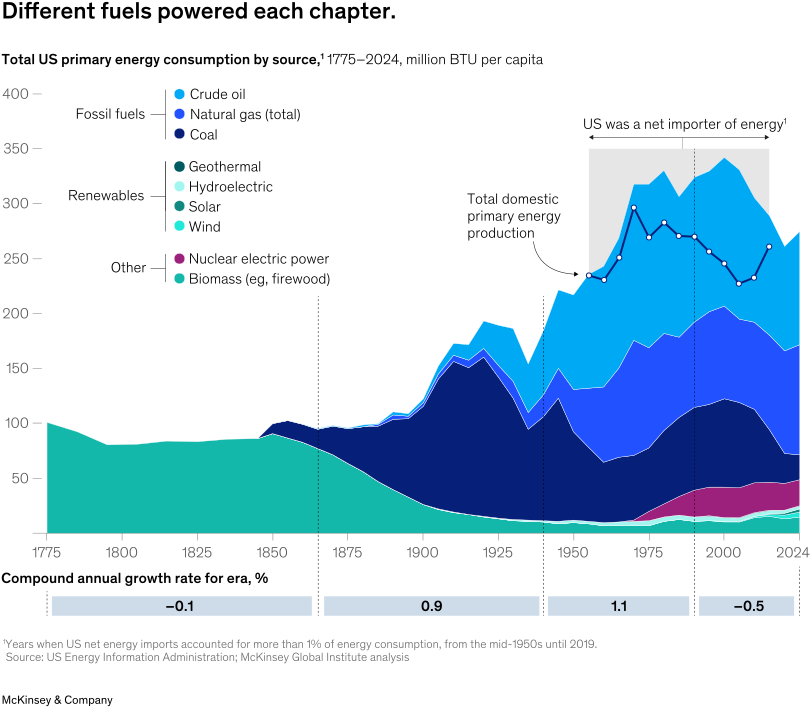
Reliable and affordable energy has been an enduring source of strategic advantage for the United States (Exhibit 11). Access to plentiful energy has lowered input costs for businesses, improving productivity, enabling scale, and improving household well-being. At independence, Americans consumed twice as much energy per person as Britons, given abundant firewood.57 As discussed, ready access to coal ignited the American industrial revolution of the second chapter. In the third chapter, the United States became a net energy importer as its energy consumption began to outpace domestic production. The resulting exposure to the oil crises of the 1970s led to energy squeezes, contributing to a slump in productivity.58 The country regained energy independence in the fourth chapter through the shale revolution, which began in the mid-2000s. In 2019, energy imports dropped below exports for the first time in half a century.59 This ultimately helped shield the United States from major energy price fluctuations brought about by Russia’s 2022 invasion of Ukraine.60 Today, 64 percent of US crude oil production and 79 percent of dry natural gas production is from shale and tight formations.61
Geography has also mattered. Relative geographic isolation meant the United States saw minimal damage during the World Wars. Natural deep harbors and warm-water ports on two oceans provided access to plentiful trade routes throughout history. Relatively friendly relations with neighbors also provided a layer of security.62 Periods of conflict within Europe also motivated the United States to develop its own industry; the Napoleonic Wars, for example, helped launch early US manufacturing.63
America’s ‘can-do’ spirit
From its inception to this day, the United States has had an entrepreneurial culture that has served as an ongoing foundation for competitiveness. By some accounts, entrepreneurs and inventors have been “cultural heroes” throughout US history.64 Entrepreneurship in America —often supported by wealth earned from its resources—has meant a willingness to take risks, an embrace of new ideas and people, and a drive for economic progress.65 As Alexis de Tocqueville wrote in 1840: “America is a land of wonders, in which everything is in constant motion and every change seems an improvement. No natural boundary seems to be set to the efforts of man; and in his eyes what is not yet done is only what he has not yet attempted to do.”66
The culture of entrepreneurship stems at least in part from the absence of Europe’s entrenched societal structures and systems; the United States was able to start fresh. Perceived openness and economic opportunity have attracted many of the world’s best minds over the country’s history. In the second chapter, for example, immigrants brought new ideas and had an outsize impact on innovation; migrants from this era were more than 1.5 times likelier to file a patent than their US-born peers.67 Andrew Carnegie, an immigrant from Scotland, famously started a steel empire that became the world’s largest corporation. This phenomenon has endured. In 2024, 46 percent of Fortune 500 firms had at least one founder who was a first- or second-generation immigrant, according to a recent study.68
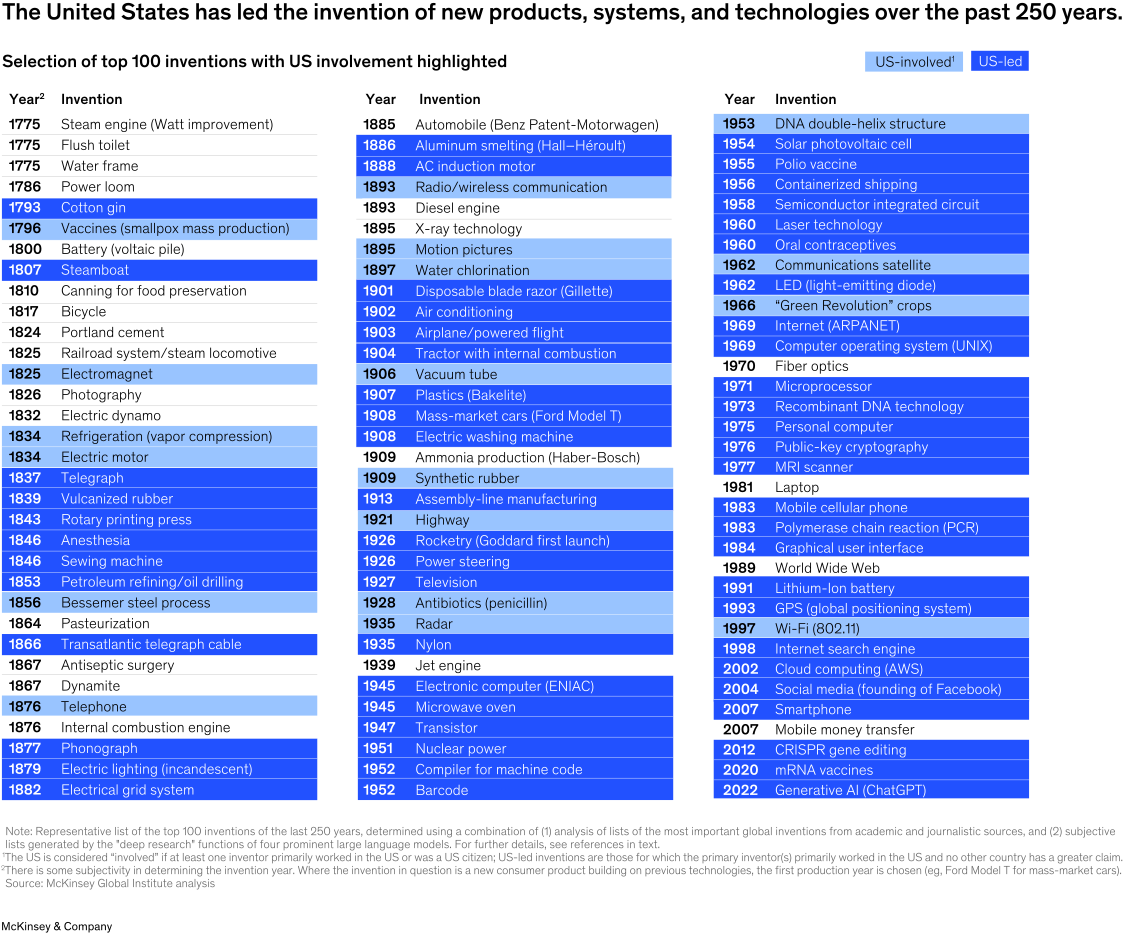
From steamboats in the first chapter to smartphones in the fourth, the United States has been a leader in invention. Americans came up with or collaborated on the vast majority of the most important inventions of the past 250 years (Exhibit 12).69 The nature of invention changed over time, as did who funded it.70 In the first chapter, self-taught tinkerers and artisans such as Eli Whitney led the charge. In the second, the industrial research lab took center stage, providing capital to inventors such as Thomas Edison and Nikola Tesla. In the third, collaborations between government, universities, and businesses mobilized teams such as a group at Bell Labs led by William Shockley, John Bardeen, and Walter Brattain, co-inventors of the first transistor. During this chapter, funding for R&D primarily came from government, with strong incentives rooted in Cold War–era geopolitical competition. In the fourth, business once again played a larger role in funding R&D. Knowledge ecosystems, including universities and venture capital–backed start-ups, became the centers of invention, with figures such as Steve Jobs envisioning products and ways of interacting with technology such as smartphones, backed by teams that turned those ideas into reality.
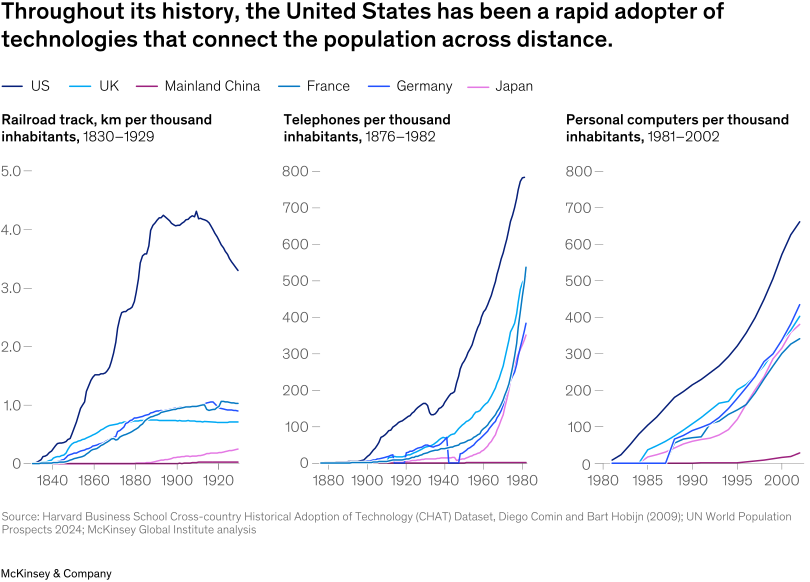
The entrepreneurial spirit of the United States was not limited to tech visionaries. It was also embedded in the American people and business community, who have long had the appetite (and means) to adopt and scale new technologies, including those invented elsewhere, such as the automobile, first developed in Germany in 1885. Over time, inventions such as railroads, telephones, and personal computers were adopted more quickly in the United States than elsewhere (Exhibit 13). The effects on the economy and the fabric of life were manifold: better connections, greater economies of scale, and faster transportation, communication, and learning. While these examples are historical, the same can be said of some more recent technologies; for example, the United States has been at the forefront of scaling cloud computing services.71
Americans have adopted generative AI even faster than earlier transformative technologies.72 That said, however, other countries have been faster; a recent ranking puts the United States in 24th place for adoption rates, behind many other G7 economies.73 As discussed, Chinese companies are embedding AI at a rapid clip. This raises the crucial questions of whether the United States can maintain this foundation of competitiveness, and, if lost, what reclaiming it might take.
Institutions and infrastructure reinforce the foundations
Over the past 250 years, institutions have embodied and supported the country’s entrepreneurial culture, and infrastructure has helped the United States harness the power of its natural resources. A virtuous cycle animates both. Entrepreneurial culture encouraged the development of new forms of governance, and the resulting institutions in turn encouraged higher ambitions and risk-taking. Resource discovery demanded infrastructure investment, while better infrastructure enabled and encouraged more resource discovery.
American institutions have, throughout history, incorporated the nation’s ideals, especially its entrepreneurial culture. To an unusual degree among modern economies, they have supported and strengthened the spirit of taking risks, protecting intellectual property, and promoting markets and individual freedom.74 The US Constitution is the oldest in the world, having survived a Civil War, the Great Depression, and two World Wars. This stability has been balanced with regulatory adaptability amid economic expansion, shifting geopolitical circumstances, and technological advancements. Federalism, which supports policy experimentation at the state and local levels, has been critical in the development and refinement of institutions. As just one example, in the realm of corporate law, several states moved early to codify limited liability and enact general incorporation laws, starting with New York in 1811. The approach ultimately spread and has been central to the development of modern corporations.75 Institutions such as comparatively generous bankruptcy laws also have encouraged entrepreneurship and risk-taking.76
The American educational system, another critical and evolving institution, has produced a well-educated, dynamic labor force, installing an ethos of constant improvement in the entrepreneurial foundation.77 The expansion of public education, especially in the early 20th century, created a workforce with a baseline of general knowledge. By the end of the second historical chapter, the United States had one of the highest rates of education in the world. Importantly, American education emphasized problem solving and flexibility over specialization, creating a more adaptable workforce and lowering switching costs for workers.78 Developments in tertiary education, such as the Morrill Land-Grant Act in the first historical chapter and the GI Bill in the third, also expanded knowledge and skills development in technical fields. Lower regulation in labor markets than seen elsewhere complemented an educated and adaptable workforce to lift competitiveness.79
The US financial system, meanwhile, emerged as both a product and an enabler of the American entrepreneurial culture. Beginning in the early years of the republic, the United States developed deep capital markets and innovative financial institutions. Beyond positioning the country as a global financial leader as early as the 1830s, early finance provided funding for major infrastructure projects, including canals and railroads, as well as industry.80 Over time, financial institutions made it easier for firms to form, scale, and fail without permanently deterring future experimentation.
Infrastructure has also contributed to America’s competitiveness. Infrastructure moved minerals, energy resources, water, and agricultural goods to ports or places of consumption and adapted over time as the country’s context and needs shifted. Americans built their earliest railroads to transport coal to factories, specialized piers to ship iron ore across the Great Lakes, and vast aqueducts to divert water to arid mining claims. Then, too, natural resources were integral to infrastructure construction, especially minerals such as copper for electrical equipment and iron ore for steel in bridges, buildings, and pipes, among numerous other fixtures. US infrastructure today supports the second-largest domestic freight system in the world, including the longest freight railroad network and the second-longest highway system.81 Today, institutions and infrastructure alone do not make the United States unique; plenty of other countries have high-quality infrastructure and pro-market institutions. But they have supported US competitiveness in a uniquely American way over the course of the past quarter millennium.
Plentiful natural resources and favorable geography provided both easy connection to markets and security, allowing for rapid advances in industry, science, and technology. But natural resources alone were not enough; harnessing them, in evolving and often innovative ways, has made the difference.82 The nation’s entrepreneurial spirit was similarly codified and strengthened by strong property rights and pro-market institutions and was further nurtured over time through educational and financial systems. In the next section, we discuss how in the chapter to come, the United States can build on the foundations that have served it so well throughout its history.
Looking ahead: Securing competitiveness in the next era
Today the United States may be entering a new chapter. Tech, especially AI, is advancing rapidly. Postpandemic macroeconomic disruptions persist, marked by a recent 40-year high in inflation. And heightened geopolitical tensions have produced a growing tide of protectionism reflected in both higher tariffs (the US average tariff rate is now 12.7 percent, the highest since World War II) and industrial policies such as the Inflation Reduction Act and the CHIPS and Science Act. Current trajectories suggest that these forces, along with persistently high capital costs and aging populations, are likely to set the competitive context for the United States and other major economies in coming years.
The opportunity is immense. Future-shaping industries including AI, biotechnology, and robotics are expected to have market sizes in the trillions in the coming decade.83 By one estimate, AI could add up to 0.6 percentage point to annual productivity growth through 2040.84
To seize this opportunity, the United States must prepare to confront looming challenges, including rising demand for energy, infrastructure gaps, and growing national debt. Success also means business strategy, operations, and innovation systems transforming to embrace AI. In parallel, business and society need to proactively train US workers to share their jobs with AI. Should those challenges be met, the net effect would be an American economy that innovates and operates in faster, bigger, and better ways. All this needs to be done with an eye to national economic security amid growing geopolitical fractures.85
The magic of US competitiveness to date is that it has not been the result of top-down planning but rather has developed organically from its foundations of natural abundance and entrepreneurialism (which in turn have been harnessed through infrastructure and institutions). Overly specific prescriptions for how to attain the next wave of competitiveness risk missing this important point. Whatever steps US firms, governments, and institutions take, they should ideally be informed by what’s worked in the past: adapting US abundance and entrepreneurship into continued economic leadership on the global stage.
In that spirit, we see five overarching prerequisites for US competitiveness in the next era. Two draw on the country’s institutions of entrepreneurialism: (1) an AI-fluent workforce and (2) sustained long-term investment. Two more relate to the foundation of natural abundance: (3) power that meets the needs of future technology and (4) new and improved infrastructure. A final prerequisite acknowledges a new geopolitical environment: (5) national economic security in a volatile world. In this chapter, we dive into each of these prerequisites, discussing both current challenges and those on the horizon, as well as proposing near-term actions that can help the country stay on track (for a brief summary, see sidebar “A near-term agenda for leaders”).
1. An AI-fluent workforce
Throughout the country’s history, America’s firms, widespread public education, and leading universities have built a dynamic workforce. Education, fundamentally rooted in general knowledge, encouraged problem solving and flexibility, while universities and knowledge ecosystems instilled deep levels of skill. Beyond building home-grown talent, these systems have also attracted the world’s best minds (along with deep pools of capital). Americans have enjoyed economic opportunity while strong human capital has in turn promoted innovation and scale, driving more prosperity.86
As discussed, AI promises significant potential to boost productivity growth and generate meaningful work at high wages. Capturing this will require business strategy, operations, and innovation systems transforming to embrace AI. As that happens, the contract between businesses and their workforces will need renewal. As businesses transform, they will require a trained and ready workforce, and at the same time individuals will need the requisite preparation to thrive. This requires upskilling and labor market dynamism to a degree unprecedented in recent history. Altogether, this shift will be predicated on the workforce’s ability to quickly adapt and learn. An aging population and expected worker shortages, particularly in specialized areas, raise the stakes.87
Work is poised to fundamentally transform
The path of innovation is notoriously difficult to forecast, especially when it is moving so fast. Yet the state of technology as it stands today suggests that fundamental change is coming: About 57 percent of American hours worked could, in theory, be performed by agents and robots.88
That’s not a prediction of job loss. Throughout history, inventions have given rise to new work and changed some jobs while making others obsolete. “Computers” were once people doing sums. Today’s computers have created a range of jobs, from hardware technician to software engineer. Data scientist is also a new job, but in a sense it is just the latest incarnation of older roles, for example the people the US Census Bureau employed in the late 1800s to process demographic data about the growing country.89
No matter how automation proceeds, many human skills will remain relevant. About 80 percent of skills used in the workplace today are needed for activities that cannot be automated with today’s technology. But many of those skills are also used for activities that theoretically could be automated. Consider the skill of data analysis. While AI excels at rapid pattern detection and automating the drudgery of data cleaning, humans are better at interpretation and asking new questions. In many such cases, work may be done by people and AI together.
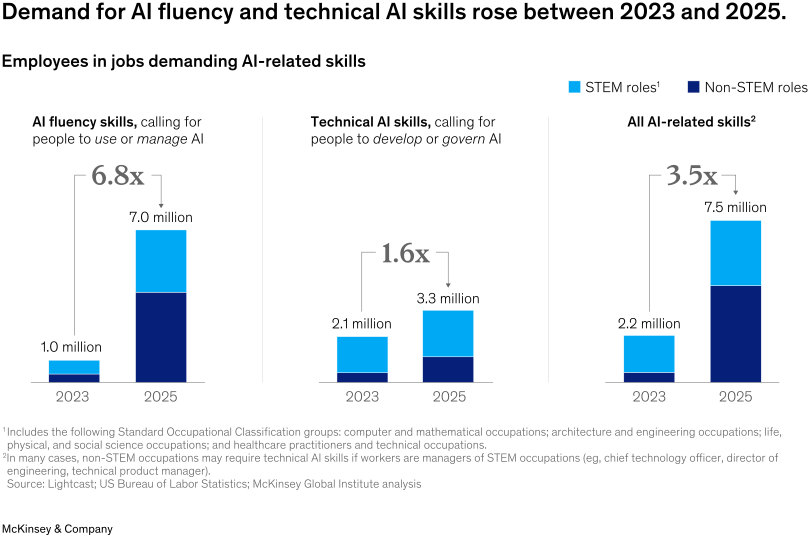
Everywhere and all at once, AI skills are increasingly important (Exhibit 14). Ultimately, workers of all stripes will need to adapt and reskill for an automated world and a transformed structure of jobs. While that full evolution may take time—and technology will evolve along the way—the next few years are crucial.
Things could get rocky in many ways. Historical precedents of new jobs forming quickly in the wake of new technology may not hold for an innovation as unique as AI. Firms could be slow to adopt AI, stultifying growth. New and improved jobs might be created, but without matching systems to efficiently connect labor to work. Or workers might not have access to sufficient opportunities to learn the skills of seamless work with agents and robots.
One reason for optimism is labor force dynamism, a source of strength for the United States relative to other major economies throughout history, particularly in the closing decades of the 20th century. That said, trends over the past several decades point to a gradual loss of labor market fluidity. The job reallocation rate, a measure of labor force dynamism, has dropped by roughly a third from the mid-1990s to today (save for a blip during the COVID-19 pandemic).90 Relatedly, geographic mobility has also declined.91 The exact mix of factors behind declining dynamism are debated, but there is relative consensus on some changes that would help. These include reducing frictions many workers face when switching jobs—such as differences in occupational licensing across states and non-compete agreements—and undertaking more skills-based hiring.92 Easing new business formation would also help create new job opportunities.93 And of course, improving elementary and secondary education, grounded in general knowledge, would improve long-term workforce adaptability, as it has historically.94
An aging workforce
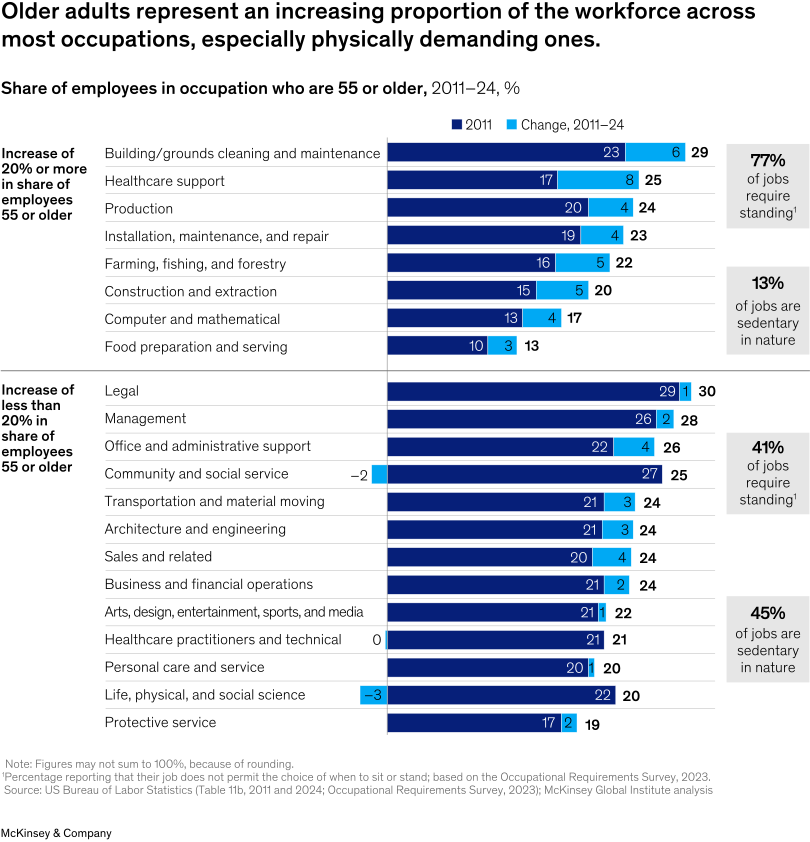
Mass retirement provides an additional challenge. The primary driver of US economic growth over the past two decades has been a rise in the number of total hours worked, a proxy for overall labor supply.95 As fertility rates have fallen over the past several decades, the population has aged, and the labor force is beginning to grow noticeably older, affecting sectors across the board. Nearly all occupations have an older workforce than they did 15 years ago (Exhibit 15). For example, 20 percent of construction workers are over 55, up one-third since 2010. For healthcare support, the number is 25 percent, nearly a 50 percent jump.96
Worker shortages across a range of high- and low-skill occupations are already a concern. Many of the sectors experiencing recent shortages have historically been harder to automate and have seen stubbornly low rates of productivity growth. Healthcare, for example, has had persistently high vacancy rates, while vacancies in construction, logistics, and utilities have more than doubled over the past few decades.97 In a 2024 survey, more than half of US construction firms reported project delays due to worker shortages.98 Many of these jobs require a large portion of human-centric skills, in which AI or automation has lower near-term potential to help fill workforce gaps.99
Taking into account aging and higher expected demand, the skilled trade jobs critical for both growth and competitiveness in coming years—for example, construction and engineering—are expected to grow by 20 times the number of overall net new jobs through 2032.100 The current pipeline of engineers suggests future shortages and the potential loss of technological leadership in the world; while the United States has a quarter of Mainland China’s population, it has just one-tenth of the engineering graduates.101 In mechanical engineering specificially, which is critical in fields such as robotics, China produces about 350,000 newly minted grads each year compared to about 45,000 in the United States.102 A 2023 report by the Semiconductor Industry Association estimates that 58 percent of 67,000 projected new jobs in the semiconductor industry could go unfilled, based on current degree completion rates.103 Pipeline challenges have been noted in other critical technologies, such as biotechnology.104
Rejuvenating labor for an AI future
Labor markets are a linchpin of economic competitiveness. To maintain their edge, and capture the gains from AI, the United States can consider the following near-term actions:
- To begin capturing gains from AI, begin building and procuring agents and robots, and integrating them into business models; reconfigure jobs as needed to account for higher automation and new types of tasks; and lay the groundwork for full-scale transformation.
- To seamlessly transition labor markets into an AI-centric future of work, train the workforce on AI skills while also expanding upskilling opportunities to the population in full.
- To boost labor force dynamism, improve the matching of workers to job opportunities and reduce frictions for labor mobility through steps such as expanding opportunities for remote work, hiring for skills rather than credentials, and streamlining occupational licensing; easing new business creation and knowledge diffusion would also help.
- To address current workforce shortages, especially those related to value chains for critical technologies (for example, construction workers and engineers), marshal coinvestment from corporations and public programs for targeted skills training programs and to provide incentives such as scholarships and research grants to study engineering.105
- To develop a flexible workforce equal to the challenge of rapid changes in technology and skill demand, achieve higher K–12 education outcomes while retaining the principles of general education.
- To deepen skills needed for the industries and world of tomorrow, ensure that the US university system remains the strongest in the world; encourage students to pursue engineering and other in-demand technical fields while prizing free and creative thinking.
- To remain at the forefront of discovery and innovation, continue to attract top talent from all parts of the United States and from around the world, to study at a US university and to found or work at US companies.
2. Sustained long-term investment
Entrepreneurs and researchers need financial capital to build their businesses and push the bounds of knowledge. The United States has long benefited from deep, trusted financial markets that both provide plentiful home-grown opportunities for wealth creation and attract the world’s capital. Since the end of World War II, the US dollar has been the world’s reserve currency and US Treasury securities have been considered the world’s safest asset. As a result, US companies, entrepreneurs, and innovators have enjoyed plentiful capital.
Growing scale and innovation in the long term will require even greater amounts of funding for capital projects, education and upskilling, and R&D. Maintaining confidence in the United States—in its economic future and the stability of its institutions—is critical to ensure that American firms continue to attract funding to make these needed investments.
The growing US national debt threatens investor confidence
The federal debt today stands at $38 trillion, or 120 percent of GDP. This is higher than the 119 percent recorded in 1946 in the aftermath of World War II and barely less than the all-time high set in April 2020 at the height of the COVID-19 pandemic.106 The United States has one of the highest national debt levels relative to GDP of major economies, behind only Japan, Greece, and Italy in the OECD. From 2000 to 2024, $2.40 of US debt was created for every $1 of net new investment (compared to $1.90 on average globally).107
When interest rates are low, growing debts are more manageable, as was the case in the decade following the global financial crisis. However, as inflation took hold after the COVID-19 pandemic, ten-year Treasury yields, the basis for most market interest rates, more than doubled their 2010s average. Interest payments in fiscal year 2024 shot up 34 percent, to $949 billion, exceeding defense spending for the first time (Exhibit 16).108 This continued into 2025.109
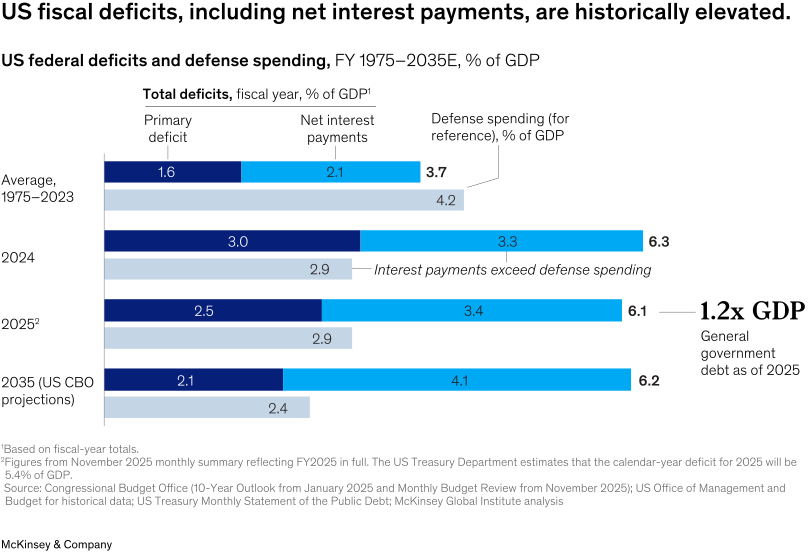
Persistent higher rates relative to expected growth rates could drive up debt growth in years to come.110 There is reason to believe that rates will remain structurally elevated above prepandemic levels. Investment needs are rising alongside a decline in economy-wide savings as the population ages, wage growth among lower-income segments that are less likely to save, high and rising fiscal deficits that absorb more capital, and slower growth in emerging markets (which have historically invested excess savings in the United States).111
Growing levels of uncertainty or a loss of confidence may also put pressure on US long-term interest rates. About half of outstanding debt is set to roll over this year and next. As these Treasuries come on the market, will demand match the supply? If not, rates may rise and contribute to unwanted growth in the national debt. Another unhelpful effect: Higher interest rates can crowd out both private investment and other government spending priorities, including ability to respond to future crises.112 The effects can spill into equity markets as elevated rates curb long-term investment and increase economic uncertainty, ultimately threatening household wealth and broader market confidence.113
Finding investment dollars as capital costs rise
Knowledge ecosystems are famously capital-light. But competitiveness in the next era will require substantial capital investment. As we discuss below, power generation, distribution, and infrastructure are underfunded. US data centers are in the spotlight; an additional $3 trillion is needed through 2030 to keep up with the compute demands of AI.114 More money will have to be found to bolster production capacity for critical goods, domestically and among allies (as we discuss below). Beyond capital expenditure, significant spending will be needed for skills development and for R&D.
Much of this is difficult to counteract. But if the United States could reduce its level of debt—saving more or borrowing less—pressure on interest rates would ease, opening the way for economy-wide investment in newly critical technologies and infrastructure. Investors are increasingly focused on whether the government has a credible plan to manage deficits and debt over the medium term.115 Deficit reduction of course will need to be done thoughtfully; overtightening could drive a demand shock throughout the economy, prompting a recession.
Higher productivity, for example from AI, can help, but it cannot solve the debt problem on its own. For one, any potential labor market disruptions could drive up costs such as unemployment insurance. And higher growth adds some degree of higher fiscal costs. Higher wages resulting from higher productivity mean higher social benefits and public-sector labor costs.116
Higher interest rates could also threaten households and corporations. Notably, US household and corporate balance sheets have become healthier since 2010, but pockets of risk remain as debt maturity “walls” approach.117 Relatedly, as both investment demands and capital costs rise, companies need to access capital, and the broader financial system must channel savings to the most productive investments. This requires a shift from the status quo of the past couple of decades, when more savings were held within corporations and capital was directed disproportionately to chasing financial returns rather than productive investment.118 Maintaining resilience and fostering a productive financial system are imperatives for both policymakers and corporate- and financial-sector leaders.
Attracting sustained investment
Sustaining investment fundamentally means maintaining confidence in the dollar, US Treasuries, and US equity markets.
Actions that can help include the following:
- To reduce pressure on interest rates, commit to a path to reducing deficits, on the order of three percentage points of GDP.119
- For business to capture gains even in the face of higher interest rates and potential volatility, invest in and adopt automation technologies to grow productivity; secure access to labor and materials; and reassess the business portfolio mix.
- To make investment productive and stimulate growth, ensure that regulatory and supervisory frameworks encourage the flow of capital to productive businesses, big and small.
- To maintain resilience for households and businesses amid macroeconomic shifts, ensure that financial planning is not predicated on assumptions of ongoing low interest rates, and create new financial products that help with long-term saving and investment.
3. Power that meets the needs of future technology
Future technology will also have immense physical requirements, the most salient of which currently is energy. All signs point to energy remaining a core input to economic growth over the long term and perhaps even growing in importance, especially given its fundamental role underpinning both computing (at least based on today’s AI models) and advanced manufacturing.
Today, the United States is the world’s largest producer of oil and natural gas, which has helped keep energy both more affordable and more reliable than in other major economies.120 Further, US power is more diversified than ever before, with carbon-free sources constituting 44 percent of electricity generation in 2024.121 However, bottlenecks in expanding power supply could pose a risk that the United States will not be able to keep up with recent growth in demand, especially from data centers, a fundamental component of the AI value chain.
Surging demand
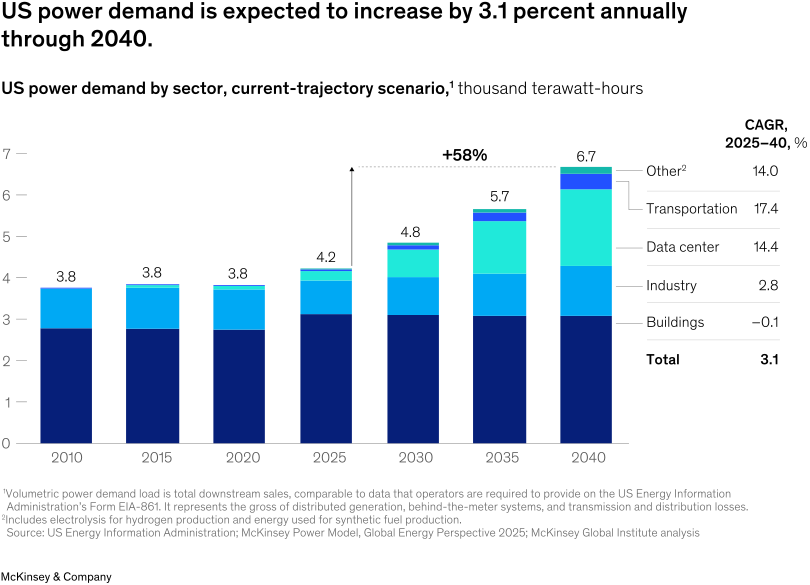
In recent years, power demand in the United States has started to grow after being stable for much of the past two decades. From 2010 to 2022, power demand grew at an average annual rate of 1.0 percent; it accelerated to 1.7 percent from 2022 to 2025. Data centers account for more than half of this recent growth.122
Supply is struggling to keep up. Delayed maintenance makes the challenge worse; a growing share of new transmission infrastructure is built just to preserve reliability.123 Utilities’ fixed costs from refurbishing and replacing existing distribution and transmission infrastructure are a factor in growing retail electricity prices in some states.124 The wait for generator grid connections alone increased eightfold from 2014 to 2023.125 Today there is a backlog of hundreds of gigawatts of projects waiting for new wires or substation upgrades.126
Several factors are at work. As coal and gas plants reach retirement age, bringing on new baseload and dispatchable generation is costly, and the market offers few incentives. Supply chain challenges for critical equipment, such as transformers and turbines, add further bottlenecks, with lead times of two to five years. Greater reliance on renewables increases energy system variability, requiring careful management.
Furthermore, long queues for permits, along with skills shortages, are slowing the growth of power supply. Average federal permitting takes 4.5 years for clean-energy projects and 6.5 years for transmission, with many stretching beyond a decade. As of July 2025, more than 650 projects were awaiting federal approval.127 Energy and upstream equipment manufacturers also face shortages of engineering and construction labor (as discussed).
The problem will become acute
In the coming era, when technologies such as AI become integral to work and society, power demand is likely to surge further. Growing geopolitical competition also means a likely push to build more domestic manufacturing for critical products like semiconductors, which will require more energy. By 2040, the United States is likely to need 60 percent more electricity than it produces today to power thirsty data centers and transportation electrification and to meet growing industrial demand (Exhibit 17).128
What’s needed now
Expanded energy infrastructure will ensure that rising power demand supports productivity growth and innovation and does not become a binding constraint on economic competitiveness. This will mean building new generation and grid capacity at a pace that has not been seen in decades while also maintaining affordability and reliability during the buildout, achieving the difficult balance of business profitability and household well-being.
Over time, doing so will likely require greater coordination among regulators, corporations, and investors. It likely means maintaining legacy power systems while boosting investment and innovation in technologies such as batteries, nuclear, and enhanced geothermal technology.129
The following near-term actions could help start to make this happen:
- To ensure system stability, increase collaboration between power generators and regional grid operators to ensure that supply keeps up with demand.
- To enhance grid capacity quickly, deploy existing technologies, including demand response systems, storage, and grid-enhancing technologies that help, for example, manage the grid more effectively during weather events.130
- To build new power generation and grid infrastructure faster, resolve supply-side bottlenecks via permitting reform and speed up collaboration across regulators, invest to expand production of scarce equipment such as transformers, and provide targeted skills training for engineers and construction workers.
4. New and improved infrastructure
Throughout the country’s history, US infrastructure has helped harness its natural abundance and support productivity growth. However, over the past several decades, this historical strength has waned because of underinvestment, and today the United States faces notable gaps, for example in transportation. In the long term, rapid growth in technology, greater domestic production (in the face of geopolitically fracturing trade) and climate change will place greater demands on infrastructure.
Infrastructure, if renewed, could boost innovation and productivity—or it could become a bottleneck for future competitiveness. Like energy, it is a necessary physical input to the next era.
Coming up short
In 2025, the American Society of Civil Engineers issued a report card that gave US infrastructure a C. In half of 18 specific categories, the country received worse than a C-minus.131 No US port ranks among the world’s top 50 for vessel time in port.132 Forty-five percent of US bridges are more than 50 years old.133 Congestion in freight corridors, ports, and logistics systems costs the economy nearly $166 billion annually.134 Approximately 20 million Americans still do not have access to broadband internet.135 Cyberattacks on North American utilities, meanwhile, increased 88 percent from 2024 to 2025.136
By one estimate, just restoring current infrastructure to good working order requires an additional $3.1 trillion over the next decade (in addition to a $600 billion energy shortfall).137 Today’s gaps are the result of underinvestment, slow permitting processes, and growing wear and tear. In 1959, US public investment in transportation and water infrastructure was 3.0 percent of GDP, 40 percent of which was operations and maintenance. By 2023, that figure was 2.3 percent of GDP, nearly 60 percent of which was spent to keep the systems running.138 And when investment does go to new construction, permitting delays materially raise costs—often by 24 to 30 percent—through inflation, labor escalation, and added overhead.139
New era, greater demands
Just as the United States built railroads to connect coal mines to factories to launch the industrial powerhouses of the late 19th century, it now needs modernized physical and digital infrastructure for the next chapter. This means more is needed beyond filling today’s gaps.
Geopolitical competition also increasingly features infrastructure, both domestic and in countries with commercial or military ties. China, in particular, has dramatically scaled its infrastructure, and its developers face fewer barriers than Americans. AI data centers, for example, are completed six to 16 months faster in China than in the United States.140 China’s Belt and Road Initiative has invested in more than 150 countries, with projects in transportation, energy, and digital connectivity, explicitly expanding China’s presence in emerging markets.141 Since 2012, China has invested roughly $1.4 trillion through the initiative in energy, mining, and other infrastructure projects, with more than $200 billion in 2025 alone.142 Geopolitical competition also means a renewed push for resilience in critical goods manufacturing, which would come with further infrastructure requirements, as discussed below.
Climate change will also place higher demands on infrastructure, such as irrigation, stormwater, and drainage systems, flood barriers, and power grids with more air conditioning, as climate hazards become more widespread and sometimes more severe. By 2050, the United States will need to scale up infrastructure-related climate adaptation threefold, to about $36 billion annually, to maintain today’s levels of protection.143
Should the United States fall further behind, whether by historical standards or global measures, US businesses and households will face higher energy, transportation, and communication costs. That would mean missing out on innovation, including new technologies and processes, that come from building large-scale infrastructure projects.144 And it might mean that the United States loses global influence.
Getting infrastructure on track
Investing in infrastructure yields sizable returns. It promotes growth of industry and technology, generates innovation, and improves household well-being.145
Actions that can help deliver new and improved infrastructure sooner rather than later include the following:
- To restore roads, bridges, and other basic infrastructure to good working order, maintain recent heightened momentum in infrastructure spending, which could fill 60 percent of total expected infrastructure needs over the next decade.146
- To speed construction of transportation and digital infrastructure, streamline permitting processes and improve coordination across regulators (at the federal, state, and municipal levels), and invest in targeted skills training for engineers and construction workers.147
- To lower long-term costs, integrate digital technologies throughout infrastructure systems to improve efficiency, resilience, and predictive maintenance, and prepare for future capital and operational expenditures for climate resilience, estimated at $36 billion annually through 2050.
5. National economic security in a volatile world
The prerequisites we’ve outlined so far—rejuvenated labor markets, sustained investment, ample power generation, and expanded infrastructure modernization—will all need to take place in a more contentious and fractious world.
A fifth prerequisite is to enhance national economic security. Like the others, national economic security has been a historical US strength, thanks to the country's natural abundance, relative geographic isolation, and leadership in manufacturing and tech.
Today, Mainland China leads the world in manufacturing, producing 45 percent of global output compared to 11 percent for the United States. In some cases, this transfer of share was direct: American companies welcomed the low-cost environment that China (and other developing countries) offered. While the United States remains the second-largest manufacturer in the world, over time it has lost a share of its capacity to produce a wide range of products—from athletic shoes to smartphones, from dysprosium to data processors, from ships to chips—presenting questions about future resilience.148
The critical conundrum
Every year, the United States imports about $1.2 trillion in critical goods, those central to resilient supply chains and national security (Exhibit 18).149 For example, advanced semiconductors are required to run power grids and telecommunications; specific active pharmaceutical ingredients are necessary to produce life-saving antibiotics; specialized high-capacity batteries keep our transportation and defense systems operational.
When US imports of a critical product are not entirely reliable, the situation can pose risk. Altogether, about $1.4 trillion in US imports are concentrated—the country relies on three or fewer nations for the supply of a given resource or manufactured product. When things go smoothly, this is not a problem. But when there is disruption and a country no longer can or will keep shipping, supply might be shut off. For example, Taiwan and South Korea produce nearly all of the world’s most advanced semiconductors.150 When the pandemic caused new surges in demand for some products and disrupted supply chains, American households and companies realized just how dependent they were on a handful of countries for semiconductors as well as other products they had not previously considered. The United States saw temporary shortages of products as varied as face masks, aluminum cans, and sriracha.151
Geopolitics deepens the conundrum. A total of $160 billion of US imports are critical, concentrated, and come from geopolitically distant trading partners (see sidebar “Defining geopolitical distance”). This bull’s-eye of potential exposure may seem small, but it contains a wide range of extraordinarily important goods. What’s more, for about three-quarters of these, Americans depend on imports for more than 90 percent of their consumption. If imports are cut off, current domestic production comes nowhere close to filling the gap.
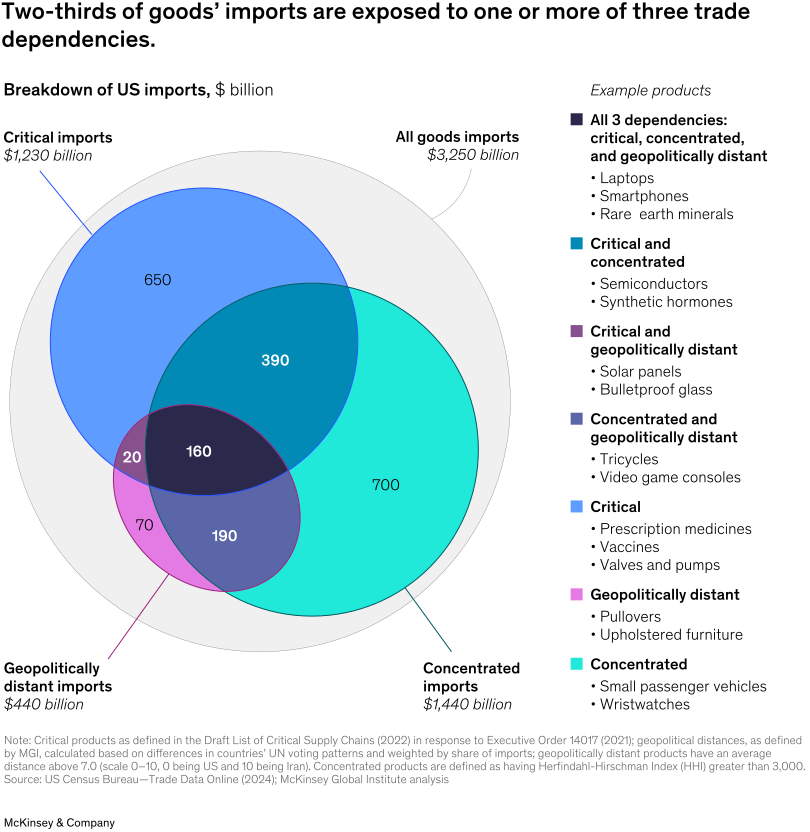
Some of the most exposed goods are critical materials central to economic security, such as rare earth metals, which power and defense systems depend on. The United States sources 70 percent of its rare earths (and 99 percent of heavy rare earth) from China. Demand for rare earths and other minerals such as lithium, nickel, and copper is rising rapidly; global lithium demand alone is projected to increase roughly eightfold by 2040. Chinese firms own the facilities responsible for refining roughly 80 percent of the world’s cobalt, 70 percent of lithium, 60 percent of nickel, and 40 percent of copper.152 These dependencies translate directly into national-security risk. Each F-35 fighter requires more than 400 kilograms of rare earth materials, and advanced naval vessels need thousands of pounds.153
Critical manufactured products in a range of technologies are also at risk. The three largest product exposures are smartphones ($56 billion in imports in 2024) and laptops ($48 billion), essentials of daily life for millions, followed by lithium-ion batteries ($22 billion), which are heavily used in those and other consumer electronics, electric transportation, and large-scale energy storage.154 Other product exposures are smaller in terms of import value but no less vital. Consider pharmaceuticals. China supplies more than 90 percent of US imports by volume for a range of both finished drugs (for example, the anti-inflammatory prednisone and the antibiotics penicillin and streptomycin) and active pharmaceutical ingredients (including for antibiotics, ibuprofen, and hydrocortisone).155
Defining geopolitical distance
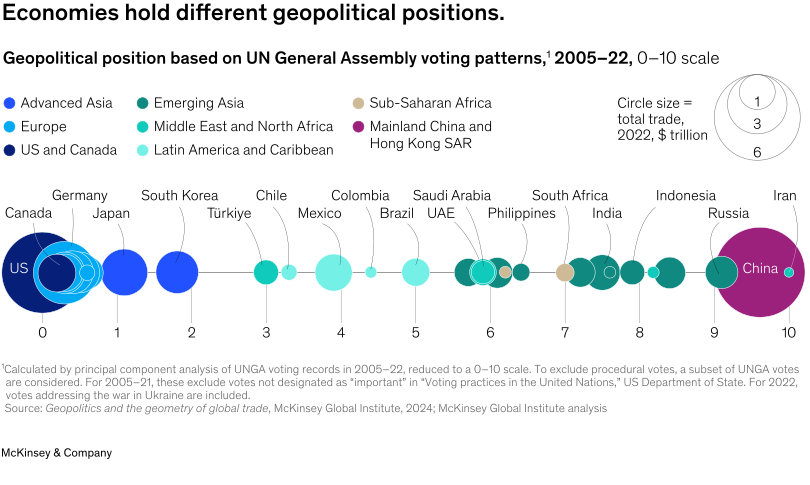
Previous MGI research developed an analytical measure of geopolitical position, using votes in the UN General Assembly between 2005 and 2022 as a proxy for alignment on global issues.1 We used principal component analysis to map each voting country on a one-dimensional voting spectrum ranging from zero to ten. Explicitly, we did not define this spectrum based on any specific country or pair of economies. We then took the geopolitical distance between any two economies to be their difference on this scale.2
By this measure, Europe, Japan, South Korea, and the United States sit near one end of a spectrum, while China and Russia sit closer to the other end (exhibit). Most emerging markets sit somewhere in the middle. Of course, relations between countries are dynamic. The United States and countries that are close, by our definition, diverged over some high-profile UN General Assembly votes in 2025. But this has happened before; UN votes are a noisy measure of geopolitical alignment, with countries’ voting practices varying from session to session. Time will tell if recent voting patterns signal a more permanent shift in geopolitical relations.
Building resilience for the future
Of course, the United States needs to prepare for resilience tomorrow rather than focusing on gaps of the past. Exposure points have emerged in industries of the future, which will shape the global economy in years to come. For example, while the United States has made massive moves to boost its semiconductor manufacturing capabilities—attracting more than $450 billion in investment commitments between 2022 and 2025, including some $200 billion in announced FDI focused mainly on leading-edge chips—some production inputs are exposed.156 Consider printed circuit boards and chemicals used in fabs, where China accounts for 30 percent and 60 percent, respectively, of US imports.157
For other goods critical to industries of the future, imports are concentrated, though not, for the moment, with geopolitically distant exporters. As AI data centers scaled rapidly in 2025, imports of logic chips and networking equipment (mainly from Taiwan) were the fastest-growing segment, at about 50 percent annually.158 And in quantum computing, where accuracy is existential, concentration is acute: Japan specializes in blue gallium laser diodes, Finland in high-precision timing devices, and Sweden in the highest-quality low-temperature amplifiers.159 In all of these areas, China has been rapidly building its own competing manufacturing capabilities.160 But the immediate competition is to be first to build a robust quantum computer, not to build scale.
How can America address these exposure points, building resilience while striking a thoughtful balance between openness and entrepreneurship, on the one hand, and the urgent needs of national security, on the other?161 Here, history may not be the best guide. The next uncertain era certainly recalls the third historical chapter, from World War II to the end of the Cold War. Both feature a rapidly shifting technology landscape, growing geopolitical tension, and the fracturing of a global economic system.
But it’s unlikely to be anything like an exact repeat of that chapter. Today’s trade crisscrosses the globe, China is the world’s top manufacturing powerhouse, and US tech development is shaped and funded disproportionately by firms rather than by government (business-funded R&D was equivalent to 2.6 percent of GDP in 2022, compared to 0.6 percent for federally funded R&D).162 And today’s biggest firms are largely globalized and not focused on the implications of business decisions for national resilience.
One step is clear: The United States will need to bolster its ability to procure or develop critical materials and to address manufacturing gaps that could become strategic choke points. In some cases, diversifying sourcing to more geopolitically aligned economies may be sufficient. In just the last year, supply chains for some products have shifted significantly. For example, US imports of both smartphones and laptops stayed constant from 2024 to 2025; both were about $50 billion. But in the same span, imports from China fell by about $17 billion for smartphones and $23 billion for laptops.163
In parallel, America may need to invest in new production capacity, requiring a fundamentally revamped industrial footprint. Ramp-up ratios—the factor of domestic production increase that would be equivalent to current imports—for products in the bull’s-eye of exposure (critical, concentrated, and geopolitically distant) are nearly double for medical and scientific instruments, five times for machinery, and more than six times for electronics.164 For some products, ramp-up factors are much higher. For example, the figures are 13 times for laptops, 17 for smartphones, and 26 for medical gloves.
Increasing domestic production adds urgency and magnitude to all the other prerequisites discussed, requiring even more skilled labor to use cutting-edge robotics, sustained funding, energy, and infrastructure. Attracting more FDI can help. The benefits go beyond simple funding: Cross-border investments that take root also transfer knowledge and spur ongoing domestic investment. In a virtuous cycle, building production know-how can generate even greater innovation and productivity growth, along with greater employment.165
The United States has done well recently. Across sectors from 2022 to 2025, the country nearly doubled its announced annual FDI inflows compared to the prepandemic period, with Japan, South Korea, and Taiwan the primary contributors. The CHIPS and Science Act, for example, spurred new waves of investment, particularly in US production of semiconductors. In this same period, the United States received the most announced semiconductor FDI globally.166 These new investments come with a great deal of production know-how.
National economic security will be assured only by greater partnership between government and business. This will help with the twin objectives of securing critical materials and expanding domestic production capacity, as well as promoting the technological innovation needed to stay ahead in the first place. Government will likely need to increase its investment, “crowding in” further investment from the private sector. Public funding has been central to major historical breakthroughs including semiconductors, biotechnology, and the internet. Low rates of private investment in some next-era critical technologies such as quantum, which have long time horizons and high degrees of uncertainty, suggest the need for public spending.167
Next steps in boosting economic security
The spotlight is increasingly on national economic security. A variety of developments are evolving at a national level that may help. Some, such as the CHIPS and Science Act, are already established; others, such as America’s Talent Strategy and America’s AI Action Plan, are relatively new. Still others are in discussion and deserve continued focus.
Central to national economic security is achieving the needed degree of resilience in sourcing critical products, whether from abroad or production at home. Businesses and government entities that are deep on the intricacies of production and supply networks will need to align on which critical goods are top priority. Defense supply chains are especially vital. Securing these, whether from stockpiling, shifted sourcing, or targeted investments in new capacity, is a critical next step.168
That will test the ability of government to make the needed investments in defense and technology infrastructure and to respond to crises. As discussed in the context of sustained long-term investment, a high national debt burden, particularly in a time of high interest rates, might reduce government’s ability to raise funds when it next needs them most.
All that said, the best defense is a good offense. Continued resilience will also depend on the country’s ability to do all the other things it is best at while ensuring that its companies are strong and that the economy works for all Americans. The pace and magnitude of technological change make this more urgent than ever.
These are acute challenges. But as Alexis de Tocqueville wrote, “The greatness of America lies not in being more enlightened than any other nation, but rather in her ability to repair her faults.” If there’s one country that has proven itself capable of reinvention when circumstance demands, it is the United States.
America’s national project
History and the analysis in this report demonstrate that competitiveness must be earned, through choices, investments, and continual renewal of institutions. It is not an inheritance.
As the old era gives way to the new, the American economy is in a position of immense strength. The country’s firms lead global markets, its innovations define technological frontiers, and its aggregate prosperity exceeds that of any other large economy. Yet, absent commitment to change, all that is at risk of loss to labor market disruption, potential turbulence in the financial system, and real geopolitical strife. This is a moment for confidence, not complacency, as leaders, shapers, and decision-makers across the country commit to choices to perpetuate America’s long-running strengths.
For businesses, US competitiveness determines whether they can continue to scale, innovate, and attract capital. The United States has long offered an unmatched combination of market size, deep financial systems, talent density, and institutional predictability. As competition intensifies and costs of capital rise, preserving these advantages will depend on reliable infrastructure, accessible talent pipelines, and policy frameworks that reward productive investment over short-term extraction.
For governments—federal, state, and local—competitiveness is essential to fiscal capacity and policy autonomy. A productive, growing economy expands the resources available for the long list of public investment needs, from infrastructure and education to national defense and social insurance. Untethering that economy requires governments to modernize permitting and infrastructure delivery, safeguard market competition, invest in research and skills, and maintain fiscal credibility.
For individuals and households, competitiveness means opportunity: access to good jobs, rising wages, affordable essentials, and paths for advancement. Productivity growth remains the most reliable driver of such opportunity. But this relationship is neither automatic nor evenly distributed. In an AI-powered world, prosperity will depend on dynamic labor markets, portable skills, and well-supported transitions.
The United States has reinvented its economic model before, showing resolute resilience in the face of deep uncertainty and challenges. Over the past two and a half centuries, the country’s competitiveness has been understood as a shared responsibility and generational investment, worth struggling for. Americans have come together to build railroads, electrify cities and small towns, expand education, and pioneer new industries.
Sustaining and sharpening America’s competitive edge in the next chapter is part of the ongoing national project made newly urgent by a changing world.
Related Articles

Out of balance: What’s next for growth, wealth, and debt?