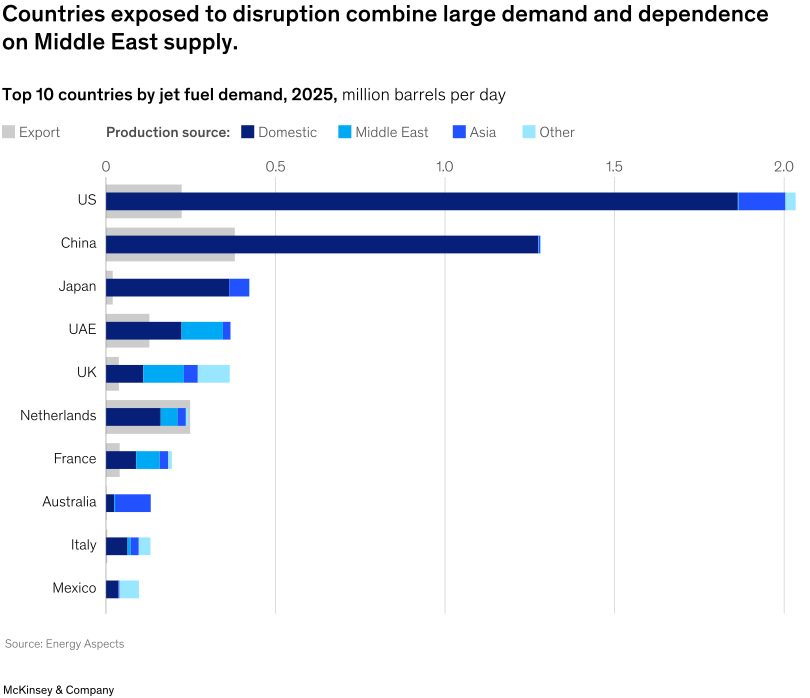
The recent disruption of tanker traffic in the Strait of Hormuz has exposed how quickly geopolitical shocks can affect jet fuel prices and airline economics. The situation has affected refineries in the Middle East (which produce roughly 14 percent of global jet fuel) and also in Asia (where jet fuel producers such as China, India, and South Korea can rely on the Middle East for more than 50 percent of their crude imports).
How can airlines manage the fuel cost volatility that can result from this type of disruption? Amid continued uncertainty, airlines can draw on previous experience with weathering high fuel prices. The industry faces a familiar challenge as it deals with rising costs and manages the lag between fuel price changes and fare adjustments.
The following analysis explores fuel dynamics and how airlines may navigate financial impacts.
Jet fuel prices have risen for two reasons. First, the price of crude oil (from which jet fuel is derived) has risen. Second, jet fuel supply has been constrained because of reduced refinery production from major Gulf-region and Asian jet fuel exporters (which together supply 40 percent of the world’s jet fuel). This second factor is reflected in the jet fuel “crack spread”—a measure of the difference in price between crude oil and the fuel products that are refined from it. In recent history, the jet fuel crack spread has tended to linger around $20 per barrel or less, but in 2026, it could end up averaging more than $50 per barrel.
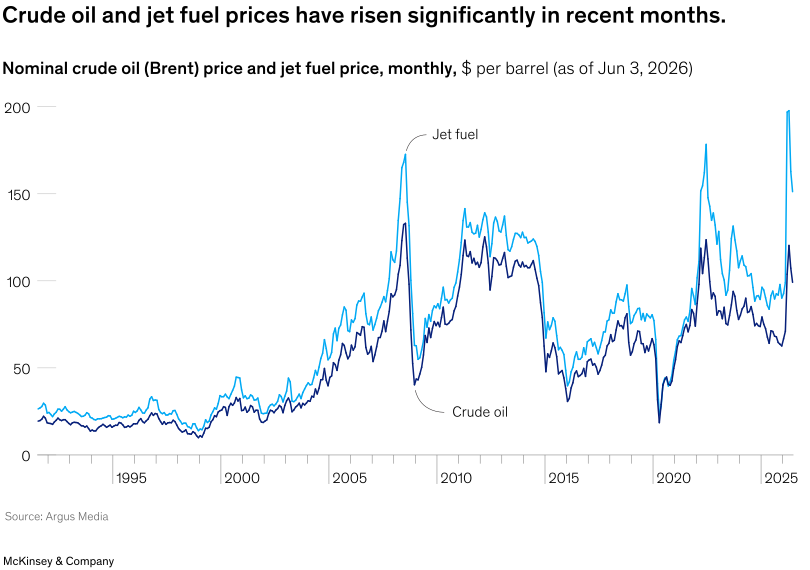
A potential increase in tanker traffic through the Strait of Hormuz could reduce immediate fuel price pressure. But jet fuel prices and crack spreads could remain volatile while inventories are rebuilt and supply chains normalize.
Heading into the summer travel season, jet fuel demand is set to rise due to increased leisure travel—but supply needs have eaten into reserves held by many countries. Exports from Middle Eastern jet fuel refineries significantly declined as a result of the Strait’s effective closure. In the near term, Asian countries are unlikely to fill the gap: China, India, and South Korea all moved to at least partially restrict exports after the conflict began. Other exporting regions may provide some relief, but likely not enough to cover the shortfall. Many of the world’s refineries were already operating at high utilization rates prior to the start of the recent conflict and have little spare capacity.
Existing inventories have been doing heavy lifting to bridge the supply gap. Asian jet fuel inventory levels have fallen below previous five-year lows. European jet fuel inventories are still within historically average ranges, sufficient to cover several weeks of demand, but face continued challenges given that offshore inventory has been severely depleted. If levels were to drop below critical thresholds, prices could move higher until airlines decide to cancel enough flights to cap demand, as seen in other situations.
All that said, the market appears to be working. The high crack spread (with jet fuel prices rising far above crude prices) has encouraged refineries to switch their mixes to produce more jet fuel. This is somewhat alleviating supply concerns.
If tanker traffic in the Strait increases, jet fuel prices are likely to fall. However, countries may be restocking and extending strategic storage, which may keep jet fuel prices elevated for several months even after tanker traffic resumes to previous levels.
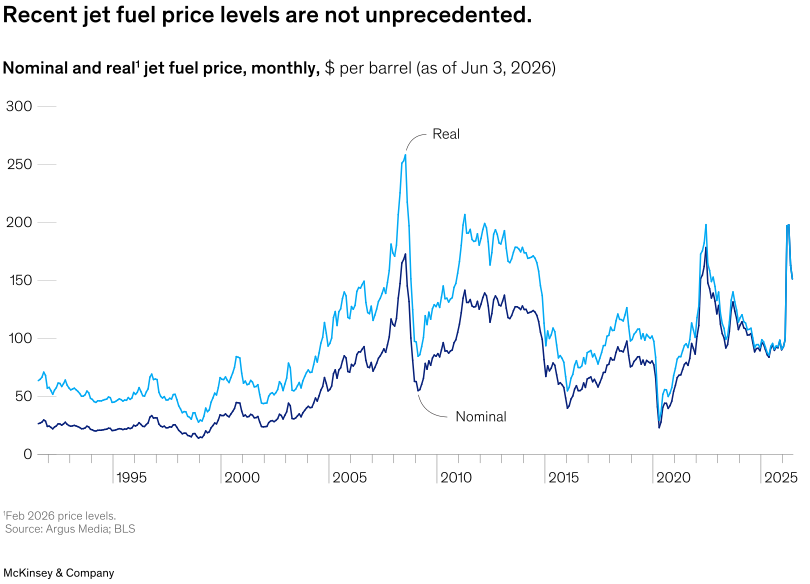
While jet fuel prices are high, airlines have seen prices this high before and have experience responding to them. The current price levels are not as high as those reached during some other historical periods. From 2011 to 2013, jet fuel’s nominal cost averaged about $130 per barrel, which would be about $180 today when adjusted for inflation. (It is worth noting, though, that foreign exchange is developing differently than in previous spikes: Airlines that generate most of their revenue in euros or pounds, for example, are more affected when higher fuel costs are compounded by foreign exchange effects.)
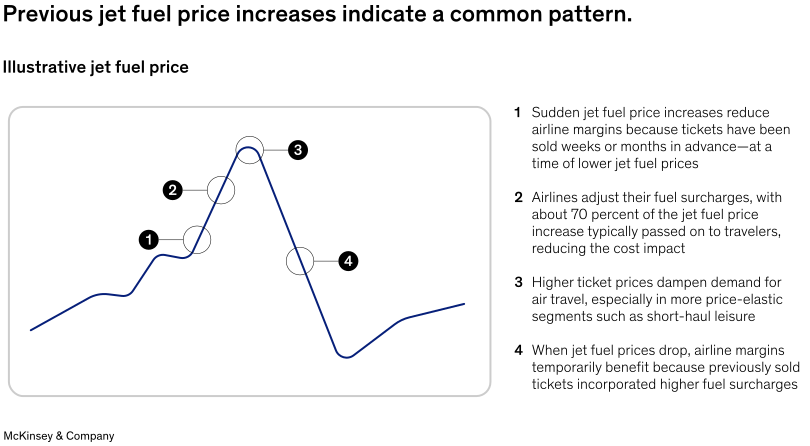
History suggests that jet fuel price increases are often passed on to consumers over time (though airlines must carefully weigh the impacts of cost pass-throughs). Research examining US airlines indicates a typical 70 percent pass-through rate. In 2013—a period that saw high fuel prices—airlines still delivered strong margins.
Given that about 30 percent of the price of an airline ticket typically goes toward fuel costs, a doubling of fuel costs (with most passed through) could lead to fare increases of roughly 20 to 25 percent. For some trips, fuel consumption has also increased: Avoiding Russia, Ukraine, and Middle Eastern airspace can add up to 20 percent more distance to some routes, increasing fuel needs.
European airlines typically hedge fuel, which can lessen the effects of price increases in the near term. US and Middle East carriers tend to be less hedged. A period of elevated fuel prices can pose challenges for airlines that are not hedged, as they need to carry passengers whose advance ticket purchases were made when expected fuel prices—and fares—were lower. Ticket prices can take time to adjust, as airlines tend to change fares and fuel surcharges with caution, but after three to four months, most cost increases will likely be reflected in fares. (Hedging programs are usually planned for one- or two-year durations at most, so over longer time periods all airlines will likely face cost increases.)
When fuel prices fall, this process can effectively reverse. Tickets that customers bought in advance during a context of higher fuel costs and fuel surcharges can be used on flights that occur after fuel prices have decreased.
Airlines can take action to navigate high fuel prices
Airlines could consider several tactics to help mitigate challenges that stem from volatile jet fuel costs.
Retire or park older aircraft
Older fleets become less economical to operate when fuel costs are elevated. During periods of high fuel prices, many airlines park less fuel-efficient, older aircraft (typically those that are more than 20 years old or of a previous generation). Retirements and parking become more feasible because airlines generally see lower demand during these periods.
Prioritize load factors over aircraft utilization
When fuel prices are lower, the cost of a lightly booked flight is lower. This leads airlines to schedule more marginal flights (for example, flights with less attractive departure times) because marginal profitability is easier to achieve.
When fuel prices are higher, every seat counts. Airlines could explore canceling some of their more marginal flights and focus on filling every seat they fly. Aircraft utilization is less important: There is a surplus of aircraft available, and it makes sense to fly only at times when passengers want to fly. (All decisions should be made based on current and expected actual jet fuel prices, whether or not an airline is hedged, since airlines get the benefits from hedging even if they don’t actually take the fuel.)
Conserve fuel wherever possible
Fuel-saving opportunities become even more critical when fuel prices are high. Airlines can take actions such as the following:
- reducing aircraft weight
- implementing reduced-engine taxiing
- reducing auxiliary power unit usage by using more ground power and preconditioned air
- employing tugs to move aircraft to the runway
- improving water and fuel loading
- optimizing flight plans
Behavioral tracking (such as monitoring use of auxiliary power units and consistency of single-engine taxiing) can be an effective lever—even well-performing carriers can reduce fuel burn by 1 to 2 percent through changed behavior.
Review pricing
The majority of fuel price increases do tend to get passed on to customers over time. However, this is not automatic. Airlines can manage fuel surcharges, particularly as they relate to corporate agreements, cargo, and flight price increases. Revenue teams can keep a close watch on elasticity, monitoring whether price increases lead to too much lost volume and whether it could be better to consolidate or cancel flights.
Consolidate flights
As the cost of an empty seat rises, airlines focus on filling as many seats as possible. Airlines may be able to selectively cancel some lower-demand flights and consolidate passengers onto other flights on the route. This will likely need to be done at least a couple of weeks in advance to ensure passengers have time to adjust. Should fuel supply run short in some locations, airports may impose restrictive quotas that could also lead airlines to cancel some flights. Any cancellations should consider the impact on hub connectivity and potential loss of passengers on connecting flights.
Focus on cost as margins decline
The airline industry typically records slightly lower margins when fuel prices are high. During these periods, airlines can refocus on trimming both customer-facing and overhead costs. Meanwhile, periods when more aircraft are on the ground can provide a useful window for accelerating maintenance and retrofits.
Be prepared for industry consolidation
A prolonged period of high fuel prices could place additional financial strain on airlines that were already facing profitability challenges. As a result, some carriers may pursue restructuring, partnerships, or consolidation. Airlines with stronger balance sheets can be prepared to evaluate strategic options as the competitive landscape evolves.
Airlines can face challenges—including increased costs and decreased demand—during periods when fuel prices are volatile. But the airline industry has seen high fuel prices before, and most carriers have, over time, been able to protect margins. Airlines can draw on an array of tried-and-true strategies that have typically helped mitigate the effects of volatile fuel costs in the past.